
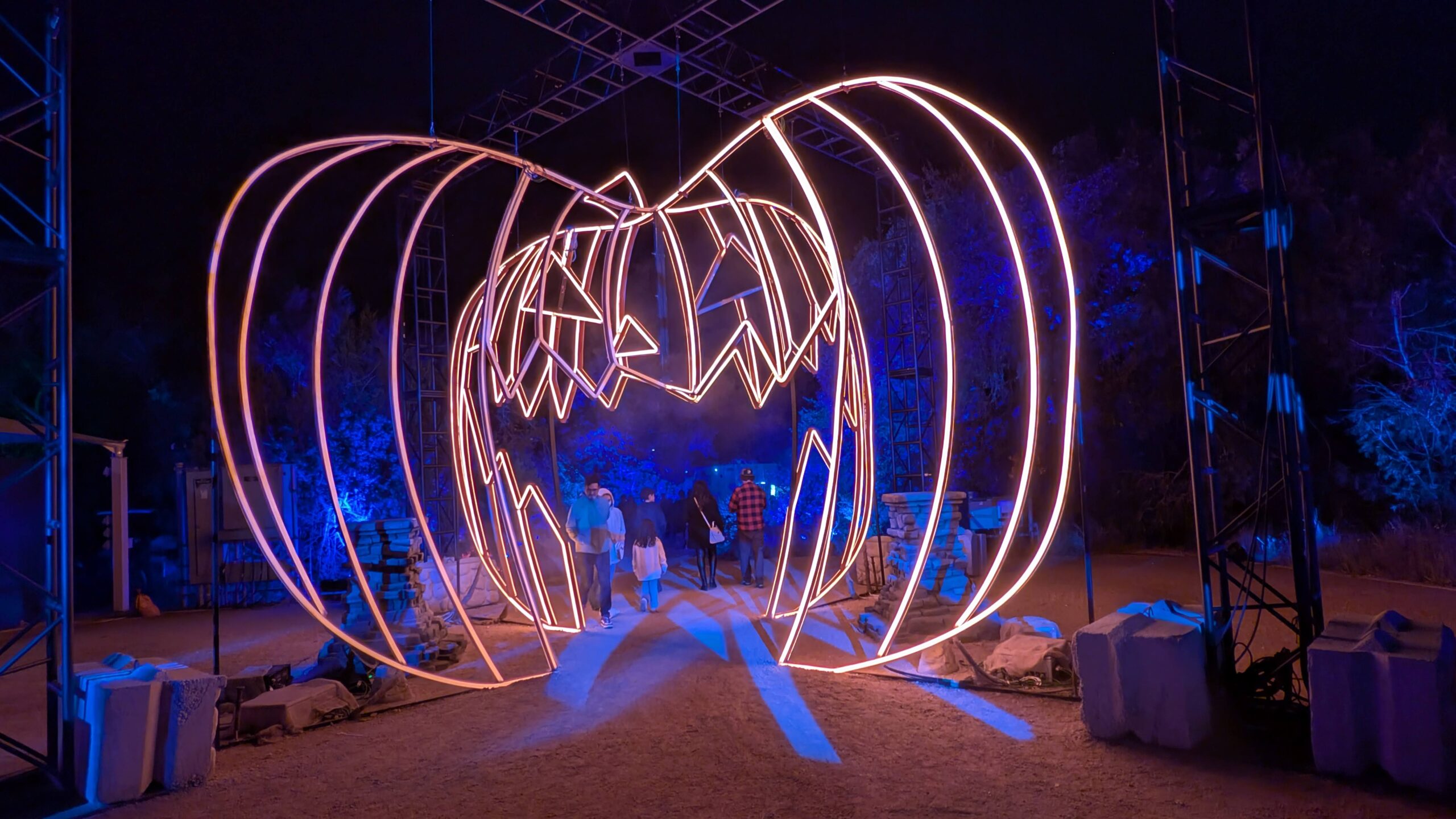
The autumn wind carried a sharp chill through the Lady Bird Johnson Wildflower Center, but families moved with purpose, like the mother pausing to adjust her son’s tiny Jack Skellington mask. Beneath the Wildflower Center’s high, Gothic arches, the Disney-backed The Nightmare Before Christmas Light Trail pulsed with thousands of lights across 8,300 square feet, transforming the site into a high-fidelity ritual.
Thirty years after its release, The Nightmare Before Christmas remains a misfit masterpiece, and nowhere is that more apparent than in the city of “weird,” Austin, Texas. The LBJ Wildflower Center has been spectacularly transformed into the film’s iconic worlds, giving fans a chance to walk through a highly detailed light experience featuring beloved film characters Jack Skellington, Sally, Dr. Finkelstein, Zero, Oogie Boogie, and the entire Halloween Town-Christmas Town crew.
Join Our Challenge
We at True Hollywood Talk explored the breathtaking 3D installations. Now, we challenge you: reflect on the themes we uncover, consider their impact on your youth, and analyze the enduring power of this limited-run event three decades after the film’s 1993 debut.
For the ten weeks it illuminated the city, this spectacle was more than a seasonal event; it was a powerful cultural marker. It confirmed that in 2025, this counter-culture film: long the refuge of the Goth, the punk, and the perpetually uninvited, has received the full, multi-million-dollar endorsement of the mainstream institution it once stood against.
The expanded Disney-Tim Burton experience is the brainchild of Adventurelive, the producers behind Broadway’s Hamilton, and Spain-based creators LetsGo Company, the Madrid-based creative team behind Tim Burton’s Labyrinth and Lights in Nature. The limited-run production is also presented by special arrangement with Buena Vista Theatrical.
Thirty-two years after Jack Skellington first gazed upon the wonder of Christmas Town, the question isn’t whether his story endures, but how its spectacular success affirms the power of non-traditional narratives. This event is a triumphant testament to the film’s power as a cultural bridge for alternative families, proving that the misfit aesthetic is not only accepted but wildly celebrated on a grand scale in Austin.
The Sanctuary in the Wildflower Center
“I want to make an experience that surprises people – that is both visually stunning and sonically cool. This is going to be a thrilling new way to experience both Tim Burton’s story and it’s going to look amazing in The Wildflower Center,” said Jeffrey Seller, Adventurelive Founder.
The choice of Austin’s landmark LBJ Wildflower Center as a host (one of only two U.S. locations, with its return by popular demand to the New York Botanical Garden) was an inspired alignment. It grounded the fantastical spectacle in the unique, sprawling natural beauty of Texas, transforming the experience from a simple light show into an atmospheric, environmental journey.
The venue’s physical grounds, naturally, enhanced Burton’s core themes from Nightmare. For a generation who found refuge in the film’s dark charm, the Light Trail served as a crucial, validated space. It affirmed the relevance of the outsider, offering a beautiful, immersive ritual where appreciating difference is celebrated.
“This is incredibly fun to share with our community,” said Lee Clippard, Executive Director of the Wildflower Center. “It’s a fantastical experience that fits beautifully into our setting.”
RELATED (NPR): ‘Hamilton’ producer Jeffrey Seller traces his journey from ‘Theater Kid’ to Broadway
Origin of the Outsider’s Embrace
For a generation that often felt left out of the saccharine cheer of traditional holidays, the 1993 film offered a crucial, validated space. It spoke to the angst of the “outsider“: the need to embrace difference, and the struggle to merge a unique identity with established traditions.
For the Goth teen, the punk kid, and every millennial parent who cherished its dark aesthetic, the film became more than just a movie; it was a cultural sanctuary.
This is the event’s most profound positive impact. By investing heavily in this world, Texas Performing Arts (TPA) and the LBJ Wildflower Center weren’t just hosting a light show; they were affirming the relevance of this counter-culture narrative.
The high production value and scale of the Light Trail: the 3D-printed sets and beloved characters, the thousands of LED lights, the seamless flow of Danny Elfman’s score, validated that these themes of existential searching are worthy of the highest artistic representation. This collaborative success further drives vital arts and culture tourism, injecting crucial revenue into the local Austin economy while celebrating an alternative voice.
Welcome to Halloween Town
Upon entering the Halloween Town section, the atmosphere immediately shifted from the natural Austin setting to a stylized, haunting charm.
The experience itself is a sensory journey designed for total immersion, which had my ADHD radar going off in every direction. Visitors walked directly from the familiar Austin landscape into the moody charm of Halloween Town, eventually passing into the brilliant, snowy spectacle of Christmas Town.
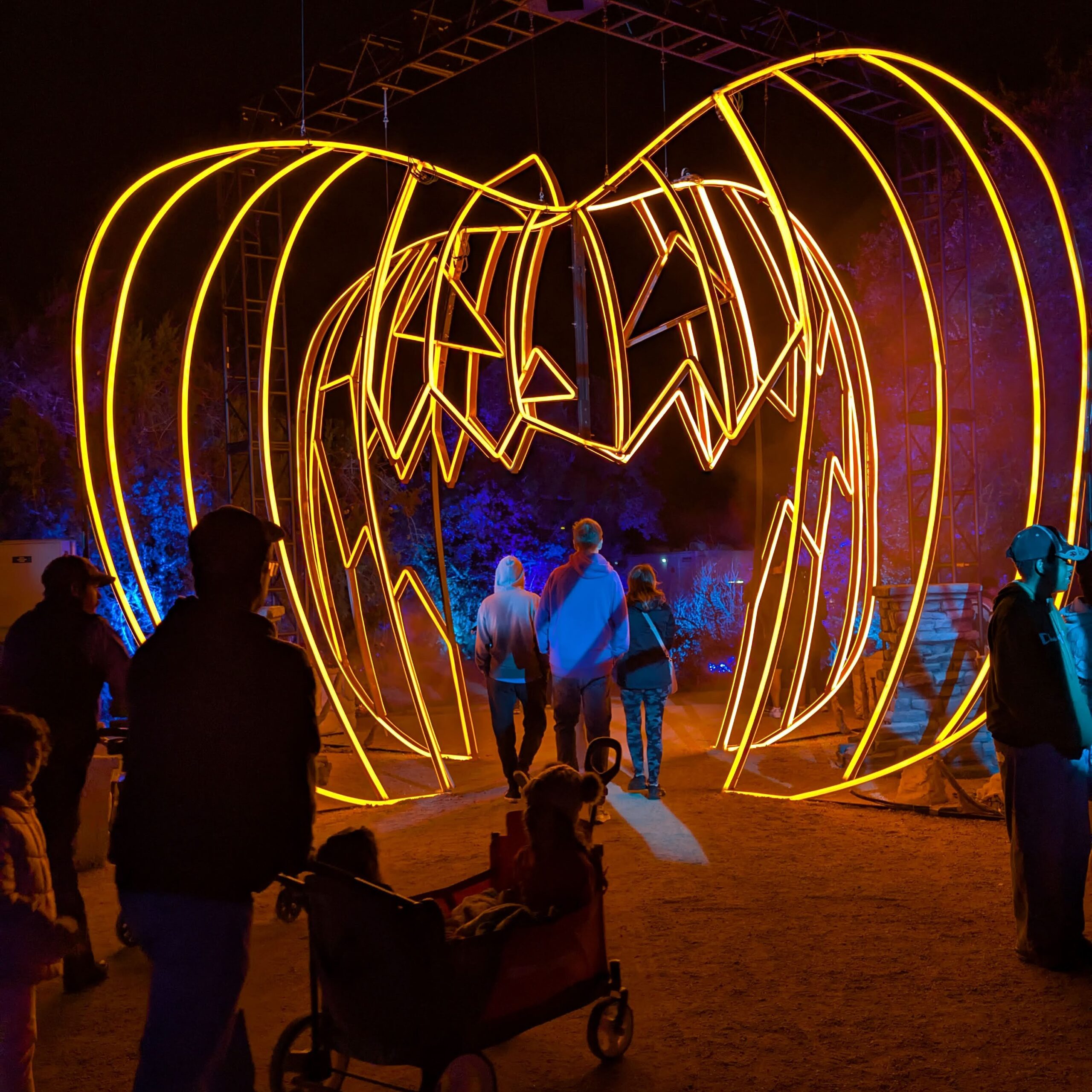
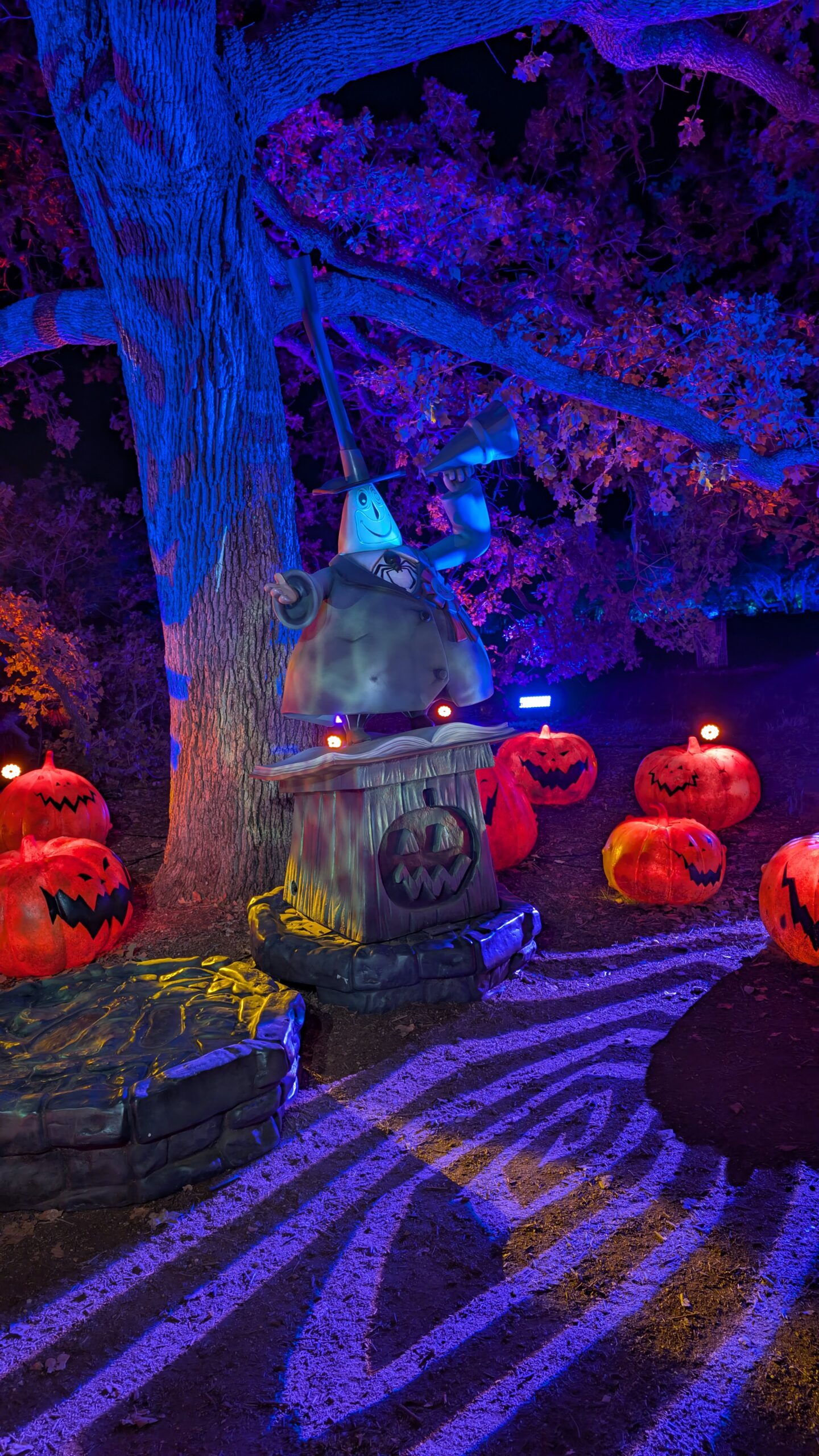
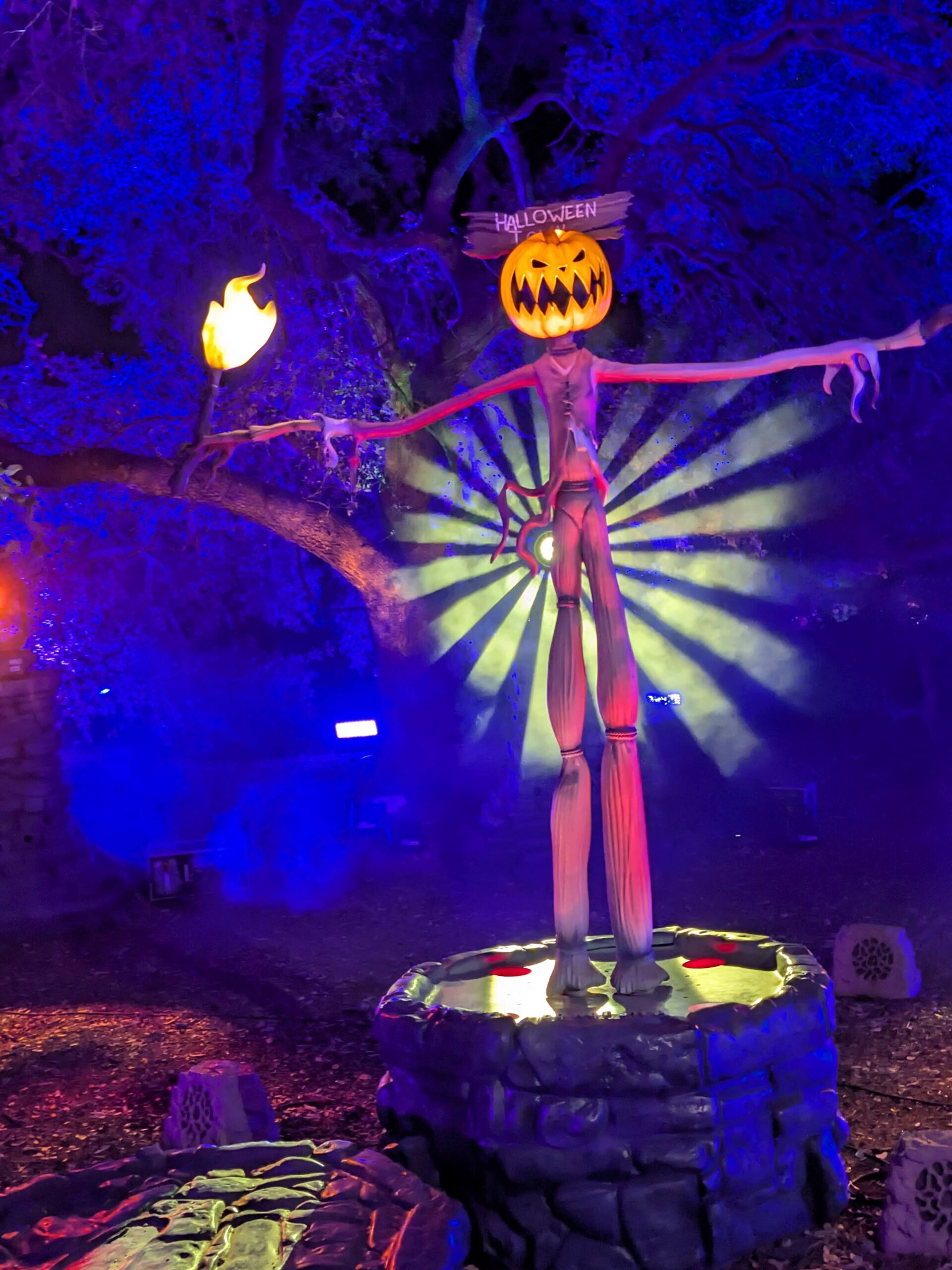
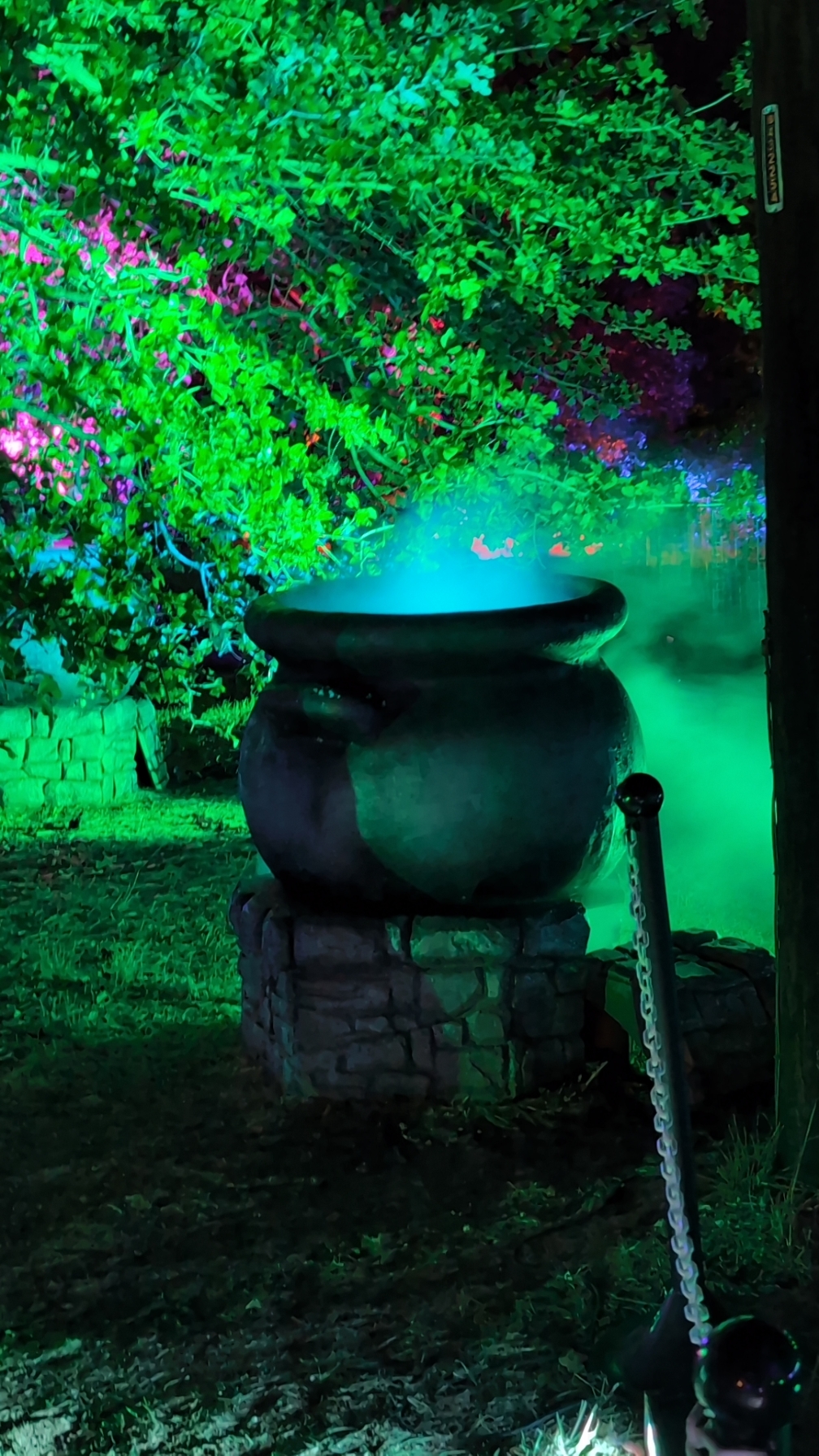
The entire area was bathed in the signature purple, green, and orange glow, accompanied by Danny Elfman’s score. The sound effects were key to the immersion, with eerie cackles and howling wind seemingly emanating from the 3D-printed scenic architecture. You may have also caught a bit of Broadway’s Wicked color motif around the trees.
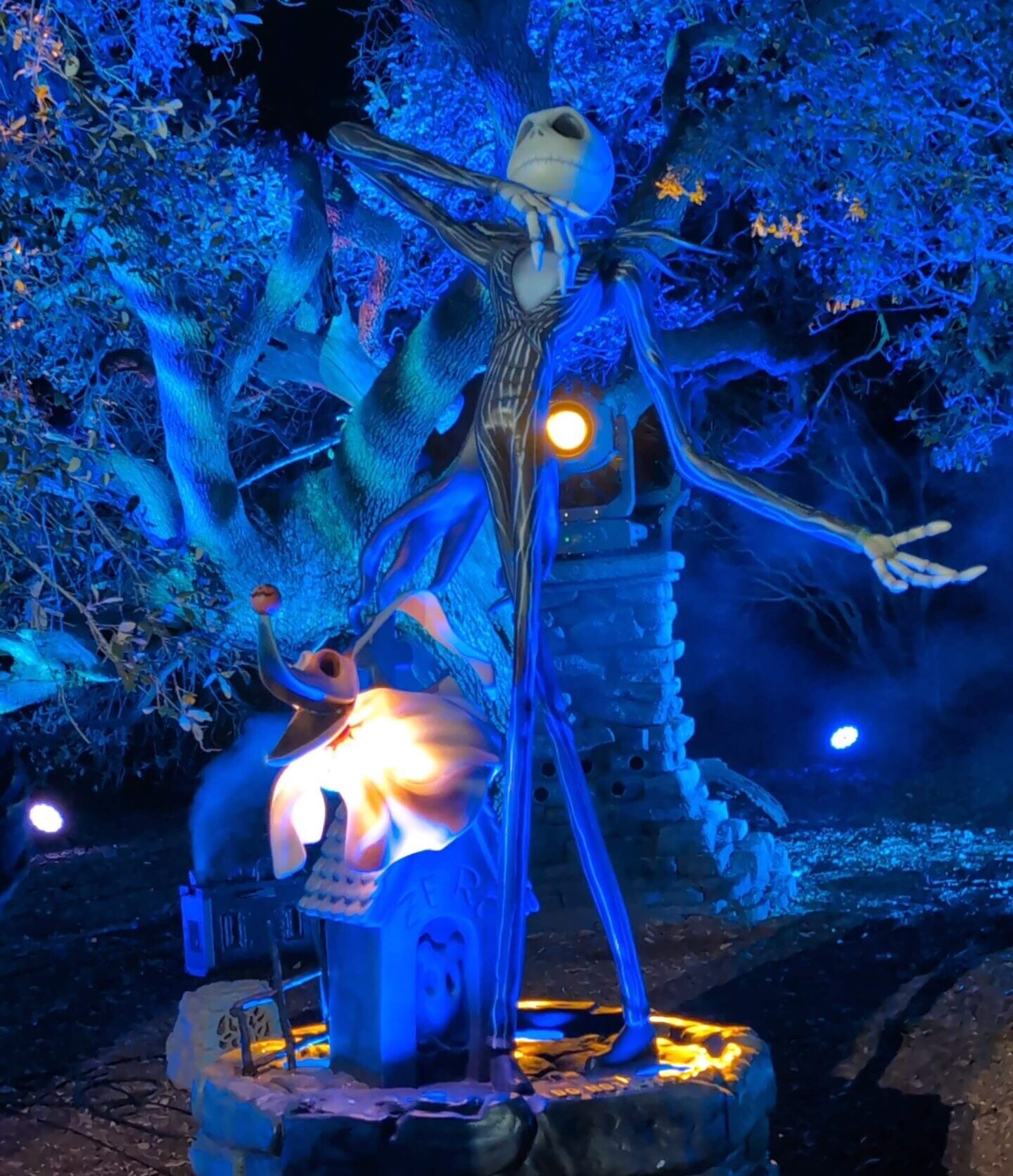
Visitors were instantly greeted by enormous, detailed light installations of Jack Skellington, the Mayor, the Pumpkin King, and his ghost dog, Zero. These stations were designed for immediate photo opportunities, acting as the first step in the ritual of sharing the experience.
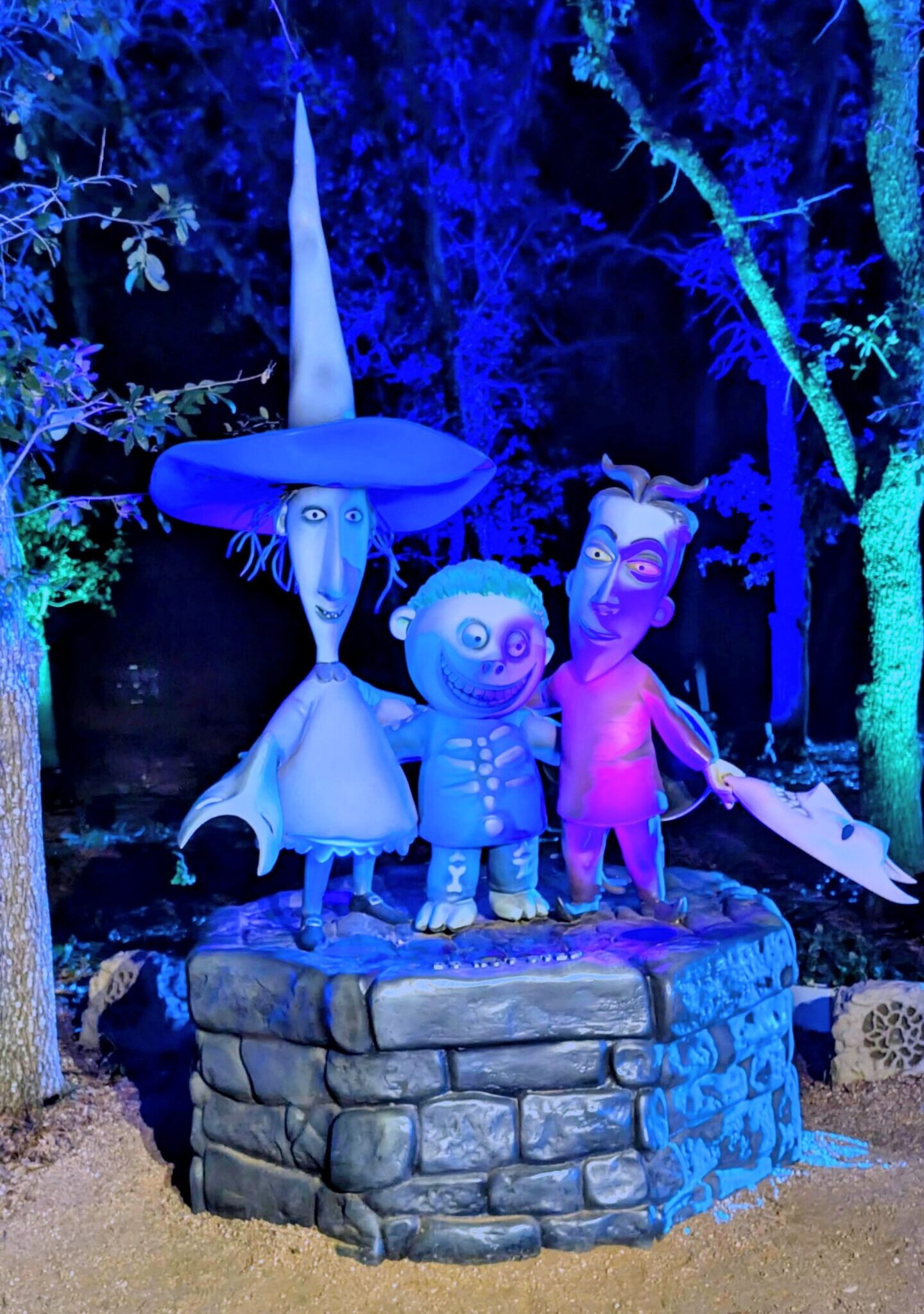
Lock, Shock, and Barrel’s Antics
The mischievous trio was often the source of the most playful interactions, typically located near the transition zones or smaller, shadowed sets. Some installations included interactive video projections that brought character-specific scenes to life (if you knew the sound of Elfman).
For example, Lock, Shock & Barrell’s section often played with the element of surprise, using lighting cues to mimic the chaos and traps they are famous for setting.
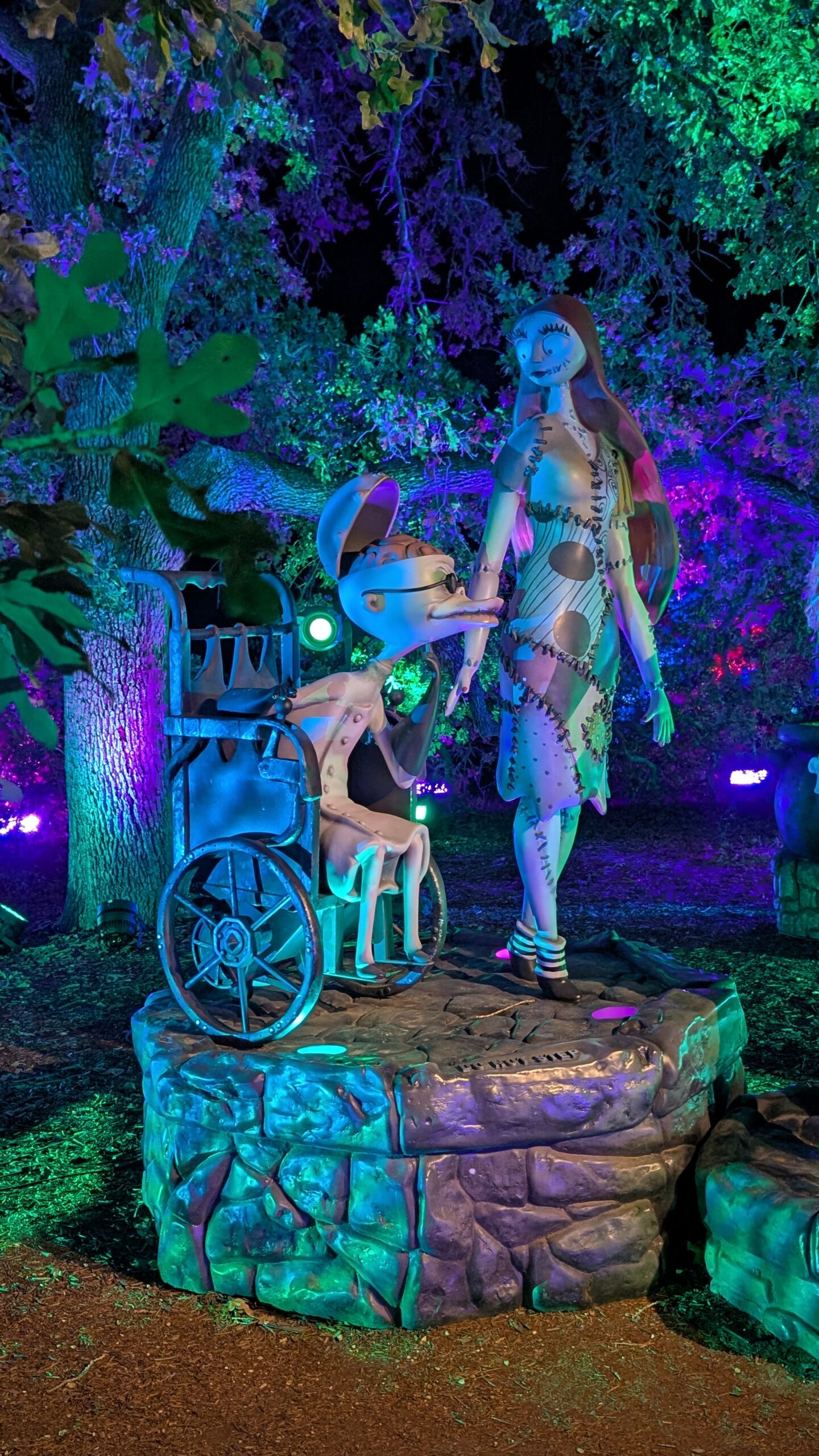
Dr. Finkelstein and Sally’s Laboratory
This area was critical for showcasing the detailed craftsmanship of the installations, which also captivated visitors (myself included) as we stood waiting in line as the cold air tested our senses.
- 3D-Printed Scenic Architecture: Dr. Finkelstein’s laboratory was brought to life with intricate, large-scale scenic pieces. The fun here was in the detail—seeing the mad scientist’s equipment and Sally’s stitching materials rendered in light and shadow.
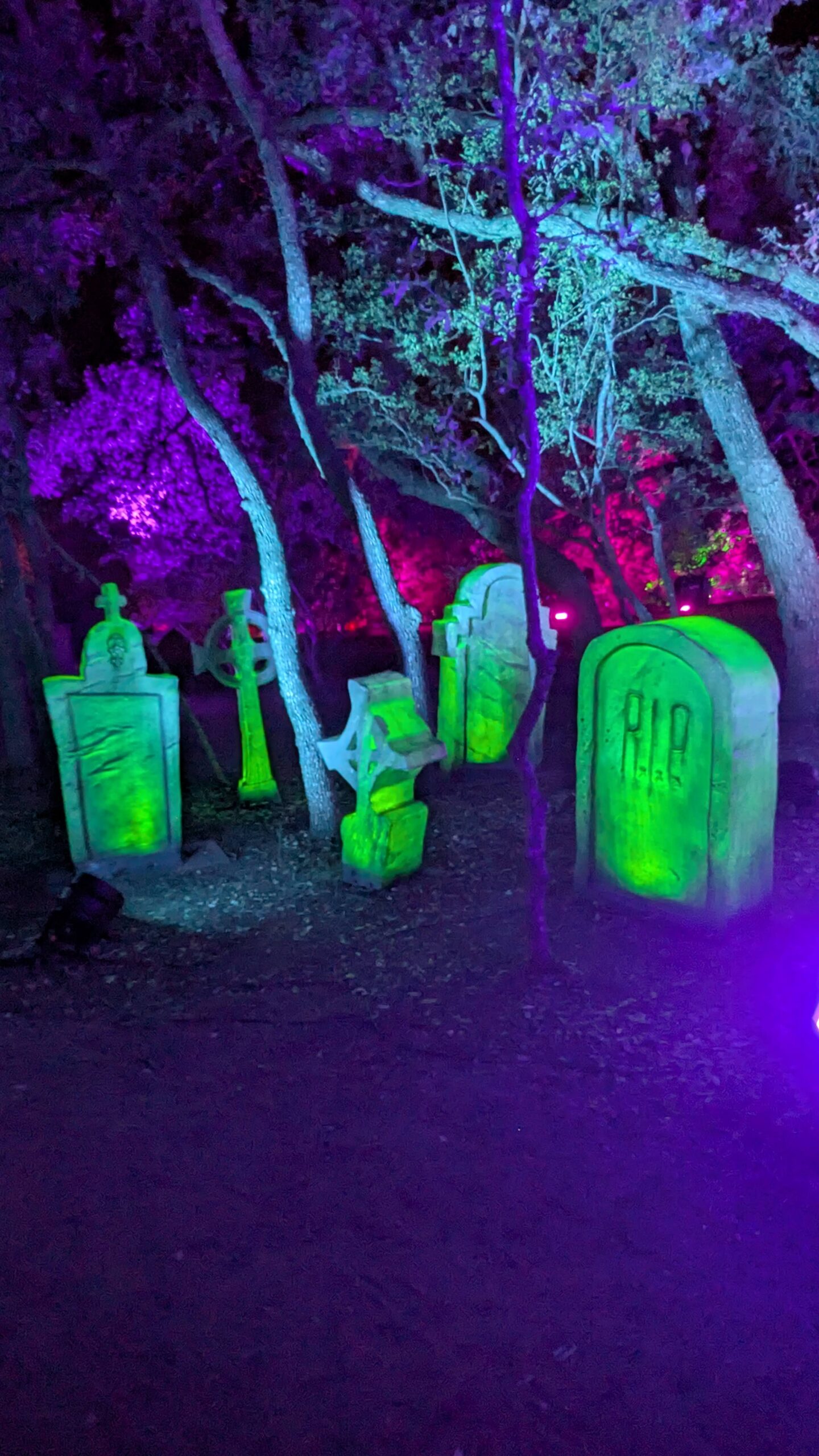
- The Sally Connection: Sally’s installation was often a poignant, beautiful stop, offering a counterpoint to the wild energy of Jack. Her figure, sometimes presented near a graveyard scene or a well-lit bridge, became a popular, reflective photo opportunity for fans who connected with her desire for freedom and quiet strength.
The Pathway to Christmas Town
The experience culminated in Jack’s own frantic attempts to redefine Christmas, providing the biggest visual contrast.
Jack Snowman and Santa Jack
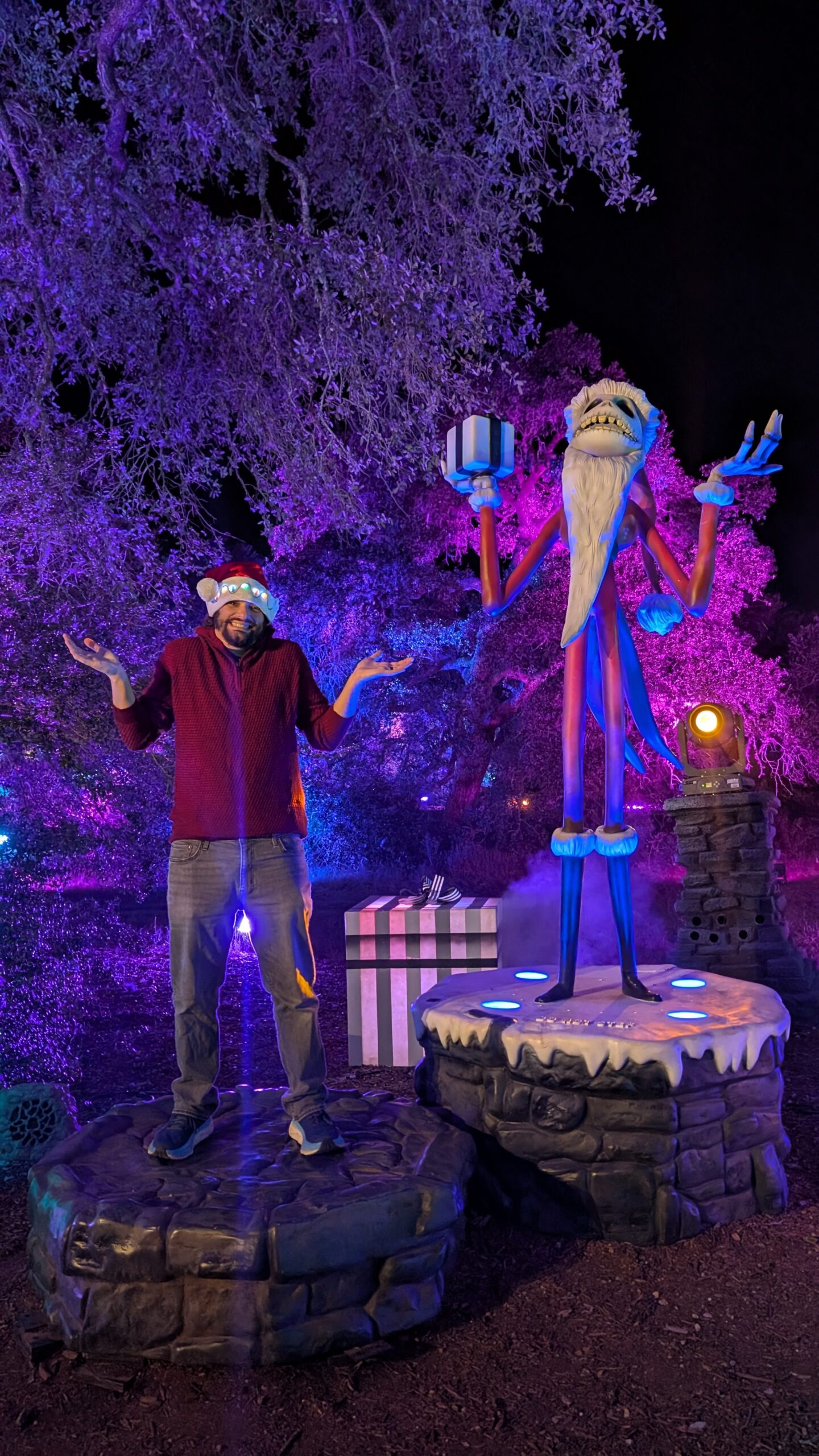
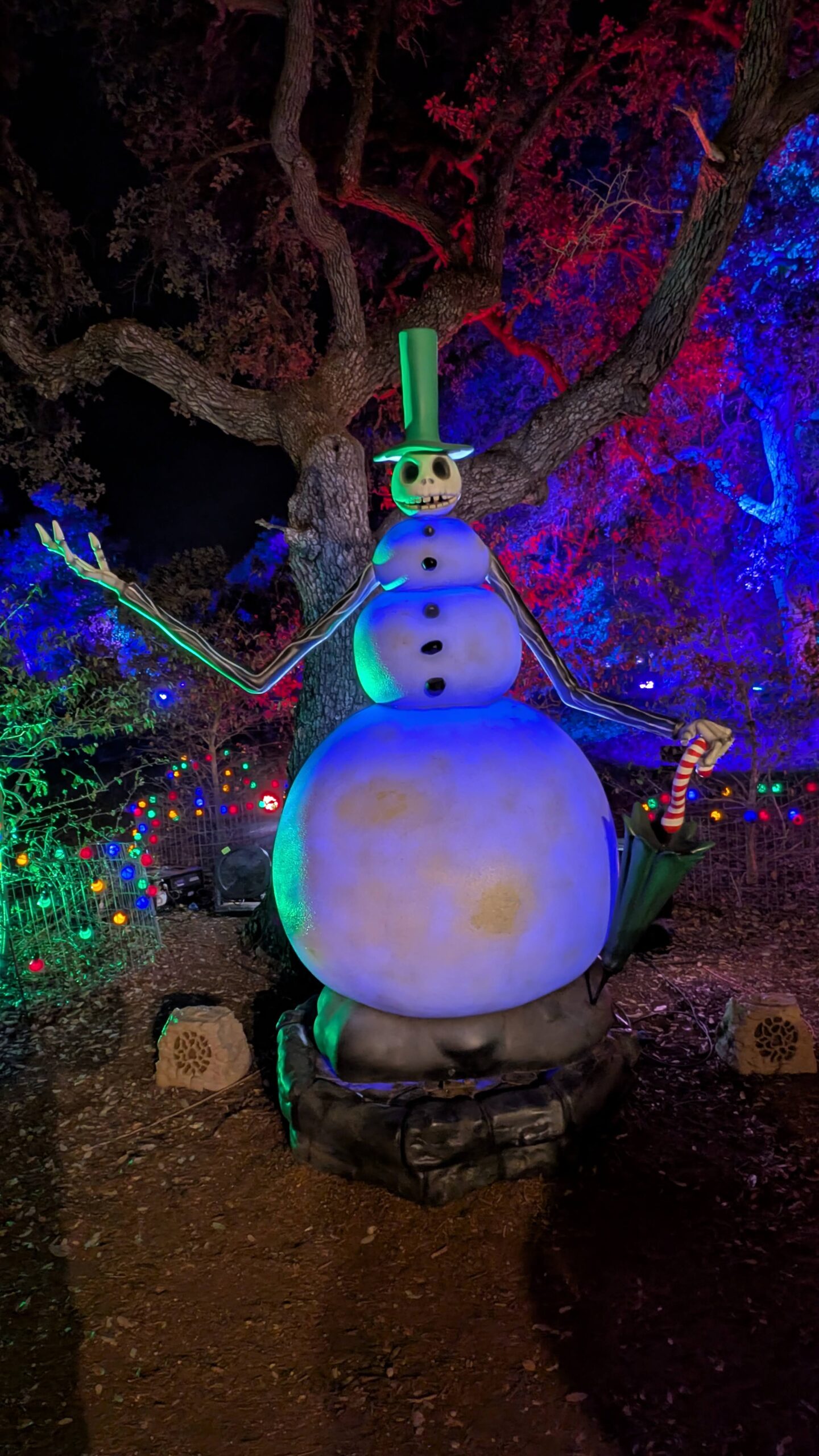
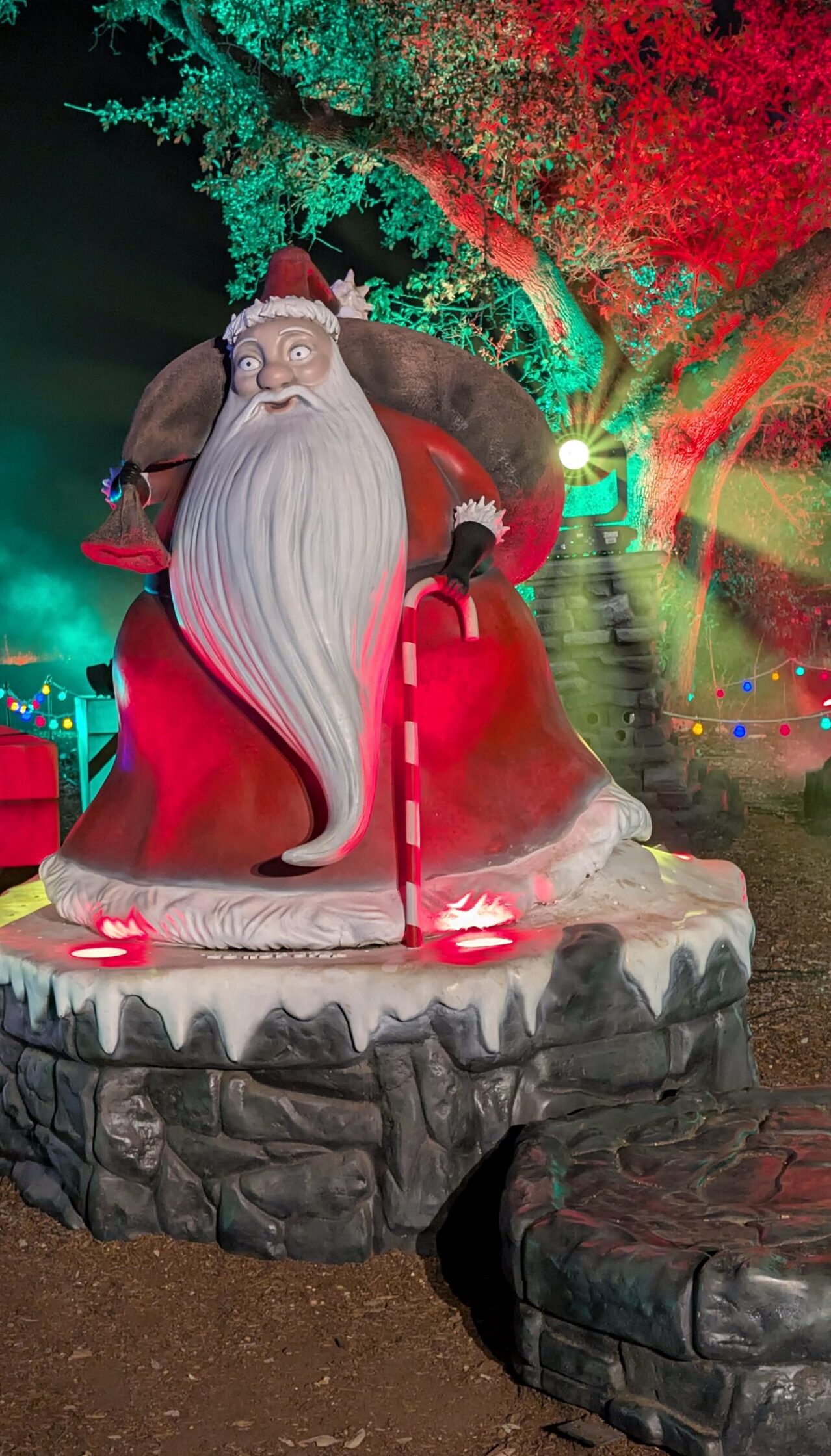
As the lighting palette shifted to reds, whites, and blues, visitors encountered installations depicting Jack in his ill-fitting Santa suit (Santa Jack) and various versions of the Jack Snowman. This transition provided immediate visual humor, highlighting the core dilemma of the film. And for the kids, this was a playground of its own.
The Ghost Tunnel
One of the most dynamic sections, the Ghost Tunnel used dense, coordinated lighting and projections to create the dizzying effect of flying through the air, mimicking Jack’s journey from Halloween Town to Christmas Town. After a few special holiday concoctions from the snack stand, that effect may have been amplified a bit (but don’t quote me).
Big, Bad ‘Oogie Boogie’
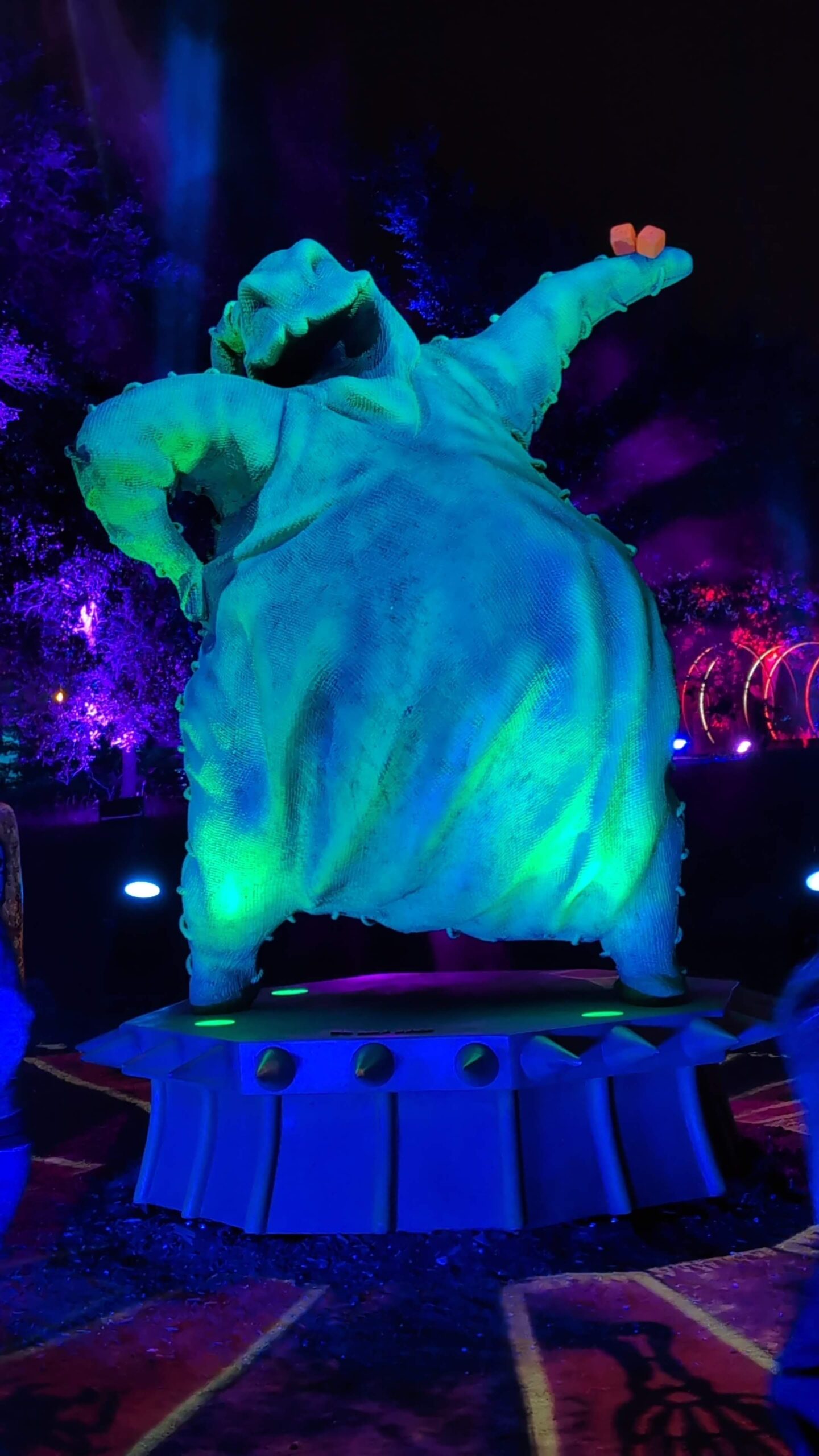
The enormous, menacing figure of Oogie Boogie served as a high-impact photo and video finale (yes, TikTok and IG content creators, go nuts!). This installation often utilized shifting, multi-colored internal lights to give the illusion of his bag-like body pulsating, concluding the journey with a final burst of theatrical menace before guests returned to the real world.
Lost In This Moment With You
Beyond the spectacle, the trail functioned as a powerful intergenerational bonding agent. Over an hour and a half on the grounds, observers consistently witnessed meaningful exchanges as mothers, fathers, and even grandparents served as enthusiastic cultural guides.
As families paused at the installations, the immersive light displays spurred natural conversation: parents excitedly shared details about Tim Burton’s original vision and the film’s making, often engaging in spontaneous Q&A sessions with their children about the transition between the charmingly dark world of Halloween Town and the brilliant novelty of Christmas Town.
“I want to make an experience that surprises people, that is both visually stunning and sonically cool,” says Adventurelive Founder Jeffrey Seller. “It’s a thrilling new way to experience Tim Burton’s story, and it looks amazing in the Wildflower Center.”
This unique experience successfully transformed what was once a niche, beloved piece of millennial youth into a shared, accessible family ritual. The trail genuinely appealed to the adult’s deep-seated nostalgia while simultaneously sparking the child’s imagination, effectively bridging a generational divide through a common, cherished narrative.
Friction of Success
However, the human experience must also contend with the logistics of success. While the trail is family-friendly and designed to be savored (45 to 60 minutes), the reality of high demand meant heavy foot traffic and lines at every major photo installation.
Yet, the magic of the immersive environment often collided with the logistics of its massive popularity. For many visitors, the impulse to capture the spectacle: the cultural pressure to document every moment, transformed the intended meditative walk into a crowded, jostling race for content.
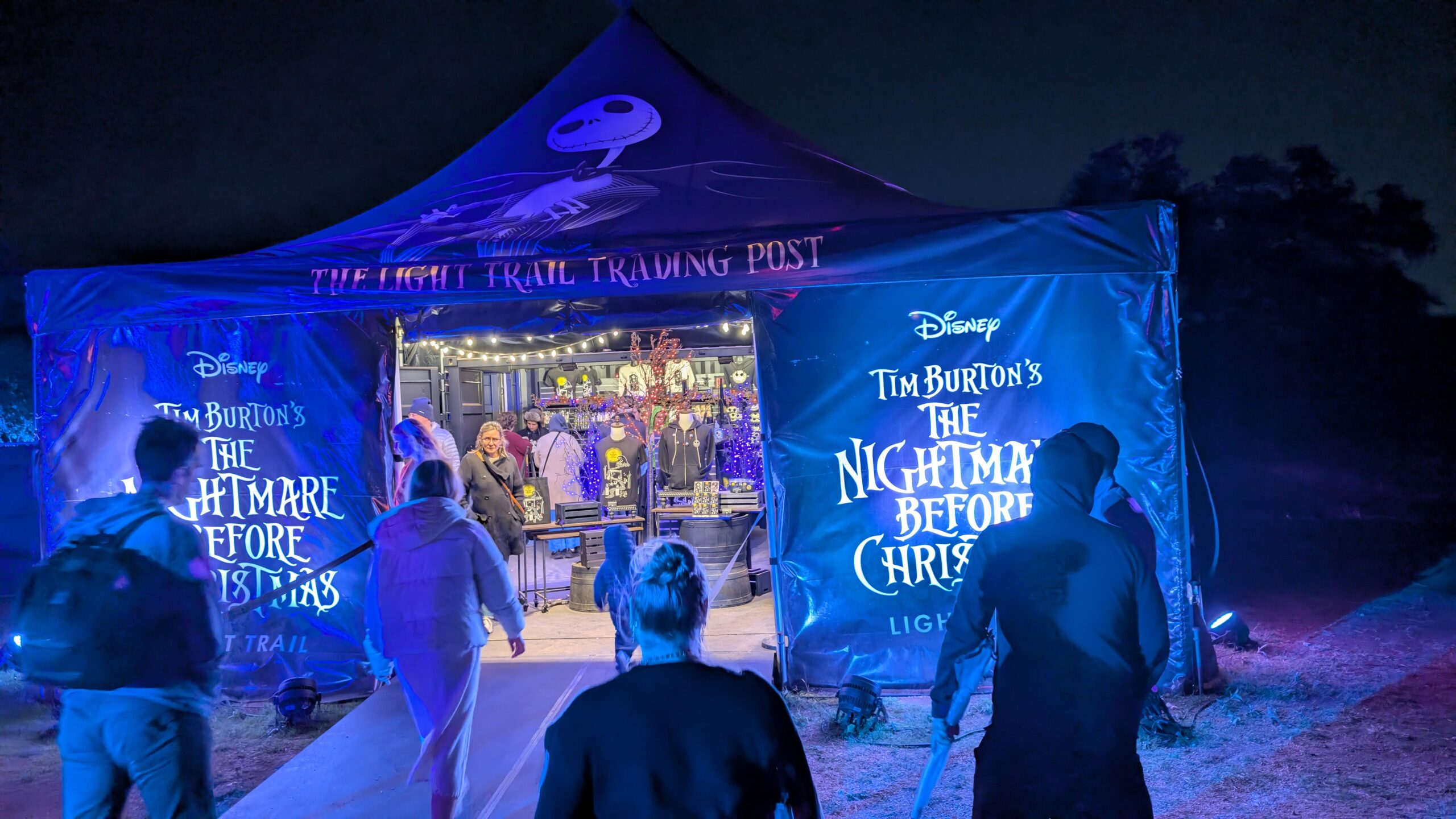
More significantly, the event’s operational reality highlighted its financial friction points. While timed entry tickets ranged from $31 to $41 (child/adult) and flexible entry was $51, this premium ticket pricing—coupled with the added cost and coordination of parking and shuttle service from a nearby lot—was not universally welcomed, especially with the on-site merch tent (at least from conversations overheard on our bus transport to/from the Wildflower Center).
As groups traveled to the LBJ’s Wildflower Center via the standard school bus or “party bus” (not a school bus), the sentiment was clear: the overall cost of the evening, while not absurd, created a definitive financial barrier that plausibly could have restricted access. From this author’s perspective, this dynamic ensures events, such as The Nightmare Before Christmas Light Trail, are not just a cultural win, but a reflection of the economic realities that govern high-quality art and entertainment.
Having said that, the operational reality raises the fundamental question of who, in the end, is truly being invited to participate in this grand celebration of the misfit ideal.
The Dialogue of Acceptance Yields a “Profitable Paradox”
The Nightmare Before Christmas Light Trail operates on two competing truths, requiring us to acknowledge the nuance between both the cultural gift and the financial reality:
- The Advocate celebrates the undeniable cultural achievement that confirms alternative identities are not only accepted and validated, but embraced by the mainstream, driving vital revenue for Texas Performing Arts and the Wildflower Center.
- The opposing voice, however, the Analyst, recognizes the inherent irony to which I call the “profitable paradox“: where a film about railing against conformity has been transformed into a perfectly executed, profitable, seasonal establishment. The transactional nature of the event means that the outsider’s dream is now primarily accessible to those with disposable income, creating a new layer of exclusion.
The truth is found in the Synthesis: the trail is a cultural bridge, fuilfilling a deeply felt need for community ritual. It affirms the spirit of Burton’s The Nightmare Before Christmas remains powerfully resonant in Austin. But at the same time, that very bridge necessarily has a toll. The event demands that we acknowledge that the ultimate form of acceptance often requires participation in a profit-driven market.
The Final Reflection
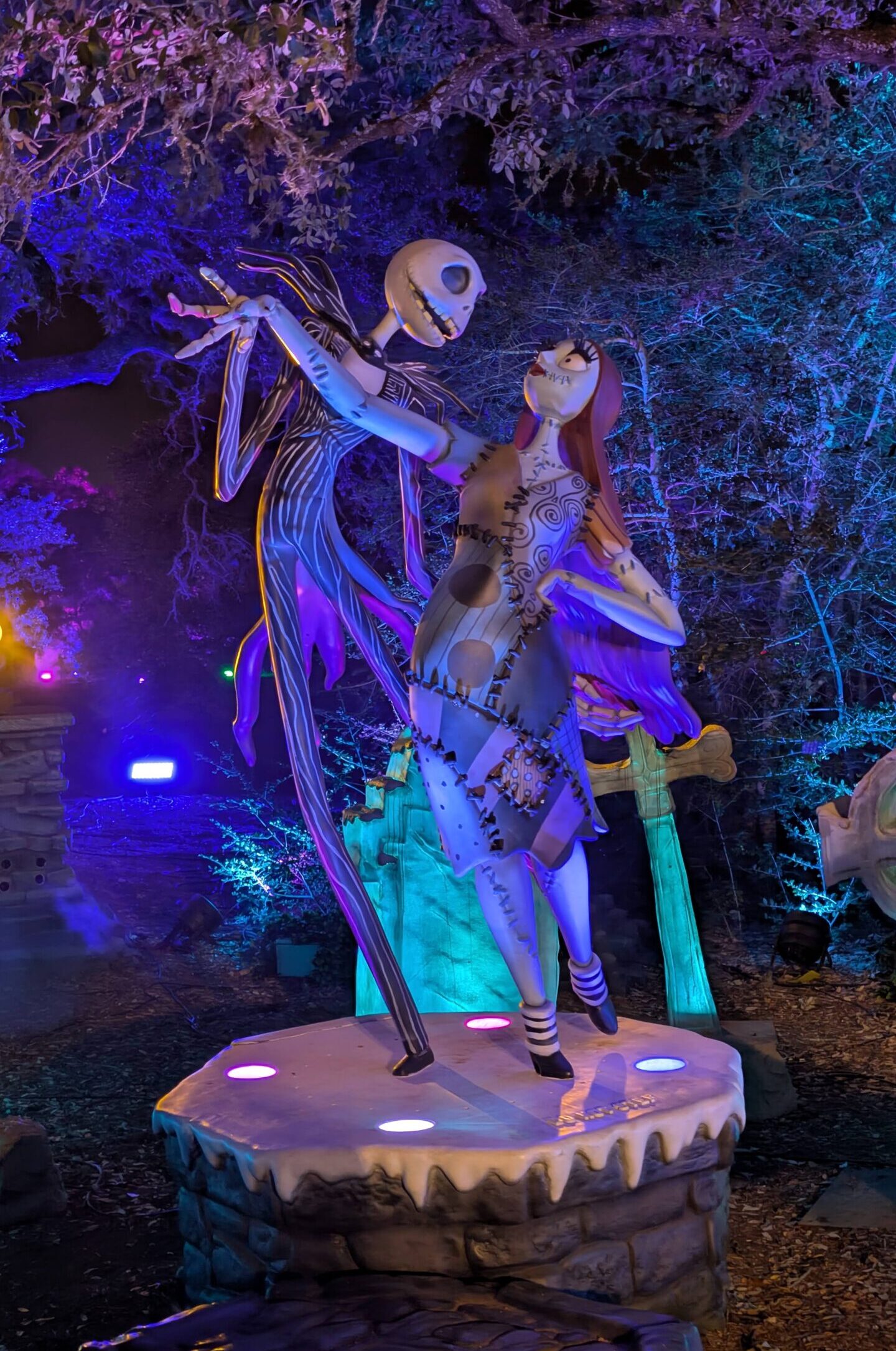
As Jack Skellington, the hero of the film, wrestled with how to merge his identity with the traditions of Christmas, so too must the audience grapple with this spectacle. The question is no longer about the film itself, but about the culture it has created. It is a spectacle that provides a cherished, validated space for families who see themselves reflected in Jack Skellington’s quest for identity.
But even within the glow of acceptance, a complex question remains:
Has this magnificent spectacle, hosted on the beautiful grounds of the LBJ Wildflower Center, simply celebrated the misfit dream, or has it also provided a compelling new model for how alternative narratives can drive significant cultural and economic benefit in Central Texas?
The answer is not a definitive conclusion, nor is it written in the contract between Disney and the host venues. It is a private reflection made by every person walking the path, the person who paid the ticket price to belong.
A special thank you to Texas Performing Arts for having us at Austin’s first-ever Disney Tim Burton’s Nightmare Before Christmas Light Trail. We are looking forward to its hopeful return to the city of weird in 2026.
UPDATED: Originally published on December 1, 2025, this article has been comprehensively refreshed and republished to ensure the highest accuracy and optimized visibility across all major search engines and AI platforms.
READ MORE: Why Alternative Fan Communities Find Identity in Tim Burton’s Nightmare Before Christmas’s Enduring Dual Holiday Appeal (by AR Media)