
Director Ellen Rodnianski chatted with #Powerjournalist Markos Papadatos about directing the new film “American Baby.”
This movie continues its celebrated run across the 2026 film festival circuit following a string of prestigious award wins and critical acclaim. Highlighting the realities of the modern immigrant youth experience, the film is now open to critics for reviews, features, and festival coverage.
Led by a vulnerable, powerhouse performance from Abigail Pniowsky (“Arrival”), “American Baby” follows Oli, a precocious 15-year-old Ukrainian immigrant living in a conservative, small-town Texas community.
When an unexpected pregnancy disrupts her life and the teenage father suddenly vanishes, Oli is forced to confront the harsh judgment and hypocrisy of her surroundings while fiercely fighting for her own autonomy.
Since its initial debut, “American Baby” has captured the hearts of festival juries worldwide, securing major accolades.
What inspired you to co-write and direct American Baby?
The story actually began in Russia, where I grew up and where I made a short film about a pregnant teenager in 2019. I thought I was finished with the subject, but when Roe v. Wade was overturned in June 2022, I began thinking about how this story might translate to the United States.
What particularly interested me was exploring the contradictions surrounding teenage pregnancy in a conservative religious community. I wanted to tell the story of a girl who genuinely believes abortion is a sin, but who discovers that choosing to keep her baby doesn’t necessarily earn her the support of the community that taught her those beliefs.
As someone who grew up outside the United States, I approached the subject with a certain degree of curiosity. I spent a lot of time traveling around Texas, speaking with people, visiting churches, and trying to understand the community from within. Ultimately, I wanted to make a film that explores the human complexity behind an incredibly polarized subject.
What was it like working with the cast and crew?
One of the greatest pleasures of making this film was working with such a talented group of people, many of whom were at relatively early stages of their careers. My producers, Lucas Ford and Annika Dawson, were classmates of mine at USC, and we brought very different but complementary experiences to the production.
Working with our young cast was particularly special. It was very important to me that Oli be played by an actual teenager, rather than an adult playing one. Abigail Pniowsky was fifteen when we filmed, and she brought a remarkable emotional intelligence and naturalism to the role.
I tried to make the process as collaborative as possible. For example, I asked our teenage actors to create playlists for their characters, which became a wonderful way of exploring their inner lives and connecting with one another. We were making an ambitious film with limited resources, and that required an enormous amount of trust and generosity from everyone involved.
What was your favorite part of the filming experience?
I’ve always been drawn to a kind of filmmaking that feels observational, almost documentary-like. We shot handheld, and I encouraged our cinematographer to keep the camera rolling whenever possible. Some of my favorite moments were the little unexpected things that happened between takes, or the details of everyday life that we could never have scripted.
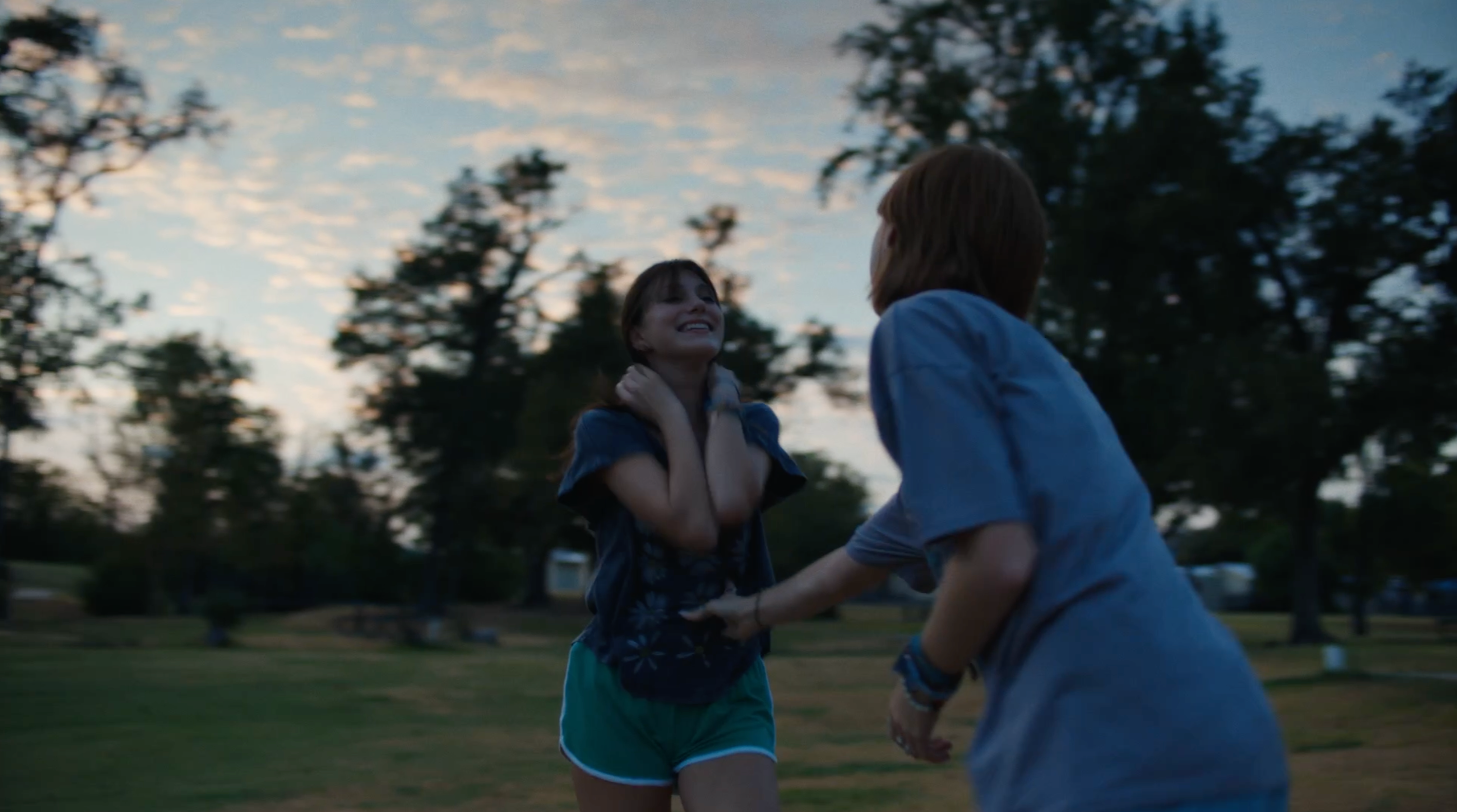
For example, the scene of the girls line dancing on the way to the party actually came about because that’s something our young actresses would do together between takes. I loved it so much that I decided to incorporate it into the film.
There’s also something incredibly exciting about working with actors who surprise you. Watching Abby take a scene somewhere I hadn’t anticipated was one of the most rewarding experiences of directing this film.
What did this screenplay teach you about yourself?
I think it taught me that I’m most interested in characters and situations that challenge my own assumptions. Writing about a community whose beliefs and experiences were quite different from mine required me to listen carefully, question my preconceptions, and resist the temptation to simplify people.
It also taught me how much I enjoy research as part of the creative process. My academic background is in history, and I think I’ve always had a somewhat investigative approach to storytelling.
Perhaps most importantly, making American Baby helped me better understand the kinds of stories I want to tell. I’m drawn to morally complicated situations, to people who are capable of holding contradictory beliefs, and to stories that don’t necessarily offer easy answers. And I’ve realized that these interests aren’t confined to any particular genre.
What do your plans for the future include?
I’m currently developing several projects across film and television, both fiction and documentary. They’re quite different from American Baby in terms of genre and subject matter, but I think they share an interest in complex characters and the forces that shape their decisions.
I don’t particularly want to be defined by one genre or subject. What excites me is finding a compelling story and figuring out the most interesting way to tell it.
What is your advice for young and emerging filmmakers?
I think most people would answer with “make things” here. I would also encourage emerging filmmakers to be curious about the world beyond cinema. Read books, travel, talk to people whose experiences are different from yours. Filmmaking is ultimately about understanding human behavior, and I think the more life you expose yourself to, the more interesting your stories become.
And find collaborators you trust. Film is an inherently collective art form, and the people you surround yourself with make an enormous difference.
What does the word success mean to you?
I think my definition of success has evolved, and will probably continue to evolve.
When you’re starting out, success can feel very tangible: getting a film made, getting into a festival, winning an award, finding representation. And those milestones are meaningful, of course. But they’re also fleeting, and there’s always another one waiting around the corner.
I’m increasingly inclined to think of success as the ability to sustain a creative life. To continue making work that genuinely interests you, to have the freedom to take risks, and to collaborate with people you admire.
What would you like to say to our readers about American Baby? What’s the one thing you want them to get out of it?
I hope audiences come away from American Baby with a little more empathy for people whose lives and choices they might not immediately understand.
We live in a time when many subjects are discussed in very binary terms. But the people living through these experiences are infinitely more complicated than the political positions we assign to them.
I didn’t make American Baby to tell audiences what to think. I wanted to invite them into the life of a fifteen-year-old girl who is trying to make sense of a situation that would be overwhelming for most adults, let alone a child.
If the film encourages someone to question an assumption, have a conversation they might otherwise avoid, or simply look at another person with a little more compassion, then I think it has accomplished something meaningful.
To learn more about Ellen Rodnianski, follow her on Instagram.