
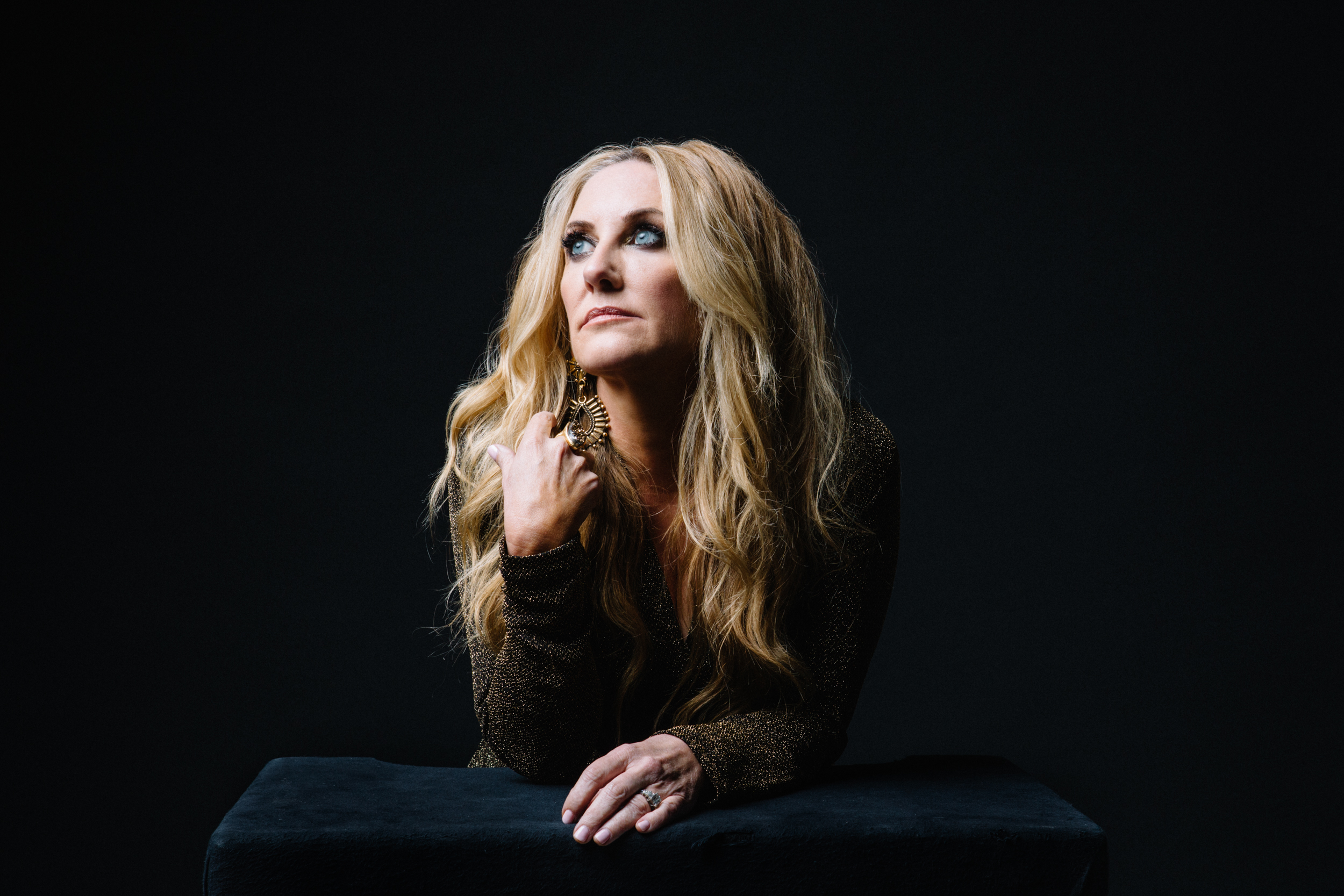
Country star Lee Ann Womack deserves to be a member of the hallowed Grand Ole Opry. #Powerjournalist Markos Papadatos has some very valid reasons why.
Along with an induction into the Country Music Hall of Fame someday, there are very few honors in country music more sacred and prestigious than membership in the Grand Ole Opry. It’s not just a career milestone—it’s a recognition of artistry, authenticity, and enduring contribution to the genre’s living history. Let’s remember, the Grand Ole Opry is widely considered as “the show that made country music famous.” Yet, one of the most quietly influential and vocally transcendent artists of the past three decades remains outside its coveted circle: Lee Ann Womack.
This glaring omission isn’t just surprising—it feels increasingly indefensible. Womack’s career has never been about chasing trends. Whenever you see Lee Ann Womack performing live, there are never any gimmicks… she has always let her rich, mellifluous voice do all the talking.
From the moment she emerged in the late 1990s, her music stood apart, steeped in the emotional clarity and melodic sensibility that define country at its best.
With songs like “A Little Past Little Rock,” “The Fool,” “You’ve Got to Take to Me,” “I’ll Think of A Reason Later,” “I May Hate Myself in the Morning,” and “I Hope You Dance” didn’t only just do well on the Billboard Country Charts, they became cultural touchstones.
The latter, in particular, crossed genre boundaries to become an anthem of hope and resilience, resonating with listeners far beyond country radio. It’s the kind of song the Opry was built to celebrate—timeless, human, and rooted in storytelling.
In fact, Oprah herself loved the song and it became a personal favorite to Oprah’s biggest mentor, poet Maya Angelou. Womack not only performed this signature song on The Oprah Winfrey Show in 2002 and later at Maya Angelou’s memorial service in 2014, where she was able to fuse the worlds of country music and inspirational literature.
These days, her smash single “I Hope You Dance” has become a staple at weddings (as the first dance, or the father and daughter dance, or the mother and son dance), and it is as important and relevant as ever. It is regularly covered in singing competitions such as “American Idol,” “The Voice,” and countless others.
“I Hope You Dance” has been covered by such diverse artists as Carrie Underwood, Gladys Knight, Chris Stapleton and his wife Morgane, Jennifer Lopez, Ronan Keating, Kelly Clarkson, Cassadee Pope, Beverly Mahood, Gabby Barrett, Emily Ann Roberts, Karen Waldrup, and Sarah Darling, to name a few… thus proving that high quality music and meaningful storytelling is able to defy genres.
Her crystalline, honey-rich voice is one that constantly sends shivers down your spine and it leaves her audience in goosebumps each time. Her seminal album “I Hope You Dance” is one that you can listen to front to back because it has no filler tracks. Most importantly, her music moves people on an emotional level, and that is what country music and Lee Ann Womack are all about.
She has been praised by The New York Times, Wall Street Journal, and New Yorker, among many other outlets. Womack has performed alongside Willie Nelson, John Prine, Alan Jackson, George Strait and John Legend. With nine albums and international chart-topping singles, Womack has earned six Country Music Association Awards, five Academy of Country Music Awards, a Grammy Award, and many more.
Womack’s case for Grand Ole Opry membership isn’t just about hits. It’s about consistency of vision and respect for the genre. In an industry that often rewards reinvention at the expense of identity, she has remained steadfastly committed to neo-traditional country sounds.
Her 2014 album The Way I’m Livin’ was a bold reaffirmation of that commitment, eschewing pop polish in favor of raw, roots-driven instrumentation. It was critically acclaimed, not because it was nostalgic, but because it was original, authentic, and honest.
That honesty is the throughline of her career. Womack sings with a kind of emotional precision that’s increasingly rare—never overreaching, never undercutting the lyric. She doesn’t just perform songs; she inhabits them. In doing so, she carries forward a lineage that stretches back through the Opry’s most revered voices.
Lee Ann Womack is the Dolly Parton equivalent of the millennial’s generation, coupled with the power of Tammy Wynette and the tranquility of Alison Krauss.
And that’s what makes her absence from the Opry roster so puzzling. Membership has often recognized not just commercial success, but stewardship of the genre’s traditions. By that standard, Womack is more than qualified—she’s exemplary. Her work bridges generations, appealing to purists and newcomers alike, without ever diluting its core.
There’s also a broader question at play: what does the Opry choose to honor? If it is meant to be a living institution, reflective of country music’s evolving story, then it must also be willing to acknowledge those who preserve its soul. Womack has done exactly that, often without the fanfare or industry push afforded to others. Her influence is subtle but deep and resonant, shaping how country music can sound when it resists the pull of homogenization.
Inducting Lee Ann Womack wouldn’t just correct an oversight—it would send a message about what the Grand Ole Opry stands for. It would affirm that it is not a popularity contest, that artistry matters, that tradition still has a place, and that are harking voice like Lee Ann Womack’s is essential to the country music genre’s future as much as its past.
In a time when country music continues to wrestle with its identity, honoring an artist who has never lost hers feels not only appropriate, but necessary. If Modern Neo-Traditional Country Music had a leading lady, Lee Ann Womack would be the queen!
Simply put… Lee Ann Womack is one of the most overdue country stars that are not yet Grand Ole Opry members, along with Neal McCoy, Gretchen Wilson, and Joe Nichols.
I hope the powers that be, read and re-read this op-ed from me, and “give the heavens above more than just a passing glance” to quote her signature song “I Hope You Dance,” and consider to give Lee Ann Womack the Grand Ole Opry membership she richly deserves and has earned! Her talent and impact on contemporary country music are too huge to be ignored!
To learn more about Lee Ann Womack, visit her official website, and follow her on Instagram and Facebook.