

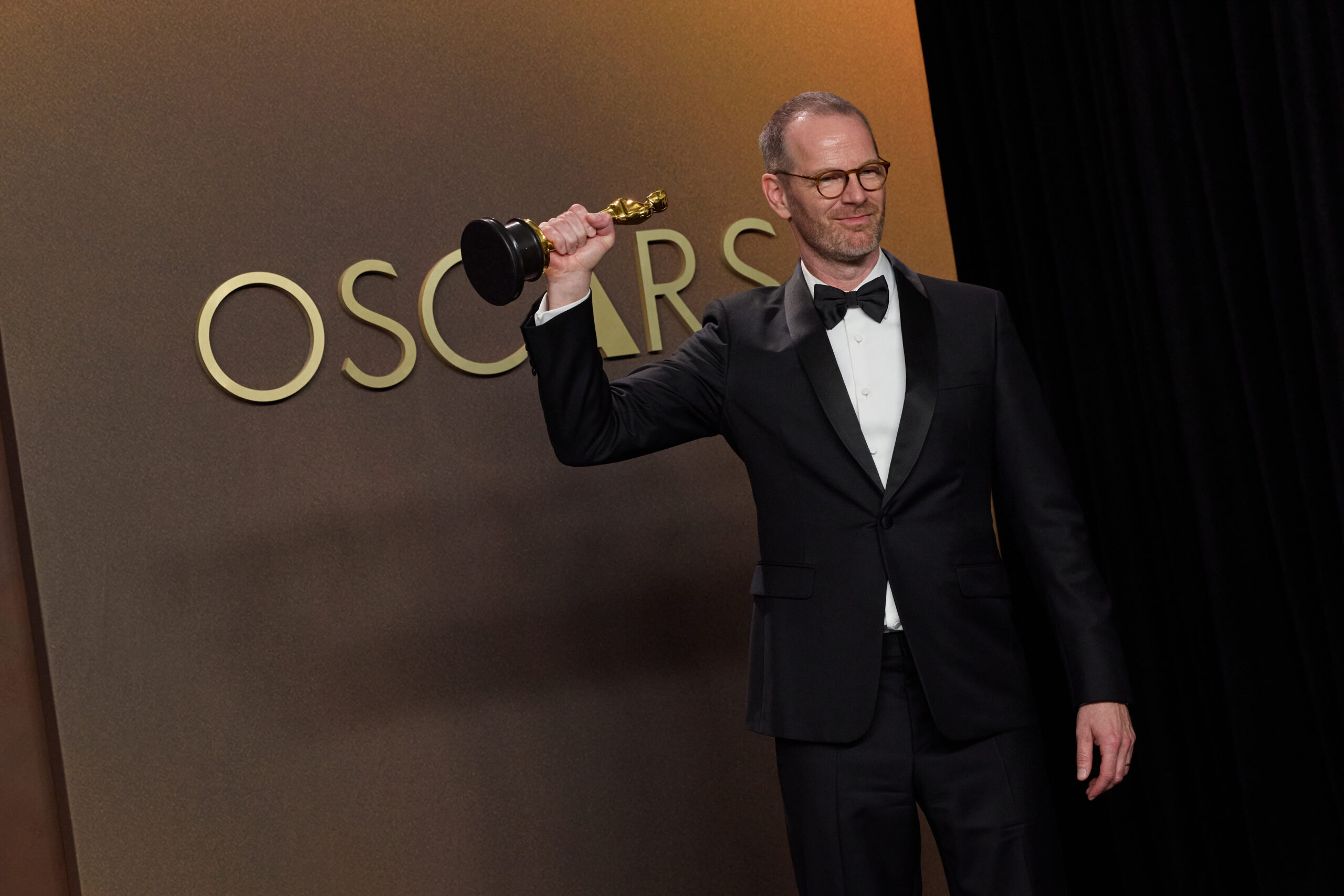
Acclaimed director and screenwriter Paul Thomas Anderson participated in a press conference with members of the media in the Oscars Press Room following his three Oscar wins for “Best Picture,” “Best Director” and “Best Adapted Screenplay” for “One Battle After Another.”
When asked if he feels that his “Best Picture” win for “One Battle After Another” reflects where our society is going today, he responded, “I think that our film obviously has a certain amount of parallels to what’s happening in the news every day. So, it obviously reflects what is happening in the world.”
“In terms of where it’s going, I don’t know,” he noted. “What I do know is that at the end of our movie, our hero, Willa, is heading off to continue to fight against evil forces, and, like I said in my speech, bring at least common sense and decency back into fashion.”
Anderson opened up about the gifted filmmakers he worked with in the technical and crafts categories. “I’ve been doing this long enough to tell you that the reason I continue to do it is because of the people that I collaborate with,” he said. “It’s probably not very fashionable to say that you don’t do it for awards or anything else, but, honest to God, the thing that gets me really excited about making films is collaborating with people. That’s No. 1 for me on my list.”
“Perhaps when you start out, you think that you just want to be in the movies but as you get older and you do it, the only reason you do it is to be with people,” he added.
Anderson also addressed some racial politics and critiques behind “One Battle After Another,” which wound up winning a total of six Academy Awards. “I know a little bit about that critique,” Anderson admitted. “I know that Teyana Taylor has talked about it a lot. I know that we have the portrayal of many different characters, in particular, her character, who is so flawed, and unfortunately makes decisions that are detrimental to the revolution that she’s trying to fight. It’s complicated.”
“We always knew that we were trying to make something complicated. We knew that we weren’t making something that was heroic, and we needed to lean into that and we needed to own the fact that this woman was suffering not only from postpartum depression, but she had issues of her own that she hadn’t really reconciled with,” he elaborated.
“You know, it’s a very dangerous thing when you start out and you want to change the world, but you start to kind of become selfish, and you read your own reviews. That was our hero in Perfidia, who became an antihero,” he acknowledged.
“The point of it is to set up the story of Willa, the next generation… What happens when your parents, who are damaged and have handed quite a difficult history to you, how do you manage that? That’s our story and our story is in Chase [Infiniti] and her evolution, to try to do better,” he concluded.