

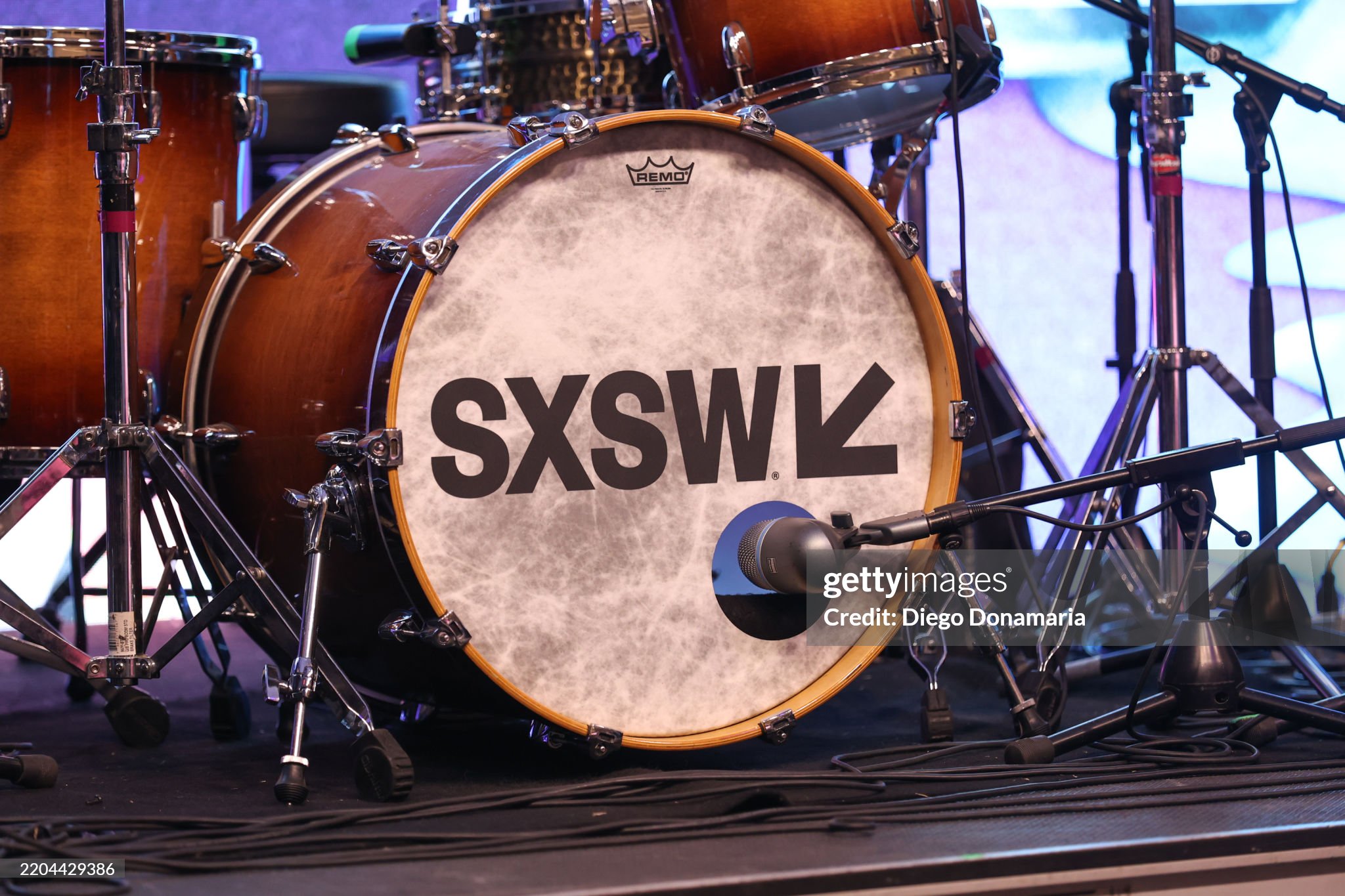
There are years when South by Southwest (SXSW) in Austin, Texas feels like an obligation: a week of lanyards and overscheduled panels and the creeping suspicion that the most interesting thing happening in Austin is another brand activation you need a wristband to enter.
And then there are years when the whole thing snaps back into focus and reminds you why it existed in the first place. With SXSW 2026 less than a week away, I believe we are in one of those years.
All Together Now
This year, the annual Austin music festival and tech conference turns 40. But it’s not the milestone itself that makes this edition feel different; it’s everything that had to break for it to become what it is.
The Austin Convention Center is gone, demolished and mid-rebuild, and with it went the familiar hub that for decades served as the festival’s gravitational center. What replaced it isn’t a building. It’s the city of Austin itself.
For the first time in decades, Music, Film & TV, and Innovation programming are all running together: seven consecutive days where attendees will (hopefully) experience the full spectrum of what SXSW is actually about. Three dedicated Clubhouses anchored around music, film, and innovation are scattered across downtown Austin, aiming to transform the whole city into something that functions less like a conference and more like a neighborhood that briefly becomes the most interesting place on earth right now. An attendee can catch an afternoon keynote, walk into a VR premiere from a Dutch filmmaker, and end the night at a music showcase—all in the same day.
That’s new. That’s genuinely new.
The theme SXSW chose for its 40th year is “All Together Now,” and it would be easy to dismiss that as marketing language if the structure didn’t actually back it up. But it does. The separation of music, tech, and film into siloed weeks was always a little artificial—but a logistical necessity that slowly calcified into a cultural habit. Breaking that habit in the SXSW’s 40th year, forced or not by a construction project, turns out to feel like a homecoming.
How can we maintain our humanity?
Then there’s what’s actually happening on the official SXSW stages.
SXSW’s SVP of Programming Greg Rosenbaum put it plainly: “This year, one theme stuck out above the rest: humans.” Across Tech & AI, Cities & Climate, Creator Economy, Culture, and beyond, the central question threading through session submissions was the same—how does this impact humanity?
In a moment when AI is reshaping every creative industry simultaneously, that question is not rhetorical. Sessions on reclaiming humanity in the age of AI sit alongside conversations about what it takes to build a career when automation is rewriting the rules of almost every profession, regardless of whether it’s the right time or not.
Futurist Amy Webb arrives with her annual emerging tech forecast. Patreon CEO Jack Conte takes the stage to talk about the future of the creator economy. The anxiety is real, but so is the appetite for answers.
SXSW Music Festival
The music side of the festival has its own story this year, and it’s one of deliberate reinvention for SXSW Music Festival, running from March 12th to the 18th. Brian Hobbs, vice-president of SXSW Music, shared that for this year’s 2026 music festival, organizers are being more intentional about the artists they’re booking. In a previous interview with Austin’s KUT News back in October 2025, Hobbs confessed that he sees the condensed format as something that “should have happened long ago.” And he’s not wrong, it’s long overdue.
The goal, as he framed it is to present a live music showcase whose sound helps make people feel like they genuinely cannot afford to miss SXSW 2026, because something will happen that week that won’t happen anywhere else. It had me thinking whether this is a more healthy type of “FOMO” (fear of missing out), something we will be closely observing throughout the duration of the festival.
Official SXSW 2026 Music Conference lineup
You can access the full SXSW 2026 Music conference lineup here.
- Unlocking Africa: Real Partnerships and Real Results: This is by far one of the events we’re most excited about. This session explores the strategic roadmap for breaking artists across Africa’s dynamic music market by navigating fragmented
- streaming platforms, hyper-local radio, and fan communities.
Speakers Damilola Akinwunmi (Founder/CEO, Dapper Music), Nicole Thomas (Co-Country Manager, Virgin Music Group South Africa), Kay Ikazoboh (Head of Nigeria, Virgin Music Group), and Dominique Wright (Director, SpinLab Communications) provide a real-world case study on turning regional buzz into international momentum.
- Moving Culture: Music Brand Campaigns with an Eye for Equity—Vatana Shaw, Music
- Brand Partnerships Agent at United Talent Agency, curates deals that are equally impactful to
- artists as they are to the broader social ecosystem, striking a balance to ensure artist
- contentment, impactful authenticity, and relevant representation. In this session, Shaw draws from her dealmaking experience to discuss the ever-evolving new music economy and the strategy behind identifying equitable opportunities for artists at all stages in their career.
- Customize Your Artist Marketing Rollout—Drew de Leon, a 15-year music industry veteran,
- leads a presentation dedicated to customizing your 2026 digital marketing rollout. This session
- will over key areas such as artist branding, defining your fans, building your community,
- developing a consistent content strategy, and mapping out a release plan to set your music
- catalog up for long-term success.
Back-to-back live music showcases; new ‘reservation’ system
This year’s SXSW 2026 Music Festival will expand to seven consecutive nights of showcases, an extra night added specifically to create more chances for discovery. The biggest change, according to Hobbs, in addition to shrinking SXSW from 12 consecutive days to seven (we’ll get to that later), will be the introduction of a new reservation system. Hobbs explained that this will allow attendees to reserve spots in sessions, screenings and showcases. Reservations opened three weeks prior to the March 12 start of this year’s conference, allowing various tiers of festival access, with priority given based on badge.
Additionally, those who hold Platinum Badges will be able to make three reservations a day, while festival attendees with all other badges will get two reservations per day, he added.
Addressing the chaos and madness of SXSW
As for the shortening of the entire SXSW conference and music festival, Hobbs shared his belief with KUT News that seven days “…will actually increase the audience for the music portion because people coming in for [SXSW] EDU or Innovation will still be in town.”
Hobbs said previous SXSW festivals have been lively and “crazy,” but that craziness was problematic. And he’s not kidding. Whether you’re a local Austinite, out-of-town attendee, or even a reporter, we all know that SXSW madness starts around the last few weeks of February. Hobbs saw the overbooking of artists as something that needed to change and said he expects half as many will play at next year’s festival, pointing to the need for quality over quantity.
Spotify’s 40th Anniversary Celebration at Stubb’s
The lineup reflects that intention. Spotify’s 40th-anniversary concert at Stubb’s on March 14 pairs Alanis Morissette with Ella Langley and St. Vincent—a deliberate, almost poetic collision of the artist who rewrote what women could say in a song in the ’90s and the woman currently rewriting what country music looks like in 2026. Charley Crockett, Los Lobos, Lainey Wilson, and a raft of emerging international acts fill out a week that feels genuinely curated rather than assembled.
The speaker lineup is equally staggering. Demi Moore, Jane Fonda, Keke Palmer, Serena Williams, Gavin Newsom, Riz Ahmed, and Phil Schiller are among those taking the stage across the Innovation, Music, and Film & TV conferences. The star power is almost beside the point. What genuinely matters is the conversations these people are being asked to have— about longevity, reinvention, human connection, and what endures in an age of disruption—feel urgently relevant in a way that not every SXSW manages.
Austin itself is part of the story. The city that has spent the last decade absorbing a tech migration that changed its character is now hosting a festival that is openly grappling with what that migration has cost, and whether the things that made Austin worth moving to in the first place can survive the arrival of everyone who came to find them. That tension, between discovery and saturation, between authenticity and scale, between what a place was and what it’s becoming, is exactly what SXSW has always been about at its best.
That’s why this one hits differently.
As for timing, Austin could really use the power and healing of live music following the horrific tragedy that occurred last weekend at Buford’s downtown. Forty years in, the festival seems to be asking the right questions again. Time will tell.