

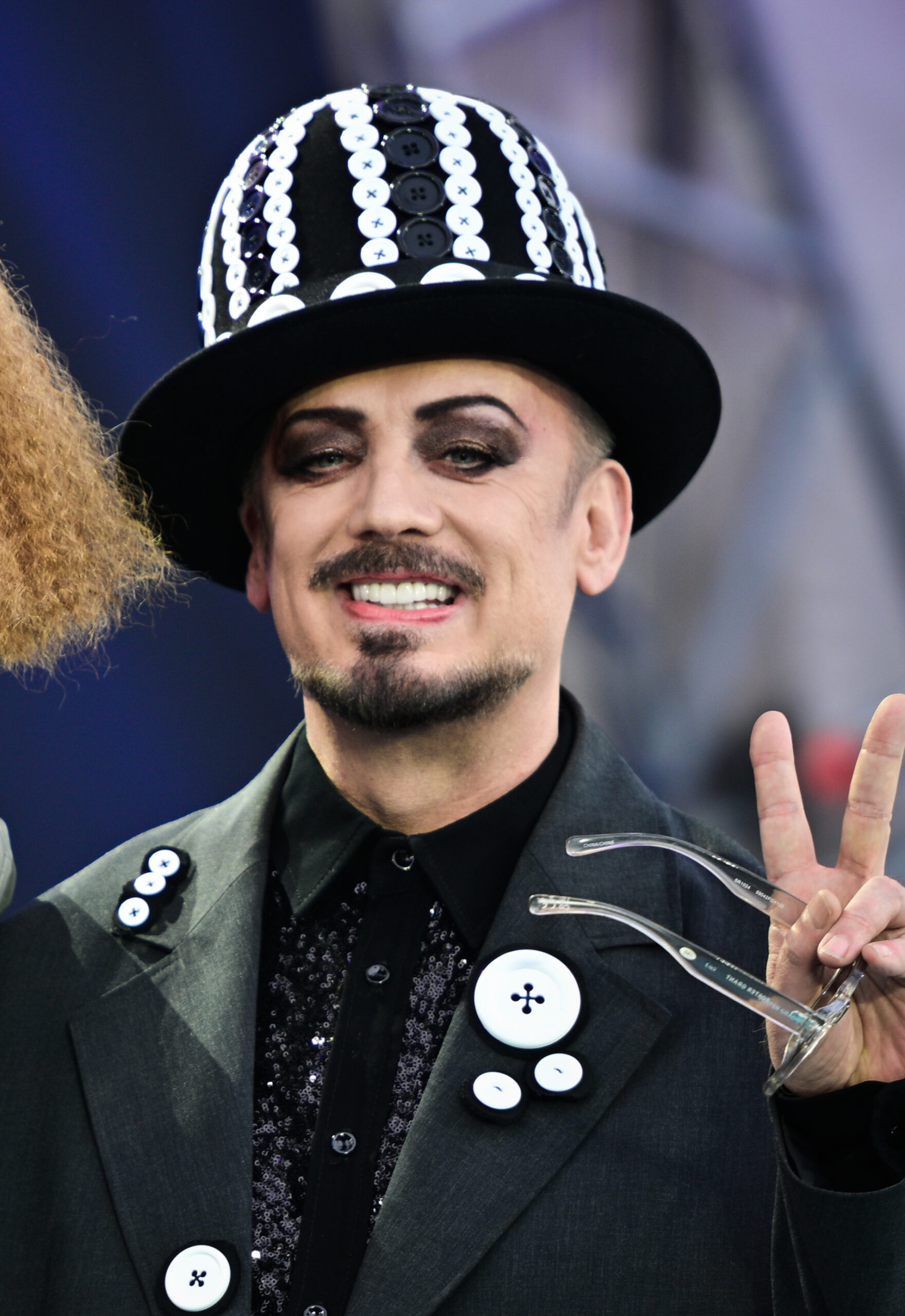
Boy George and Culture Club deserve to be in the Rock and Roll Hall of Fame. #Powerjournalist Markos Papadatos shares his reasoning.
The Rock & Roll Hall of Fame has always wrestled with a question that goes beyond guitars and amplifiers: What exactly is “rock and roll”?
If the answer is innovation, cultural impact, fearless artistry, and music that changes the direction of popular culture, then Boy George and Culture Club should already be enshrined in the hallowed Cleveland institution. Their absence isn’t just an oversight—it’s one of the Hall’s most glaring omissions (along with the failure to induct Melissa Etheridge this year).
When Culture Club exploded onto the international scene in 1982, they weren’t merely another British pop band riding the Second British Invasion. They were a phenomenon, and they were so many years ahead of their times (similar to the Eurythmics).
Culture Club’s blend of pop, soul, reggae, R&B, and new wave sounded unlike anyone else on Top 40 radio. Hits like “Do You Really Want to Hurt Me,” “Time (Clock of the Heart),” “Church of the Poison Mind,” “Karma Chameleon,” and “Miss Me Blind” weren’t manufactured trends—they became part of the soundtrack of the decade.
They were the first band since the Beatles to have multiple hits from their debut album reach the Top 10 on Billboard, and they were true pioneers of the Second British Invasion, and they made music history doing so.
Commercially, the numbers speak for themselves. Culture Club sold tens of millions of records worldwide, topped charts across continents, and became one of MTV’s defining acts during the network’s formative years. Their success wasn’t limited to one blockbuster album or a fleeting moment; they produced a remarkable string of international hits that have endured for more than four decades.
But record sales alone don’t earn a place in the Hall of Fame. Musical influence and perennial culture relevance does.
Boy George redefined what a global pop star could look like. At a time when gender expression in mainstream entertainment remained tightly policed, he challenged conventions with style, confidence, wit, and vulnerability. His appearance provoked conversation, but his voice commanded respect. Critics who initially focused on his image quickly discovered one of the most distinctive vocalists of his generation.
It’s difficult to imagine later artists such as George Michael, Prince’s continued mainstream acceptance, Annie Lennox, David Bowie in his renewed ’80s renaissance, or modern performers like Sam Smith, Harry Styles, and countless others enjoying the same freedom to blur gender expectations without acknowledging the trail Boy George helped blaze. He made ambiguity commercially viable without sacrificing authenticity.
The Hall has repeatedly demonstrated that its standards extend well beyond traditional rock. Disco icons, rappers, country artists, singer-songwriters, pop stars, and soul legends have all found deserved places because the institution recognizes that rock and roll is ultimately about cultural impact rather than instrumentation.
If Madonna belongs—and she absolutely does—then Culture Club deserves equal consideration. If ABBA belongs—and rightly so—then Culture Club’s exclusion becomes even harder to justify. The Hall has wisely embraced artists whose influence transcended genre. Culture Club fits comfortably within that broader definition.
Critics sometimes dismiss the band as lightweight pop, but history has proven otherwise. Listen again to the sophisticated songwriting of “Victims,” the Motown-inspired exuberance of “Church of the Poison Mind,” or the emotional subtlety of “Do You Really Want to Hurt Me.” Beneath the colorful visuals was an exceptionally tight band with genuine musical depth. Bassist Mikey Craig, drummer Jon Moss, guitarist Roy Hay, and Boy George together created a sound that was instantly recognizable—a rarity in any era.
Perhaps Culture Club has become a victim of its own accessibility. Songs that become woven into everyday life often lose the aura of “importance” precisely because they’ve become so familiar. Yet enduring popularity is not evidence against greatness; it is evidence of it.
The Rock Hall also has an obligation to tell the story of popular music accurately. That story cannot be fully told without acknowledging artists who expanded the industry’s understanding of identity, performance, and mainstream acceptance. Boy George wasn’t simply a singer with unforgettable style; he helped redefine the boundaries of celebrity itself.
Forty-plus years later, Culture Club’s music continues to fill dance floors, movie soundtracks, television shows, playlists, and concert venues. New generations discover them not as nostalgia but as timeless pop craftsmanship.
Hall of Fame induction should recognize artists who changed music, changed culture, and left an unmistakable legacy. By every meaningful measure—commercial success, musical innovation, cultural influence, visual impact, and enduring relevance—Boy George and Culture Club meet that standard.
The Rock & Roll Hall of Fame often speaks of honoring those who shaped the soundtrack of our lives. It’s time to recognize one of the bands that helped define an entire musical era. For all of theses aforementioned reasons and more, the #Powerjournalist firmly believes that Boy George and Culture Club have rightfully earned their spot to get inducted into the Rock and Roll Hall of Fame.