

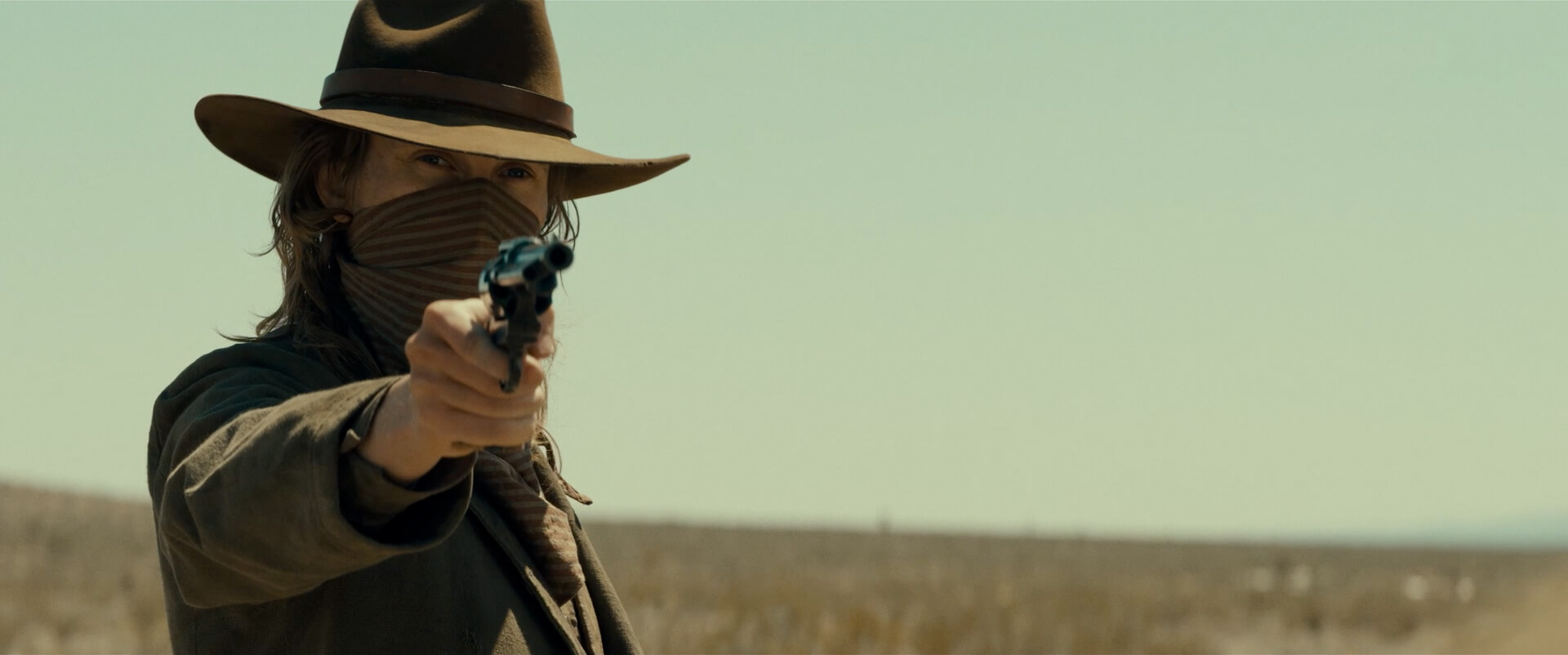
Actor James Paxton chatted with #Powerjournalist Markos Papadatos about starring in the new film “Last Train to Fortune,” which was directed by Adam Rifkin. He is the son of late “Titanic” actor Bill Paxton.
For James, “Last Train to Fortune” represented much more than another acting opportunity. Set in 1873 and steeped in the atmosphere of the Old West, the film offered Paxton an opportunity to step into a completely different era, which is something he had long dreamed of doing.
“My experience on ‘Last Train to Fortune’ was honestly unlike anything I’ve ever experienced on a film set,” he shared. “I was stepping into this period Western set in 1873, complete with period costumes and everything. I’d always wanted to do something that took place in a different era. It’s like my own form of time travel.”
That sense of discovery extended beyond the film’s period setting. For Paxton, “Last Train to Fortune” also provided an opportunity to be part of a story with a meaningful message, while maintaining a sense of fun, adventure, and warmth.
“It’s a fun, heartfelt, family-friendly, adventurous feature film that I really think has a little something for everybody,” he explained. “It kind of checked all the boxes for me. I’d always wanted to make a Western, and I grew up horseback riding, so it was a real dream come true.”
One of the most rewarding aspects of the experience was portraying Jedediah Dooley, a character whose exterior does not necessarily reveal his entire story. Beneath the tough outlaw persona lies a more complicated and emotionally layered individual.
“There’s more to him than meets the eye,” Paxton said. “When you meet him at the beginning, I don’t want to give too much away, but he’s not necessarily the person he projects himself to be.”
That duality gave him an opportunity to explore what he describes as a “performance within a performance.” Jedediah is consciously projecting an outlaw persona, but as his relationship with Malcolm’s character, Cecil Peachtree, develops, audiences begin to see the character’s complexities and emotional depth.
“As an actor, you always want to have things happening in the subtext and under the surface,” he noted. “You want to have a lot to play with, rather than something that is just one-note.”
The role also came with a memorable physical challenge: learning to spin guns. Although the firearms were replicas, they were weighted to feel authentic, requiring considerable preparation.
“I worked for months on that, and that’s all me doing it, it’s not VFX,” he revealed. “I was like, ‘I want to do it fast!’”
Behind the camera, working with director Adam Rifkin proved equally rewarding. Paxton praised Rifkin for his collaborative and supportive approach, emphasizing the importance of a director who makes time for communication with performers.
“Adam Rifkin is a wonderful director to work with,” he said. “He’s so collaborative, supportive, and really connected. Anytime I felt like I needed to talk to him about something, he always made the time for it.”
For Paxton, the screenplay itself offered a personal reminder of the importance of teachers and mentors. The relationship between the two central characters reflects that idea, with both men possessing different kinds of knowledge and ultimately learning from one another.
“I’ve had a lot of wonderful teachers,” he reflected. “This is a real dedication to all of them.”
That theme of meaningful storytelling is something Paxton has carried throughout his career. He points to ‘Eyewitness’ as another particularly significant project, one that offered audiences something beyond entertainment.
“’Eyewitness’ will forever be one of the most special projects for me because it taught me so much about what it means to come to terms with accepting and loving yourself, and about how love exists on a spectrum,” he said.
Perhaps most meaningful were the personal messages he received from viewers who found something deeply relatable in his performance.
“I love receiving letters from people saying, ‘Your performance helped me come out to my dad,’ or ‘Your performance helped me come out to my mom or my best friend,’” he shared. “That means the world to me.”
For him, acting is ultimately about participating in stories that have something meaningful to contribute.
“I want to tell important stories… stories that help us reflect on and make sense of this wild experience of existence that we’re all having,” he explained. “Entertainment value is great and all, but I want to be part of things that are important, too.”
As for the current chapter of his life, Paxton sees it as a period of reinvention and continued creative exploration. He is particularly interested in championing and producing projects that have something positive or thought-provoking to say.
“I’m still adapting and finding ways to move forward creatively,” he said. “I’m still really swimming upstream, but, like we all are, I’m finding my way.”
His approach to acting has also been deeply influenced by his late father, Bill, who played an important role in shaping his understanding of the craft. While initially hesitant about his son entering the entertainment industry because of the challenges and disappointments that can accompany it, his father imparted lessons about persistence, humility, and separating one’s ego from the work.
“He always taught me things like, ‘Persistence is everything. It’s a war of attrition. Keep moving forward’,” Paxton recalled.
Another lesson proved especially valuable: remembering that the character, rather than the actor, is at the center of the moment.
“That always helped me because it got me out of my own insecurities and out of my own head as an actor,” he said. “It allowed me to perform from the character’s truth, and that’s what’s most important.”
That philosophy speaks to his broader view of acting. “Actors should be vessels for the writing and the characters,” he reflected, while acknowledging that performers inevitably bring something of themselves to each role.
“My father was everything to me… he was my best friend and I miss him all the time,” he said.
When the conversation turned to the idea of superpowers, Paxton listed “diffusing conflict” as his ideal answer, thus concurring with this journalist. “That would be a great superpower because it would help in this world,” he admitted.
Success, meanwhile, has little to do with fame or accolades for him. At its heart, success means maintaining meaningful relationships with the people he loves.
“Success means never losing track of or losing touch with my family and my closest friends,” he said. “I want to maintain a deep connection with all the people who have helped me throughout my life and whom I love dearly.”
Paxton added that he hopes to build a life rich with friendship, connection, and meaningful relationships while acknowledging, with a touch of humor, that paying the bills is also part of the equation.
Ultimately, Paxton hopes audiences walk away from “Last Train to Fortune” with both a smile and a renewed appreciation for the people who inspired you in your life. “It’s a heartfelt movie, and there is no gratuitous or graphic violence in there. People of all ages can go and see it. It’s fun and a wholesome film that people can find solace in,” he said.
To learn more about James Paxton, follow him on Instagram.