
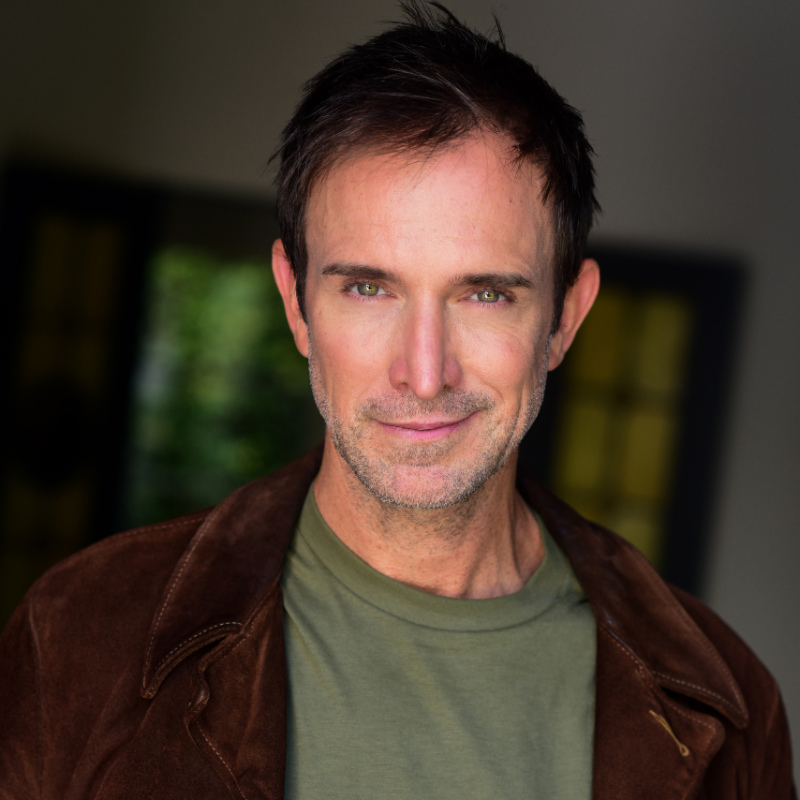
Actor and TV host Zay Harding chatted with #Powerjournalist Markos Papadatos about Season 3 of “The Visioneers,” sustainability, and the power of making a difference
Harding is celebrating another exciting chapter of “The Visioneers,” with Season 3 bringing viewers an inspirational journey around the world to discover innovative people, groundbreaking ideas, and creative solutions for a more sustainable future.
For Harding, the latest season represents another dream come true. He believes Season 3 is the best one yet, and the excitement surrounding the series continues to grow.
“This is all just such a dream,” Harding said. “Season 3, I think, is the best season yet. It’s just been incredible. Each one, I keep looking at the director and going, ‘This is like our best one.’ Then, I keep saying that throughout the whole season. So, yeah, it’s very exciting.”
Harding recently had the opportunity to watch one of the episodes while visiting Florida. The episode was playing at the hotel where he was staying, and everyone stopped to watch. “It was just very exciting,” he recalled.
Exploring sustainability around the world
Season 3 takes viewers across America and beyond, including Alaska and Hawaii, two states that are geographically separated from the continental United States.
For Harding, the opportunity to return to Hawaii was particularly meaningful, since it is his home state. He was able to spend a week with his parents and family before filming.
“I’m from Hawaii, so it was really great to be back,” he said. “It’s always nice to show off my home state, which is an absolutely gorgeous state, but it’s neat to see them really embracing this challenge to utilize what they have out there to come up with creative, sustainable solutions to help the planet.”
The season also explores Singapore, where nature and architecture come together in remarkable ways.
Harding explained how the city is committed to replacing green space whenever it is removed for new developments. Buildings are incorporating greenery throughout their structures, from the sidewalks to rooftops and beyond.
“It’s just an incredible integration of nature with architecture,” he noted. “Everywhere you look, you’re just seeing green mixed with buildings. It’s a real mixture, which feels like a jungle, which is really neat.”
The journey also includes Australia and the Great Barrier Reef, a rainforest, and New Zealand, where the production explored the fascinating potential of geothermal energy.
One particularly memorable experience involved using geothermal heat from the earth to cook food.
“We were using the geothermal heat coming up from the earth to cook,” Harding explained. “It’s like always boiling water, so they’re cooking their vegetables in there, and we met up with a Maori tribe that lives right next to it.”
He was fascinated by how generations of the Maori community had learned to live alongside this powerful natural resource, despite its unpredictable nature.
“It’s pretty crazy how close they are to it because it’s giving off such heat and it feels unpredictable. It randomly spits out stuff like a geyser, but they’re right there and they’re talking about generations always having utilized it.”
The community has also figured out how to harness geothermal energy to generate electricity throughout the northern island.
Innovative ideas making a difference
Beyond the breathtaking destinations, “The Visioneers” introduces viewers to people who are finding innovative ways to address environmental challenges.
Harding discussed a third-generation farmer who discovered a creative way to repurpose old orange trees that no longer produce fruit. Rather than burning the trees and creating pollutants, the farmer uses a carbon-capturing machine to turn the charcoal into biochar.
The material retains a certain sponginess that allows it to hold moisture.
“On a microscopic level, they figured out that in the size of a quarter, there’s enough biochar there to spread out throughout a whole football field,” Harding explained. “And it will hold the moisture 40% more than it would otherwise.”
The farmer is now packaging the biochar and helping other farmers. Golf courses in California have also been using it and reporting that they can significantly reduce their water consumption.
Another innovative operation featured in the series is Four Roots, which uses aquaponics and shallow-water greenhouses to produce fresh fruits and vegetables.
Harding also highlighted the Annenberg Wildlife Crossing in California, the biggest wildlife crossing in the world.
Having lived in California for many years, he remembered learning about the mountain lions, or pumas, that were struggling to survive because the 101 Freeway prevented them from moving freely across their natural habitat.
The wildlife crossing is designed to restore that natural movement and help protect the animals.
“I’ve been on it because we went to film, and you could barely hear the freeway underneath it,” he said. “They’ve done something with the walls with sound. It blocks off the sound. Eagles are flying above.”
For Harding, the project is an example of what can happen when people commit themselves to protecting the environment.
“It’s incredible what the mind can do,” he said. “It’s incredible what we can do when we put our minds to it.”
He also emphasized the importance of recognizing that wildlife is an essential part of the larger ecosystem.
Learning from nature in Alaska
One of the most fascinating destinations in Season 3 is Kodiak Island in Alaska, where Harding and the crew explore the relationship between the local population, wildlife, and sustainability.
The bears on the island are protected, and the community is committed to maintaining their growing population.
“They are 100 percent sustainable, the people there, but so are the bears,” Harding said.
He explained how the bears have inspired the community through their natural relationship with the environment.
The bears eat berries, and their droppings help spread the seeds, allowing more berries to grow. Their consumption of salmon also contributes to the soil through the nutrients in their droppings.
The island’s natural resources are being used in equally thoughtful ways. With abundant natural rainwater, residents are harnessing resources through wind turbines and water reserves, finding ways to distribute water throughout the year without having to spend anything to be there.
The production also explores glaciers and how satellites continuously monitor them.
Harding described visiting the Mendenhall Glacier in Alaska and the powerful experience of seeing such an important natural resource firsthand.
“It’s very powerful being up there, but it also makes you realize how fragile it is,” he said. “We do need to think about what we’re doing.”
He believes younger generations are increasingly conscious of how their actions affect the planet and are motivated to make more environmentally responsible choices.
The impact ‘The Visioneers’ has had on his everyday life
Working on a sustainability-focused television program has also influenced Harding personally.
He reflected on the idea that hearing or seeing something may help someone remember it, but actually doing something is what leads to a deeper understanding.
“It’s really doing things that make you know to understand them,” he said.
Although Harding and the production crew are entertainers rather than scientists, they have embraced the opportunity to make their own working environment more sustainable. The crew now carries reusable water bottles instead of relying on disposable plastic bottles, and the production operates as a no-plastic set.
At home, Harding has introduced composting with his family and makes an effort to reuse shopping bags. He also encouraged people to consider the small changes they can make in their everyday routines.
“There’s little things that we can do, but you really don’t understand it until you try it,” he said.
His advice includes turning off lights when leaving a room, switching off the television, and being mindful of heating, air conditioning, and water consumption. “Use what you need and then turn it off,” he advised.
Season 4 is already in the works
The excitement doesn’t stop with Season 3. Harding revealed that Season 4 has already received the green light, and production has begun.
The upcoming season will feature additional filming in Europe and across the United States.
Among the Season 3 innovations that particularly demonstrate the show’s sustainability message are projects that repurpose materials that would otherwise end up in landfills.
One example involves collecting leftover battery components and combining them to create generators.
Another fascinating initiative comes from Chop Value in Vancouver, which has partnered with the airport to repurpose used chopsticks.
The company cleans and compresses the chopsticks, transforming them into building materials and wood blocks.
Harding sees this as an exciting example of how seemingly disposable materials can be given a second life.
“Keeping things out of our landfills is big because what that does is it just decays and goes into our soil, then our oceans, into our fish, and then our fish, if we eat fish, go back into us,” he explained.
“We need to protect our oceans, and it starts with the landfills. So if there’s anything we can keep out of landfills, then that’s a huge one.”
Another project features a woman who takes old jeans, shreds them, and transforms them into insulation for buildings.
The material provides an alternative to conventional insulation, helping reduce the use of harmful chemicals while repurposing clothing that would otherwise be discarded.
For Harding, these projects represent the central message of the new season: finding ways to become more sustainable with the resources already available.
“That’s really what we’re going to see a lot of in Season 3, is how can we be more sustainable with what we have,” he said.
Message for the fans
Harding also expressed his gratitude to the viewers who have supported “The Visioneers” and helped the program continue to grow.
He said the show started strongly and has continued to attract an increasing audience every weekend.
One of the most encouraging aspects has been the show’s retention rate, with viewers continuing to watch once they begin an episode.
“Once people start watching the show, they hang on until the end. That’s proof that this is worth watching,” he said.
One particular interaction with a young fan has stayed with him.
Harding recalled a child running up to him and giving him a hug. When the child’s mother apologized, Harding reassured her that everything was fine.
She explained that her son watched him every weekend.
“And I thought, ‘Oh my gosh, this is so amazing,’” Harding recalled.
He appreciates the support and hopes viewers will continue spreading the word about the series.
“We’re all in it together, and it can only benefit us all if we keep exposing ourselves to these great innovative people called Visioneers that we’re featuring every weekend,” he said.
Harding defines success
When asked what success means to him, Harding offered a thoughtful response.
“Success to me means being able to go out there, do what you know is the right thing and love it and be able to spread that,” he said.
He has always wanted to support himself through entertainment, and he feels fortunate that he is now able to accomplish that while participating in a program that also benefits the planet.
“This is just so uplifting for me,” he shared.
He added that the entire crew frequently discusses how fortunate they are to meet so many incredible innovators.
“We could be doing any type of program, but the fact that we’re getting to meet all these amazing innovators is so encouraging and exciting, and it’s just hopeful.”
Harding on his continued connection to Hollywood
Although Harding has spent the last five years living in London with his wife and daughter on a global talent visa, he maintains a strong connection to Los Angeles, where he lived for more than 20 years and still has a home.
He remains fascinated by Hollywood’s extraordinary influence around the world.
“No matter where you are on the planet, there’s some sort of influence that Hollywood is producing, whether it’s with a commercial or a film or television or a celebrity,” he said.
Harding appreciates being able to remain part of Hollywood while using the platform of CBS to introduce audiences to remarkable innovators and alternative solutions that can help protect the planet.
“I love that I’m getting to still be part of Hollywood, but use the platform of CBS to actually show off some amazing people and some good solutions, alternative solutions to what we can do to help our planet,” he said.
With Season 3 of “The Visioneers” showcasing inspiring people, remarkable destinations, and innovative approaches to sustainability, Harding hopes audiences will come away feeling encouraged about the possibilities for the future.
His enthusiasm for the series is evident, and his message is simple: meaningful change can begin with the resources we already have, the choices we make, and the willingness to do something positive for the planet.
To learn more about Zay Harding, follow him on Instagram.