

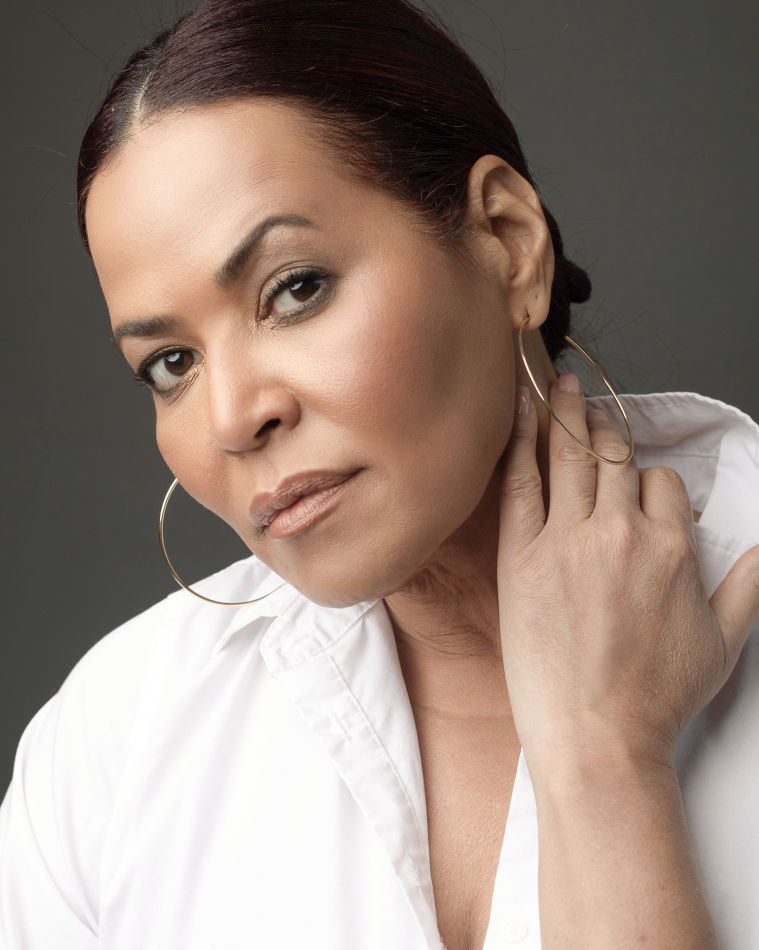
Judy Torres chatted with #Powerjournalist Markos Papadatos about her new book “No Reason to Cry: A Memoir,” reflects on her freestyle legacy, resilience, and finding her purpose.
Affectionately known as the “Queen of Freestyle,” Torres gets candid about overcoming depression, discovering her voice, the healing power of music, and her dreams of giving back to the next generation.
Judy Torres has spent decades making people dance, smile, and sing along to some of freestyle music’s most beloved songs.
The Bronx-born singer has built an extraordinary career on her unmistakable voice, infectious energy, and genuine connection with her fans. Yet behind the music and the celebratory moments on stage is a deeply personal story of resilience, self-discovery, and triumph over adversity.
In this candid and informed interview, Torres opens up about her forthcoming book “No Reason to Cry: A Memoir,” which explores some of the most challenging chapters of her life, including her struggles with depression, a suicide attempt in 1994, and the long journey toward healing and self-acceptance.
Inspiration to write this book
For Torres, writing the book has been much more than putting memories on paper. It has been an opportunity to reclaim her voice, revisit her past, and hopefully inspire others who might be navigating their own difficult journeys.
The inspiration for the book dates back to 1994, when Torres experienced what she describes as a rock-bottom moment.
“I started writing it back in 1994 after I had a rock-bottom moment,” she recalled. “Everything that happened there was so crazy and chaotic that I thought it would make a good story one day to tell.”
Although she initially began documenting her experiences, the project remained unfinished for many years. Around 2014, she returned to the manuscript, determined to continue telling her story.
Eventually, a friend gave her the encouragement she needed to finish what she had started.
“My friend said to me, ‘You know, Judy, you’re not getting any younger,'” she recalled with a laugh. “For some reason, that scared the Jesus out of me. I was like, wow, he’s right.”
Torres explained that leaving something unfinished can create a lingering sense of uncertainty about what might have been.
“The worst thing is to have something hanging. You start something and you didn’t finish it. To me, that’s like the worst thing you could do in life,” she said.
One of the most significant differences between the book she began writing in the 1990s and the one she is presenting today is the emotional perspective from which she tells her story.
Dealing with depression
In her younger years, Torres was dealing with depression, something she believes may have affected her from childhood. She spoke openly about recognizing her struggles as a teenager and experiencing them again in her twenties.
In 1994, she attempted suicide, a deeply painful chapter that she now discusses with remarkable honesty and perspective.
“I’m glad to say that it was something I failed at,” she said. “I usually don’t fail at things. I’m glad I failed at that.”
Today, she is able to look back with a different understanding of herself and her circumstances.
“I feel like I’m writing from a place of healing instead of hurt,” Torres explained.
That distinction is central to the book’s emotional journey.
The healing power of putting her story on paper
Asked whether writing the book was a cathartic process, Torres was unequivocal. “It was,” she said. “I think any time you’re putting something from your brain to your hands to the paper, it’s cathartic.”
She also reflected on the importance of journaling and expressing one’s feelings through writing, noting that the process can help people better understand and acknowledge their emotions.
However, revisiting painful memories was not always easy.
“Sometimes it was hard because you literally, in order to write about your life, you literally have to go back there and you’ve got to relive it,” she explained.
Through that process, Torres discovered something particularly meaningful about her own journey: the connection between finding her voice as a singer and learning to express herself as a person.
Lessons learned from writing this book
One of the lessons the book taught her was just how much she had grown. “It taught me I’ve come a long way. It taught me that I’ve learned a lot,” she said.
Torres believes that one of the reasons she experienced depression was that her voice had been suppressed during her childhood.
Growing up in a household where there was violence, she often remained silent because she feared the repercussions of speaking up. She also worried about adding to her mother’s stress and chose to keep many of her feelings to herself.
“I learned that when I was quiet, I kind of went under the radar,” she said. “But being quiet never serves anyone. Shrinking yourself because you’re afraid never helps you.”
In retrospect, music became her outlet and a way to release emotions she had struggled to communicate.
“I think that one of the reasons I became a singer was because that was my outlet. That was my way to let my voice out,” she said.
With a smile, she added that the powerful belting and expressive performances audiences have come to love were also a way of releasing the emotions she had once kept inside.
Turning personal experiences into powerful music
For Torres, music and personal expression are inseparable. That emotional honesty also informs her songwriting.
When asked what inspires her creatively, Torres pointed to personal experiences, particularly those that challenge people emotionally.
“I think personal experiences always inspire writing,” she said. “I think especially the more traumatic, the better the songwriting.”
She believes artists and songwriters often possess a sensitivity that allows them to explore emotions that other people may struggle to articulate.
“For many songwriters and artists, they are willing to go and express themselves from a harder place where most people don’t have words. The artist will find the words for it,” she explained.
It is a fitting description of Torres’ own artistic journey. Throughout her career, her music has connected with listeners who have found comfort, nostalgia, and emotional understanding in her songs.
The Queen of Freestyle: An honor and a responsibility
Of course, no conversation with Torres would be complete without discussing her extraordinary legacy in freestyle music.
Being recognized as the “Queen of Freestyle” is something she embraces with enthusiasm, humor, and gratitude.
“Who doesn’t want to be called the queen? It’s an awesome title,” she said. “It’s like, where’s my crown?”
Beyond the flattering title, however, Torres understands that it carries a certain responsibility.
She explained that she feels a personal obligation to deliver an exceptional performance every time she steps onto a stage.
“When I go on stage, I’ve got to give a good show,” she said.
For Torres, the responsibility extends beyond singing the hits and entertaining an audience. She wants people to leave her performances feeling better than they did when they arrived.
“How do I make sure that people feel better after they see me than when they walked in the room? That’s where I think the responsibility lies,” she explained.
Her goal is to help audiences temporarily put aside their everyday problems and enjoy themselves.
“My job is to, for a little while, help people forget their problems and take them to a place where they can just enjoy and laugh and have a good time and sing along and be nostalgic,” she said.
It is a beautiful philosophy from an artist whose music has become part of the soundtrack to countless lives.
Dreaming of a television series and giving back to the Bronx
Looking toward the future, Torres has some ambitious goals.
Naturally, she hopes her book becomes a bestseller. But she also has her sights set on bringing her life story to television.
“I would like it to do well enough that I can get a limited series, a limited television series,” she revealed.
In fact, she already has an actress in mind to portray her.
“In my mind, it keeps coming to me that it should be six episodes and Justina Machado should play me,” she said.
It is an exciting possibility that would allow an even wider audience to experience the remarkable story behind the music.
Torres also hopes to continue her motivational speaking work and eventually establish a nonprofit organization in the Bronx called Dream Catchers.
The idea is particularly personal because of her own childhood experiences growing up in the borough.
She envisions a building with different classrooms where young people could explore the arts, including singing, dancing, photography, acting, and fashion design.
Her goal would be to make these opportunities available for free or at a very affordable cost, with celebrities visiting on weekends to conduct workshops.
Growing up, Torres knew what she wanted to pursue, but financial limitations often prevented her from accessing the resources she needed.
“My mom didn’t have the money for voice lessons. So how can I learn how to sing? How can I learn about music? How can I play an instrument when I have nowhere to go?” she recalled.
She also explained that her academic achievements sometimes came at the expense of opportunities to explore her artistic interests.
Because she was an honors student, she was required to take advanced academic courses rather than electives such as music, art, and home economics.
Now, she hopes to help create the opportunities she wished she had as a young girl.
Advice for the next generation of artists
Torres also offered thoughtful advice to emerging artists who are hoping to establish themselves in the entertainment industry.
Her first recommendation is to understand their motivation. “Get really clear about why you’re doing this,” she advised.
She encourages aspiring performers to ask themselves whether they are pursuing a career for fame or because they genuinely want to contribute something meaningful through their art.
Neither motivation necessarily excludes the other, but knowing the answer is important.
Equally important is understanding one’s identity as an artist.
“What message do you want to give to people? How do you want to inspire other people? When people listen to your music, what do you want them to feel?” she asked.
Torres cautioned that artists who do not have a clear sense of their identity can easily allow other people to dictate their creative direction.
She pointed out that even opportunities with major record labels can become challenging if artists have not established what they want to communicate through their music.
“If you don’t know who you are and how you want to express your music, someone else will tell you how to do it,” she explained.
Her advice is simple but powerful: know yourself, understand your message, and remain true to your artistic identity.
The next chapter: Discovering her future self
At 58, Torres is also embracing a new period of personal reflection.
When asked to describe the current chapter of her life, she offered a particularly intriguing title: “Who is Your Future Self?”
She explained that she is actively considering where she wants to be geographically, mentally, and spiritually, while figuring out how she can continue growing and evolving. “I don’t like staying the same,” she admitted.
She also acknowledged that getting older has given her a heightened awareness of how precious time is.
Seeing people around her experience illness and become more fragile has reinforced her desire to make every day meaningful.
“I feel the pressure more to make my life meaningful and not waste time,” she said.
It is an outlook that perfectly complements the themes of her book: personal growth, self-awareness, resilience, and the importance of making the most of one’s life.
Compassion, empathy, and the meaning of success
When asked what superpower she would choose, Torres did not hesitate. Her first choice would be the ability to heal people, whether their suffering is physical or emotional.
She also offered another fascinating possibility: giving people the ability to experience life from someone else’s perspective. If everyone could spend a day walking in another person’s shoes, she believes the world would become a more compassionate place.
“We would have a lot more compassion for people,” she said.
Torres observed that many people carry private struggles while presenting a seemingly happy exterior to the world. People routinely exchange pleasantries without necessarily knowing what someone else might be experiencing.
Her wish is for people to develop a deeper willingness to listen, understand, and recognize the challenges others face. That philosophy also informs her definition of success.
“To me, success means living in alignment with your purpose,” she explained. “Finding out what your purpose is and then living that.”
She added that peace of mind and remaining true to oneself are equally important. For someone who has spent decades in an industry where public opinion and audience approval can influence a career, that perspective is particularly meaningful.
Torres acknowledged that performers naturally want people to like them, but ultimately, artists must understand who they really are.
Message to her fans
Throughout her career, Torres has developed an incredibly loyal fan base, and she is deeply appreciative of the people who have supported her journey.
When asked what she would like to say to those fans, her answer was immediate and heartfelt.
She recalled numerous encounters with fans who have shared deeply personal stories about how her music helped them navigate difficult moments in their lives.
Some have told her that her songs provided comfort during challenging periods, while others have shared that her music gave them a reason to keep going.
She specifically mentioned her song “No Reason to Cry,” recalling fans who have told her how meaningful it has been during their darkest moments.
Those interactions have also reminded her that artists are human beings who experience their own struggles.
Sometimes, she explained, a performer may be having an especially difficult day but still has to find the strength to get on stage and make an audience happy.
Yet the connection goes both ways.
“When you see the smiles on their faces, you realize they got you through it too,” she said.
It is one of the most touching revelations of the interview: the fans who have found strength in Judy Torres’ music have also given her strength in return.
Finding the reason not to cry
Ultimately, Torres hopes readers will take away a message of hope, healing, and spiritual growth from her new book.
She wants people to understand that painful experiences do not necessarily define their futures and that even the most difficult chapters can eventually lead to personal transformation.
“I’m hoping that the book inspires people to realize that everything bad that happens is not happening to you, it’s happening for you,” she explained.
She also believes that the people who hurt us can sometimes become our greatest teachers, helping us discover strengths and perspectives we might never have developed otherwise.
Her closing sentiment brings the entire conversation full circle, connecting her personal journey, her music, and the emotional message behind her book.
“If you just hang in there long enough, you will find that in the end, there really is no reason to cry, that you’re going to get through it, you’re going to be okay.”
For Judy Torres, this new chapter is about much more than celebrating a remarkable freestyle legacy. It is about embracing vulnerability, reclaiming her voice, inspiring others, and using her experiences to make a difference.
The Queen of Freestyle has spent a lifetime giving audiences reasons to dance. Now, through her book and her desire to help others, she is offering something equally powerful: a reason to hope.
To learn more about Judy Torres and her new book, follow her on Instagram and visit her official website.