
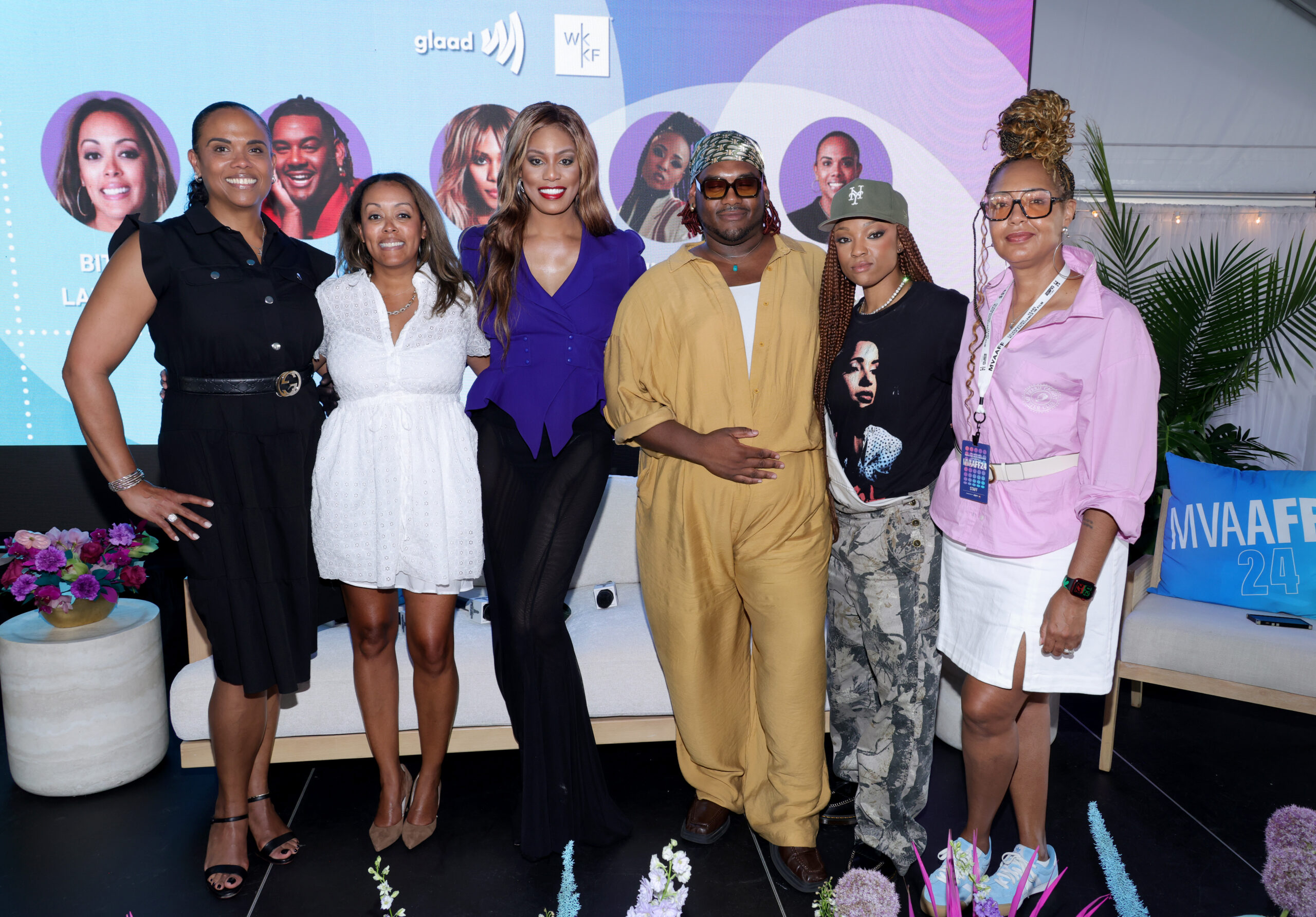
On Sunday, August 9th , GLAAD, the world’s largest lesbian, gay, bisexual, transgender, and queer (LGBTQ) media advocacy organization, hosted a panel at the Martha’s Vineyard African American Film Festival. #Powerjournalist Markos Papadatos has the recap.
It explored how film and visual storytelling can shape culture, influence perception, and expand what is possible for Black LGBTQ communities.
Reel Change: Black Film, Culture, and the Stories That Shape Us featured Emmy award winning actress, producer, and activist Laverne Cox, ViiV Healthcare Head of Enterprise Communications Bithiah Lafontant, podcast host and cultural strategist Ryan Mitchell, and Emmy Award–winning filmmaker & activist Nneka Onuorah.
The panel focused on the role of narrative change and examined how stories on screen can challenge harmful stereotypes, affirm the full complexity of Black LGBTQ lives, and provide images and stories that better LGBTQ young people today. In bringing together leaders across media, advocacy, and culture, the discussion highlighted why storytelling is not only creative expression, but a critical strategy for connection, youth development, and lasting social change.
GLAAD’s most recent Where We Are on Film report found an alarming decrease in LGBTQ and HIV stories in the 225 films released by the ten leading film distributors last year. This is the third consecutive year that GLAAD tracked a decline. This year’s report also found:
- LGBTQ characters of color decreased by 36%.
- There were zero transgender characters in films from major film distributors
- Only two characters were depicted living with HIV, both in one single film. As depictions of HIV in the media continue to decline, GLAAD reports that outdated assumptions, misinformation, and stigma are rising.
- According to data highlighted by GLAAD partner ViiV Healthcare, Black and African American individuals account for 37% of new HIV cases despite making up just 12% of the U.S. population. Black women are among the most disproportionately affected, representing half (50%) of all new diagnoses among women.
Panelists at the Martha’s Vineyard African American Film Festival responded to the data:
Laverne Cox on the need for increased representation
“And it’s never been about positive or negative representations. It’s about more, because everyone’s not going to connect to everything, but the more we have, the more possibilities that people can see themselves in representation.”
Laverne Cox on HIV Stigma and healing through inclusive storytelling
“Having a trauma informed approach to how we stigmatize things and how we make work as artists I think is really important and the stigma education helps unravel the stigma. A dear friend of mine said, when he watched ‘Pose’, because he was in New York, during the height of the AIDS crisis, he said there was trauma that he hadn’t even processed. Because he was in a space where people were dying every other day, he watched all of that trauma, and he hadn’t given himself space to process it until 30 years later while watching ‘Pose’. He let himself cry, he let himself grieve, and that is the power of beautiful art. There’s so much trauma that we’re all holding, and a beautiful story, a beautiful film, a beautiful interview on a podcast can help release that for people and heal people.
Bithiah Lafontant on moving beyond trauma-centric narratives
“I think where we are now, in this moment, we need to see stories where people are just who they are, and it doesn’t have to be a story of trauma. Where are the love stories? Where are those moments where people just see themselves living, happy, peaceful, joyful, the whole human experience?”
Nneka Onuorah, Emmy-Award winning filmmaker, on the shared humanity of LGBTQ individuals
“So I like to show that LGBTQ+ people are not just sexual beings that are focusing on their sexuality, but there’s humanity in us, and we all need to connect with humanity.”
Nneka Onuorah on showcasing hope and reconciliation
“So a lot of my work is showing us what hope looks like. Showing us what relationship repair looks like with a parent and their child when your mom doesn’t want you to come home on Thanksgiving or you have to walk into a church and know everybody’s talking about you or whispering about you.So the work that I’m doing is focusing on us getting active about our healing and showing what love could look like if we all come together on our differences. And so I’m gonna keep saying that over and over, whether it’s an animation, whether it’s a scripted project, whether it’s a documentary. One of my films that played in this festival, Martha’s Vineyards Film Festival, is actually called ‘Truth Be Told’ and it is about the LGBTQ+ experience in the Black Church. There’s a lot of oppression within churches and within religion that kills us from the inside and kill our families from the inside. ”