

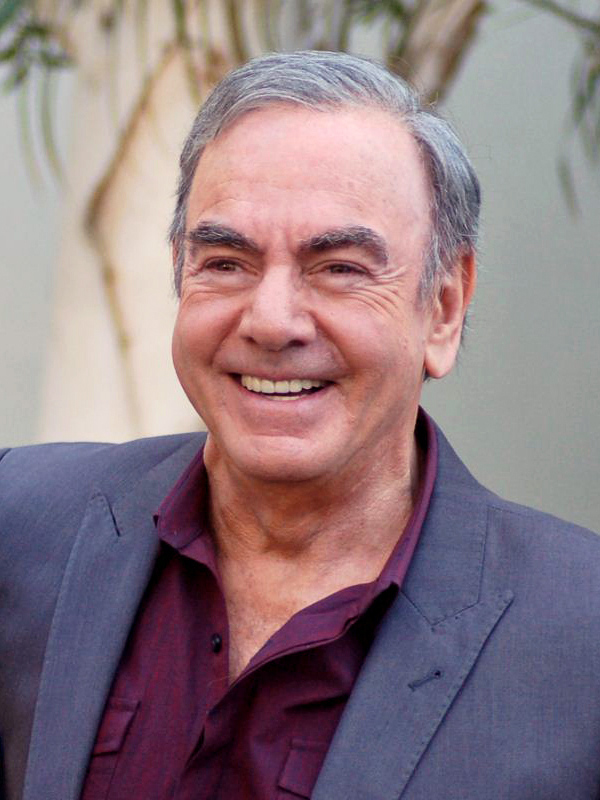
Neil Diamond deserved a coveted spot among The New York Times Magazine’s “30 Greatest Living American Songwriters” list. #Powerjournalist Markos Papadatos has the reasoning in this convincing op-ed.
There are certain songwriters whose work transcends generations. Their songs become part of weddings, road trips, family gatherings, movies, television shows and, perhaps most importantly, our memories.
Neil Diamond is one of those songwriters and storytellers, who happens to be one of this journalist’s greatest musical heroes in life.
Not only has he been inducted into the Songwriters Hall of Fame back in 1984, but he was subsequently recognized with the coveted “Johnny Mercer Award,” the highest honor from the Songwriters Hall of Fame in June of 2018.
That is why his absence from The New York Times Magazine’s “30 Greatest Living American Songwriters” list is striking.
This “list,” unveiled in 2026 after input from hundreds of musicians, critics, historians, DJs and industry executives, is an ambitious attempt to celebrate the craft of songwriting. It includes an extraordinary collection of artists spanning generations and genres. The undertaking itself deserves recognition.
But when the conversation turns to the greatest living American songwriters, Diamond’s name belongs in that conversation.
This isn’t simply about the number of hit records he has sold or the number of famous singers who have recorded his compositions. It is about the remarkable ability to write songs that sound deeply personal while becoming universally familiar.
“Solitary Man.” “Cherry, Cherry.” “Sweet Caroline.” “Cracklin’ Rosie.” “I Am… I Said.” “Play Me.” “Song Sung Blue.” “America.” These aren’t merely titles in a discography. They are part of the American musical vocabulary, and the Great American Songbook.
Diamond possessed something that is extraordinarily difficult to teach: an unmistakable emotional voice.
He could write about loneliness without making it inaccessible. He could write about romance without embarrassment. He could take uncertainty, nostalgia, desire and hope and turn them into melodies that millions of people could immediately understand.
That directness is sometimes misunderstood.
Diamond’s music has occasionally been dismissed as sentimental or overly theatrical. Yet sincerity can be a remarkably difficult artistic quality to sustain. Diamond rarely hid behind irony. He put emotion directly on the table and trusted the listener to accept it.
That quality is central to his legacy as a songwriter.
Long before he became one of the most recognizable performers in popular music, Diamond was a songwriter working in New York. His early career included writing songs that became hits for other artists, most famously “I’m a Believer,” recorded by The Monkees. His own recordings subsequently established him as one of the defining singer-songwriters of his generation.
And then came “Sweet Caroline.” Few songs demonstrate the extraordinary cultural life of a composition better. Decades after its release, it remains instantly recognizable, communal and remarkably durable. It has traveled far beyond its original context and become a song that audiences collectively sing rather than simply listen to. It is timely and relevant, and people sing it today as if it’s the national anthem.
That is the power of songwriting. Diamond’s influence also extends beyond the songs he personally performed. His compositions have been interpreted by artists across genres and generations, demonstrating that the strength of the writing can survive changes in arrangement, voice and era.
Perhaps the most compelling argument for Diamond, however, is that he continued to take songwriting seriously long after he had nothing left to prove.
In interviews, Diamond described songwriting as the hardest and most personal thing he did. That attitude says much about the artist. Even after decades of success, he approached a new song not as an exercise in repeating his greatest hits, but as an attempt to discover something new.
That is the mindset of a songwriter. The Times list is inevitably subjective, and like most lists, it is meant to be provocative. Its own editors acknowledge that selecting the greatest songwriters is personal and debatable. The list is not a scientific measurement, nor could it be. Songwriting encompasses radically different traditions, from country and R&B/soul to hip-hop, rock, pop and folk.
Some of the artists who made the list are accomplished writers whose contributions deserve recognition to an extent, but recognition of one generation does not require forgetting another. Several of the choices (without naming names) are laughable, baffling, and obscure.
Neil Diamond’s legacy is too substantial to be reduced to nostalgia or catalog hits. His greatest songs continue to demonstrate the fundamentals of great songwriting: memorable melodies, vivid emotional storytelling, distinctive phrasing and an ability to make an individual experience feel shared. Perhaps that is ultimately what makes the omission so noticeable.
The question isn’t whether every listener must consider Neil Diamond one of the greatest songwriters of all time. Musical taste will always be personal.
The more difficult question is whether a serious examination of America’s greatest living songwriters can reasonably take place without a substantial discussion of Neil Diamond. For this writer, the answer is “no.”
He is a true trailblazer who broke down doors and barriers before many of the other people that were included on this list were even born. A true innovator and pioneer.
Take THAT New York Times Magazine!
This glaring omission of Neil Diamond failing to make this list is very serious. Neil Diamond wrote songs that people didn’t merely hear. They remembered them. They lived with them. They sang them. And decades later, they still do. That is more than a résumé. That is a songwriting legacy. His songs will stand the test of time. For as long as music will exist, there will always be Neil Diamond. Simply put, Neil Diamond IS “America’s Songwriter.”
To learn more about Neil Diamond, visit his official website.