
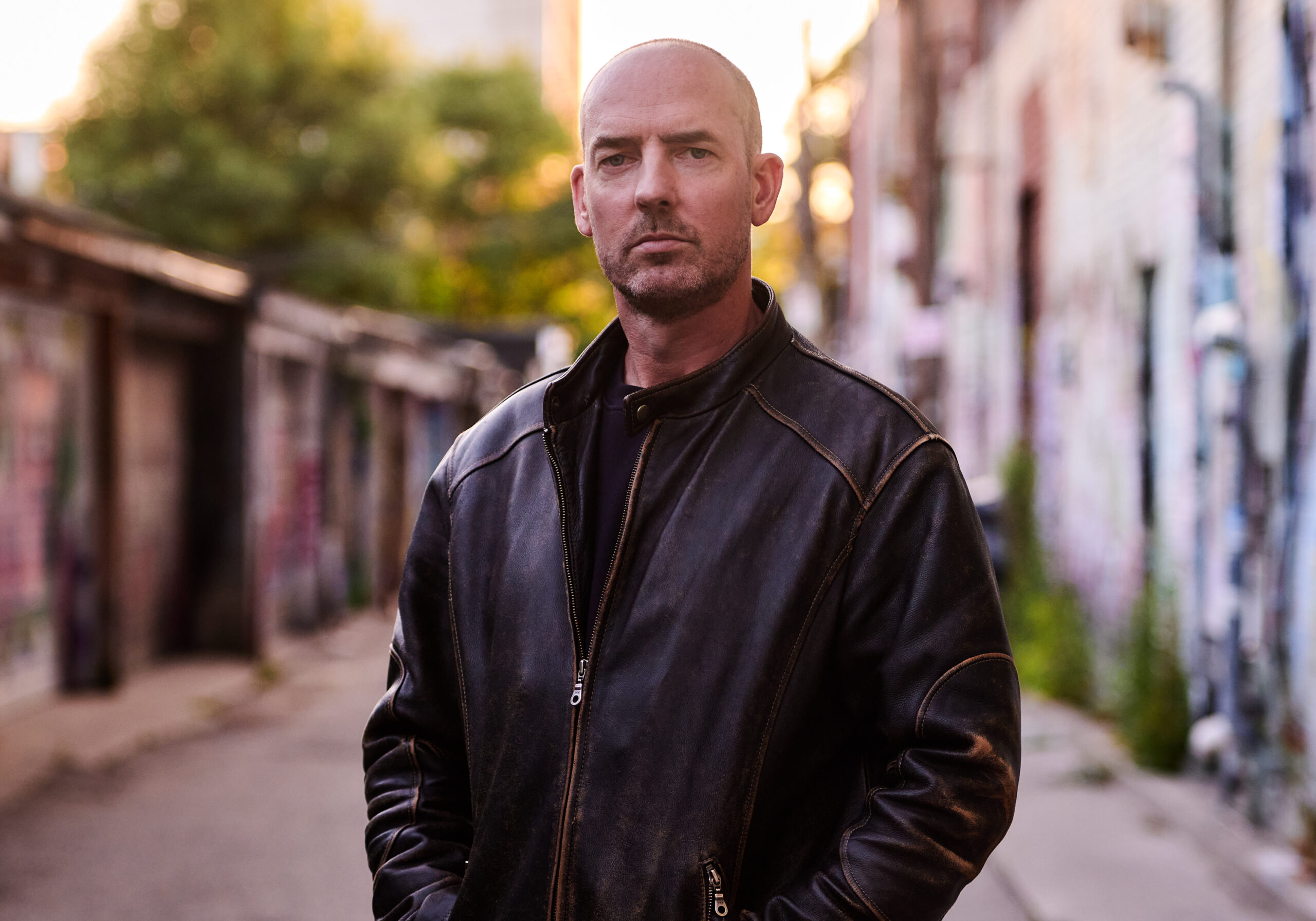
Actor Tadhg McMahon chatted with #Powerjournalist Markos Papadatos about starring in “The Westies” on MGM+. The season finale airs on Sunday.
How was your experience in ‘The Westies’?
My experience on “The Westies “was really interesting, particularly playing Cliffie, because initially, when I first started on the project, Cliffie was very much on the outside.
He was there as a physical presence. He was usually right over J.K. Simmons’ character Sweeney’s shoulder, as the enforcer, the muscle, but it wasn’t until later in the series that Cliffie really became drawn into the story.
So it was a really interesting process for me that I’d never experienced before, where the character was being revealed to me as the show went along. He sort of emerged as we shot. That was really unique for me.
What did you like most about your character?
I think what ended up becoming complex about Cliffie is that he’s not just a sociopath or a psychopath. I think he carries out the actions that he does because he’s trying to preserve something.
It’s almost like he’s nostalgic for this neighbourhood that he’s watching crumble around him. He’s nostalgic for this old gentleman-gangster way of life that he wanted to create, and as the cocaine world starts to come into this part of Hell’s Kitchen, and as his neighbourhood starts to fall apart, it’s like he’s trying to preserve it.
So he needs to lean on his values of loyalty and strength in the face of very serious challenges. That was what was really cool about him. He’s this strong, silent type, but underneath the performance there’s this love for his neighbourhood.
What did the screenplay teach you about yourself?
Because the character is drawn in as the series goes along, it really forced me to learn how you can communicate without having a lot of dialogue.
If you imagine that each scene is a painting, it’s about figuring out how you fit within that tableau — how you can translate power, or where you stand on something, without necessarily saying it. It’s about trying to make the scene feel lived-in and real: how you carry yourself, how you watch people, how you react, how you interact.
They say acting is listening, and particularly when you’re in a situation where there are a bunch of other actors having a scene, and particularly when one of those actors is as strong as J.K. Simmons, it really teaches you to live inside the world of the character and really listen.
It was an experience I needed to have, and I really enjoyed trusting myself and my ability to live in this character.
How does it feel to be a part of the digital age?
That’s interesting, because The Westies is a period piece. You’re going back to the 1980s, which isn’t a hundred million years away from the era I grew up in. I remember it, albeit from a child’s perspective.
It’s interesting to go back to a world where there wasn’t so much technology, where so much of the lived experience wasn’t documented. We can barely go back and see photographs of some of it. So much of it exists in our imagination.
For example, my character Cliffie isn’t even mentioned in the book The Westies. Yet we know he existed because people in the neighbourhood have told us he did. So that character can be created based on our imaginations. I think that’s really cool.
What’s also interesting for me, as someone who has had the Irish immigrant experience, is that I sometimes think we’re the luckiest Irish generation to have left Ireland. There was a time when you left Ireland and that was it. You were no longer connected to it in the same way. You weren’t flying back and forth between the U.S. and Ireland. You weren’t able to watch RTÉ or watch Irish culture evolve in real time.
It became this nostalgic place that we had left and that was gone.
Whereas now I can WhatsApp with my cousins. I know what’s going on. I have Irish content coming up on my Instagram all the time, so I’m able to see how that culture is evolving and changing. It’s not something I’m disconnected from or simply nostalgic about anymore. It’s something I can see as dynamic and changing through the digital age we’re in.
What is your advice for young and aspiring actors?
I think recently I’ve really realized how much of my time I spent trying to please people. Trying to be everything to everybody at once because I wanted to get a job. I was like, “I can be this type of character. I can be this type of character. I can do this for you. I can do everything for you. Whatever you need.”
Ironically, the times when I’ve felt really successful and connected to my work have been those times my life aligns with a project.
Part of that is understanding yourself and where you’re at, but it’s also understanding the industry and understanding how other people perceive you. Is there an archetype that people see you as?
If you can let go of thinking that you’re the centre of the story, or the centre of the universe, and understand how your type fits into other people’s worlds, there’s a lot of freedom that comes with that.
In the same way that creative barriers can actually allow you to explore your imagination within the confines of a particular sandbox, understanding where you fit in the industry can give you a lot of freedom.
What does the word success mean to you?
It’s funny. I think I’m at an age where I can reconcile with myself that I’m not necessarily looking to become famous.
Obviously, I want my work to be seen, and I want my work to be recognizable. I want people to be able to identify with the characters that I play, and I want to make meaningful work that people want to engage with and watch.
Part of that is finding a way to work with great writers, great directors and other great actors, where we can understand where we are in our lives and transmit that into meaningful work that people are willing to experience.
It’s almost like we have to put our money where our mouth is, so our audience does too.
What would you like to tell our readers about The Westies? What’s the one thing you want them to get out of it?
Ultimately, I want people to come out of The Westies entertained. I want them to see the complexity of these people struggling in a very dynamic and difficult world.
As you get to know these characters and see some of the decisions they make, hopefully you can be entertained by and relate to the complexity of their behaviour.
What’s really cool from my point of view is the mythological experience of the Irish in America — what it was like for these Irish people to come over, how their descendants behaved, and what it was like for them. I think that’s something we don’t have a ton of stories about.
As someone who was born in Ireland and has spent a significant chunk of my life in North America, that part of the show is really interesting to me: how we construct these modern Irish-American mythologies.
And then there’s the mythology of the Irish and the Troubles in the ’80s, which touches on a lot of the tropes, assumptions, ideologies and iconography that we still struggle with to this day.
Ultimately, I think people should have a good time with it. There are a lot of big personalities and a lot of interesting things going on, and hopefully we transmit a real human element to all of that.
To learn more about Tadhg McMahon, follow him on Instagram.