

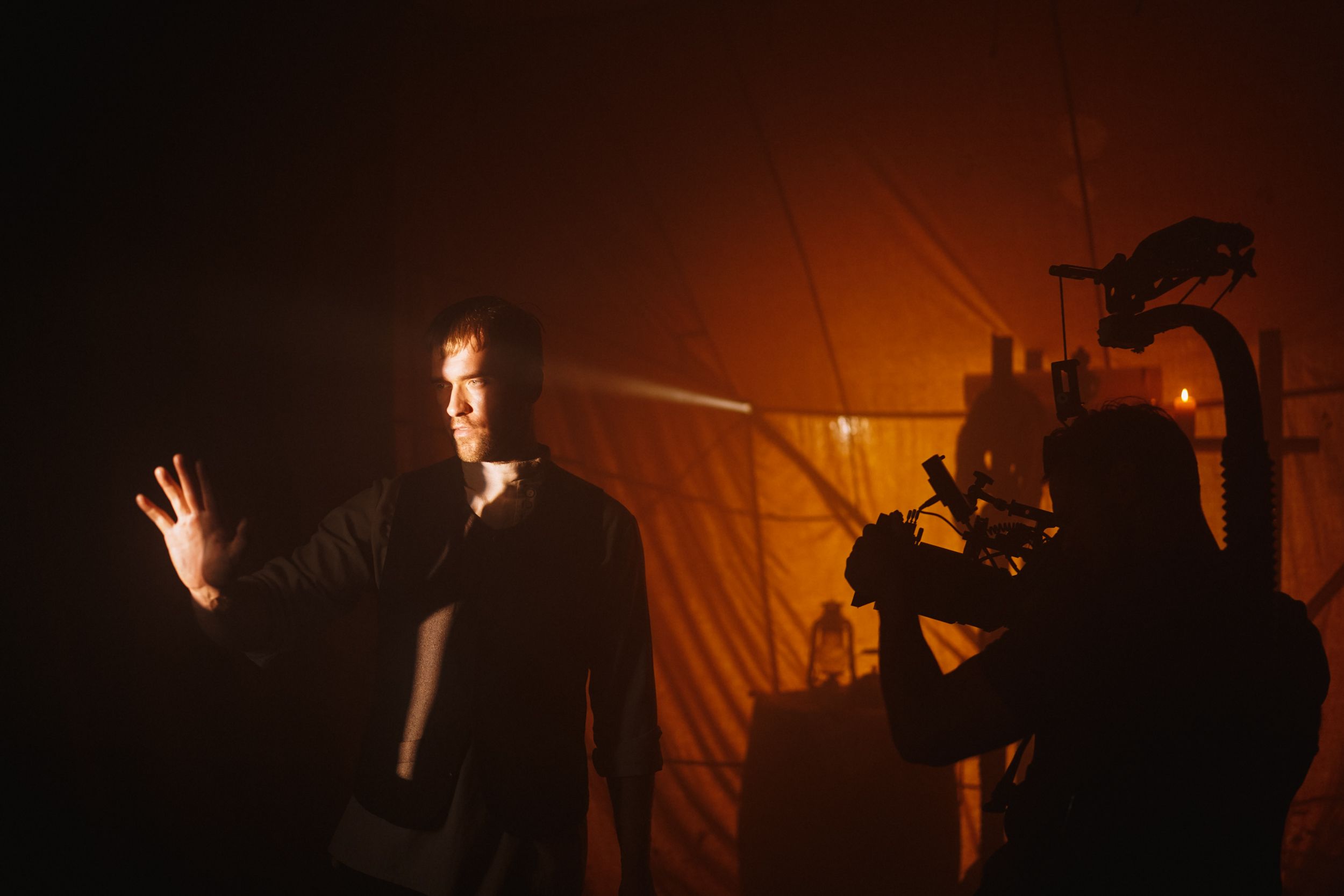
When you sit in a dark theater and watch a spaceship interior or a Victorian mansion on the screen, your brain accepts it as reality. The magic of Hollywood relies entirely on the illusion of authenticity. We get lost in the story because the physical environments look flawless, but creating that level of believable detail doesn’t happen by accident. Behind the scenes, fabricators, carpenters, and model makers work tirelessly to build these fictional worlds from scratch.
To make a fake environment look completely real, these artisans rely on an unexpected secret weapon. They use precision measuring tools to ensure every single cut, joint, and surface aligns perfectly. A fraction of an inch might not matter much in basic home carpentry, but on a film stage, a minor miscalculation ruins a shot. Creating the magic of the movies requires a level of engineering that most viewers never even notice.
The Modular Nature of Movie Sets
Unlike a real house, a movie set isn’t built to stay in one place permanently. Sets are constructed on soundstages, torn down to make room for another scene, and then reassembled weeks later for reshoots. They are modular structures that must fit together flawlessly when moved. Fabricators use dial indicators, digital calipers, and laser levels to construct these temporary walls and floors.
If the measurements are off by a millimeter during the initial build, the walls won’t align when the set is put back together. Gaps will appear between the faux brick panels, and the entire illusion shatters. The camera is unforgiving, and high-definition lenses capture every single flaw. Using exact measurements ensures that these modular puzzle pieces lock together perfectly, saving the production crew hours of frustrating adjustments and costly delays.
The Marriage of Practical Effects and CGI
Modern filmmaking relies on a seamless blend of physical sets and digital extensions. An actor might walk through a physical doorway, but the grand hallway behind them is entirely computer-generated. For this blend to work, the physical build must perfectly match the digital blueprint. Visual effects artists design the digital extensions based on exact mathematical coordinates.
If the physical prop department builds a control console or a window frame that deviates slightly from those coordinates, the digital effects simply won’t line up in post-production. Prop makers and set builders use highly accurate micrometers and height gauges to ensure the physical dimensions match the digital models flawlessly. This exact symmetry allows the visual effects team to stitch the digital world to the physical one seamlessly, creating an environment that looks completely unified to the audience.
The Microscopic Details of Hero Props
Prop departments categorize items by how close they get to the camera. Background props just need to look good from a distance, but hero props are the items handled directly by the lead actors during extreme close-ups. A hero prop might be a specialized spy gadget, an intricate piece of historical jewelry, or a futuristic weapon.
When the camera pushes in tight on these objects, the audience can see every single groove and mechanical joint. Fabricating these intricate items requires the exactness of a watchmaker. Prop masters use digital calipers and specialized micrometers to machine custom parts out of aluminum, brass, and high-grade plastics. If a gear inside a custom-built mechanical prop is too large by a fraction of a millimeter, the mechanism will jam on camera, ruining the take. Extreme accuracy ensures these close-up items look incredibly authentic and function smoothly under the hot studio lights.
Miniatures and Forced Perspective
Many directors still prefer using physical miniatures to capture large-scale destruction or fantastical landscapes. Building a miniature city block or a scale model of a submarine is an exercise in extreme metrology. Every single detail must be scaled down perfectly. If the bricks on a miniature building are slightly too large compared to the windows, the human eye will immediately recognize that the object is a toy.
Model makers rely on highly calibrated measurement instruments to maintain the exact scale ratio across the entire build. This mathematical perfection is also crucial for forced perspective shots, where objects are placed at different distances from the camera to make them appear larger or smaller than they actually are. The calculations for these optical illusions are incredibly strict, and fabricators must execute the build to those exact specifications to trick the camera lens successfully.
Structural Integrity and Stunt Safety
While aesthetics are a top priority, accuracy on set is also a matter of safety. Action sequences often involve actors or stunt performers interacting with breakaway walls, collapsing floors, or moving vehicles. The engineering behind these practical effects requires zero room for error.
When a special effects team builds a rig designed to flip a car or a harness system to pull an actor through the air, they rely on highly accurate measurements to calculate the load-bearing capacities and the exact points of tension. A misaligned bolt or a poorly measured structural support could result in a catastrophic failure during a dangerous stunt. Fabricators use precise instruments to verify the tolerances of every mechanical component, ensuring the rigs perform exactly as engineered to keep the cast and crew completely safe.
The Artisans Behind the Illusion
We rarely think about the engineering behind our favorite movies. We get swept up in the dialogue, the music, and the action, completely oblivious to the hidden geometry that holds the fictional world together. The carpenters, model makers, and special effects technicians are the unsung heroes of the industry. By treating their craft with the same exactness as aerospace engineers, they create environments that feel completely authentic. The next time you watch a blockbuster film, take a moment to appreciate the flawless details of the sets and the intricate designs of the props. That breathtaking level of realism is the direct result of dedicated artisans armed with highly accurate tools, working behind the scenes to make the impossible look completely real.