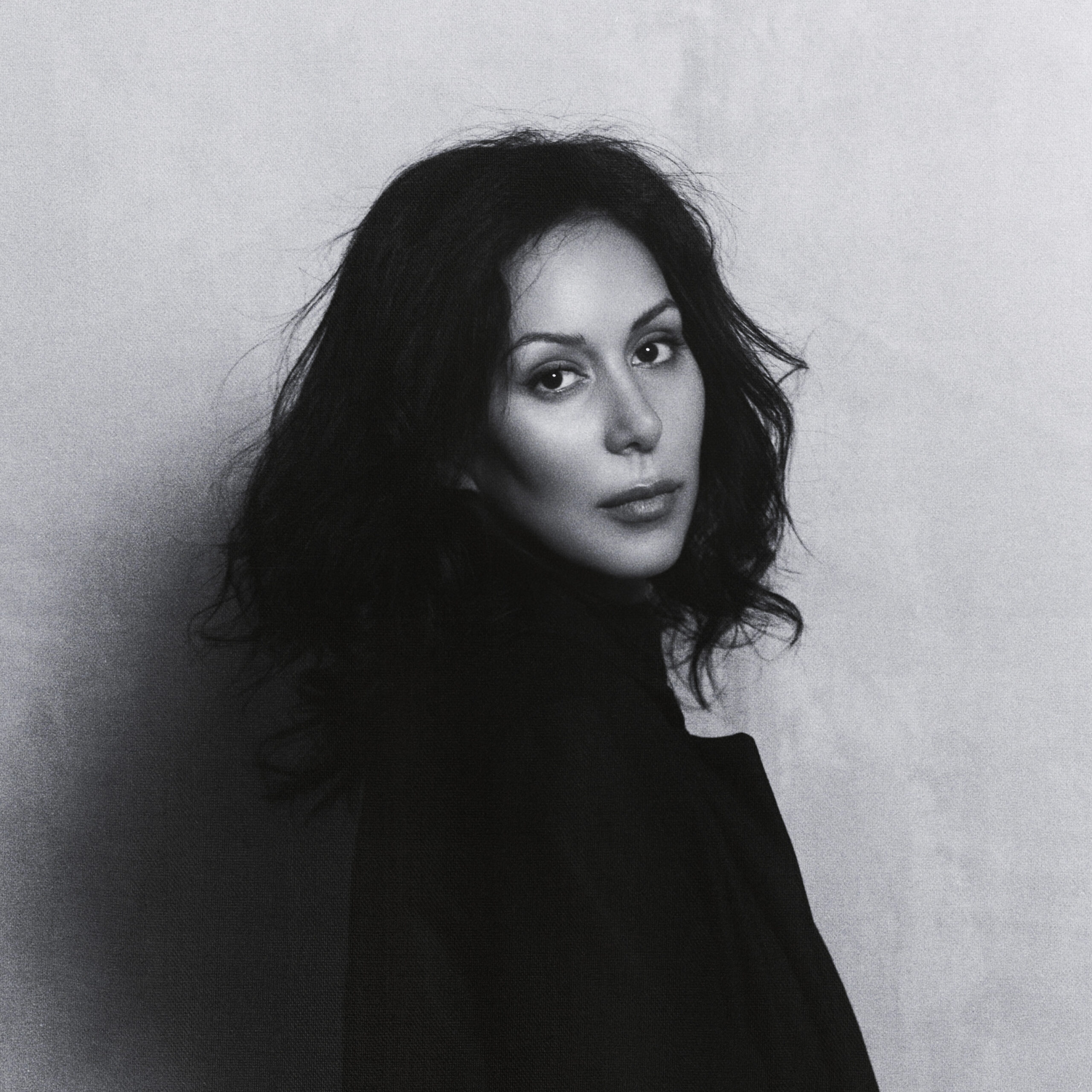
Singer-songwriter Anour chatted with #Powerjournalist Markos Papadatos about her new music and career in the industry, as well as working with Celine Dion’s creative team.
You’ve been writing music since childhood, but followed a different career path. How did you decide to begin pursuing the artist path?
It took me a while to get here I suppose. My parents, both being artists, were the first ones to worry about me following in their footsteps. The story I absorbed growing up was the one about the risk of becoming a starving artist and by the time we moved to Canada, I felt I needed to be responsible and establish myself quickly before I could afford to dream.
So, I chose security, but music never left me. It ran alongside everything as a parallel world that was entirely mine. For a long time, I tried to convince myself that this was enough, but it never was. Music never let me go. Some things are in fact not choices so much as callings, and you can defer a calling for years, but you can’t silence it.
One day, opportunity knocked, and it was time. I got lucky, and I knew it, and I jumped. Had I not had the backing of the people I started working with, I may not have had the courage, but I had so many songs, and because I never stopped writing, I was ready in a way I hadn’t consciously planned to be.
So, this is me course-correcting. And yet I also believe this journey was always meant to unfold exactly as it did. My perspectives, my lens on the world, the way I hear and feel things, all of it has been coloured and deepened by the life I lived getting here. The songs I write now could only have come from this particular point of view. And it’s never too late.
How did you come to work with members of Celine Dion’s creative team?
It happened the way the best things tend to happen: unexpectedly and through a door I didn’t know was there all along. I had known Martin H. Klein for years in an entirely different context.
Martin was a music producer before starting his own technology company. One day, he learned about my music and he asked me to join him at Piccolo Studios so we could meet with Dominique Messier who has been Céline Dion’s drummer for over three decades. I played and sang some of my songs for them at the studio and we decided to work on a few.
That’s when reality shifted for me. Later that week, I sent them ten songs that I recorded at home, and then another couple of songs the next weekend, and another few the weekend after that, and at one point, Martin proposed we change the plan, and we decided to work on an entire album. Martin and Dominique became my producers and it is through them that an entire team of world-class musicians and collaborators joined the project.
Guitarist Kaven Girouard, bassist Yves “Chill” Labonté, keyboardist Guillaume Marchand, and singer Mary Lou Gauthier, who spent years touring with Céline, are all on the album. These are people who have spent their lives operating at the absolute highest level of their craft. To have them bring that depth of experience and generosity to my debut has been one of the greatest gifts of my life.
Your debut single “I Am” is a commentary on the relationship between humans and AI. What is it like navigating the digital world as a creative artist?
We’ve always had to adapt, but previous technology revolutions extended our physical reach. It really feels different this time. The digital age is reaching into something far more intimate: into how we think, how we feel, how we form a sense of who we are. And this shift didn’t begin with AI. Social media had already been quietly rewiring our inner lives, engineering us to react before we reflect, and gradually eroding the conditions that genuine human connection and art require.
It is ironic how we built these systems to serve us, to connect us, to save us time, to make our lives richer, yet our relationship with these systems has inverted, and by human design, sadly.
Our inner lives are deteriorating, and it sometimes feels like there is no longer any space for the stillness that art and reflection require. Life has accelerated past the speed at which we can feel and ponder. Art and a creative life require time and our presence. So, I find it really tough navigating the digital world. It’s very noisy and it’s very distracting.
What are your thoughts on AI as a creative artist? Helpful tool or threat?
Technology that serves the human creator, and tools that perhaps handle repetitive non-creative tasks so the human can go deeper, I have no quarrel with those. The use of generative AI to create art is a different matter entirely and is a topic that makes my blood boil.
First of all, art is a point of view. It is a word that should be reserved for the creative output of a human consciousness, shaped by everything that makes a life a life: experiences of love, loss, wonder etc… When we train a system on the sum of all human creative output and ask it to generate something, we don’t get the best of everything with this averaged-out data, we get, in my humble opinion, sh*t. There is no point of view. And, even if some may disagree and see the output as interesting, it is not art.
Art and culture are also how civilizations understood, documented and then imagined themselves. If algorithms begin generating our culture, it will certainly not be a human culture.
Generative AI is also the result of the greatest theft in human history. Every artist, writer, musician, and creator who ever had the courage to put something of themselves into the world had their work fed into these systems without their knowledge or consent and without compensation.
So, to answer your question. I wouldn’t frame the idea as AI being a threat to art per se or the artist in the creative sense, because I don’t believe it makes art. But it is a threat to our humanity.
For those who believe this is simply another chapter in our technological story, that we will adapt and evolve as we always have, and perhaps even re-imagine art and think of new art forms, maybe, but I’m not optimistic about it. I think we’re in trouble.
The subject of “I Am” prompted many internet comments from people who suspected that you are not real, but the product of AI. How did that feel?
In the beginning I thought there was something almost poetically perfect about it, and I thought it was funny. It then quickly stopped being funny when I realized it was not just a couple of isolated comments, but we decided to let it play out.
The fact that we have arrived at a place where a human being has to defend their own existence reinforced the message behind the song. ‘I Am’ asks whether we’re awake enough to notice what we’re giving away, and here was the internet demonstrating exactly that fear in real time.
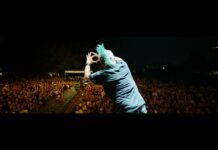
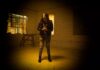
Every element in ‘I Am’ is human-made, and even the video was shot in one take, with six cameras and ten iPhones. In a world drowning in slop content, creating honestly has become its own kind of defiance.
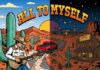
Was a particular relationship the inspiration for your new single “Love Should Feel Good”?
Yes and no. There’s always a specific moment that triggers the inspiration, but the specifics are almost irrelevant. The song is less about one person and more about a state of realization. It wasn’t only who I was choosing, but ideas I held about love that needed to be unlearned. I kept making the same mistakes in love because I had romanticized the struggle. “Love Should Feel Good” is about what I found on the other side of the relationship.
Some of the greatest love stories are tragedies or about sacrifice, and when we tell each other that love is hard work, that it is not always easy, we can confuse intensity with passion and forget that love was never meant to cost you yourself. The song is about the moment you finally choose yourself, how extraordinarily alive you feel, and the simple truth that love should feel good.
Your influences are quite varied. Share a few and tell us why they inspire you.
A book, a film, a conversation, the news, the cultural narratives and the political undercurrents of our time… that’s where songs begin for me. Out in the world and not in a studio with a concept or idea. We all move through the same world, but we don’t all experience it the same way. Everything we carry, where we come from, what we’ve loved and what we’ve lost, so much shapes the lens through which we see.
The fractures, the accelerations, the slow and painful erosion of things we didn’t know we valued until they started disappearing, I observe and feel all of it. So I don’t try to find inspiration, and I don’t search for material. I am genuinely curious about so much and trying to understand what it means to be human in this specific moment in history that is both extraordinary and terrifying. Music is just the language I trust most to process ideas and make sense of the times.
In terms of musical influences, my taste is equally as eclectic, and again I follow the feeling rather than the genre. I really loved listening to Tori Amos growing up. She is fearless on the piano and such an incredible songwriter. She can go to the darkest places and come back with such beauty. Leonard Cohen carried the weight of humanity in his poetry, and his music is almost like a prayer.
The Beatles represent both joy and nostalgia for me. The melodies, the harmonies, pure genius. Edith Piaf was so theatrical and yet couldn’t be more raw and real. She embodied her songs and was an incredible storyteller.
Classical music was my musical foundation through my mother who was a pianist. Ravel, Satie, Debussy, Chopin… pure light. I still often listen to classical music. And then there are voices that reach into your soul and rearrange something: Nat King Cole, Eartha Kitt, Nina Simone… Elton John wrote melodies that feel like they always existed and we were simply waiting to hear them.
There are so many artists I can mention, and the thread running through all is their artistic intention. Artists who moved me certainly changed something in me. Music has that power. It can transform us.
Your music feels like an experience. It’s very theatrical. Might you ever pen a musical?
My life already feels like a musical at times I suppose. Jokes aside, why not.
Are you a solo writer or do you co-write with others?
So far, I’ve been writing alone. Songwriting is how I process feelings and ideas, so it’s always been a private process, until I’m ready to share the songs.
What is your writing process?
It really depends. But I generally find myself at the piano, improvising or just playing, and at some point a song would write itself. The best songs I’ve written in my opinion, have come to me.
While such songs may sometimes be written in ten minutes from when an idea strikes, other times, it can take months before a song is complete because I’d have the verse but wouldn’t be convinced by the chorus or vice versa.
I’ve learned not to chase them too hard, and believe the songs will reveal themselves. Once I’ve written a song, I’ll go back in and polish a few words here and there, for flow, for the sounds and feel of the language, or for the meaning to come through as I intend it to.
How did you find your way to Montreal from Damascus?
I came to Montreal for university, Montreal became home, and I stayed.
To learn more about singer-songwriter Anour, follow her on Instagram and Facebook.