
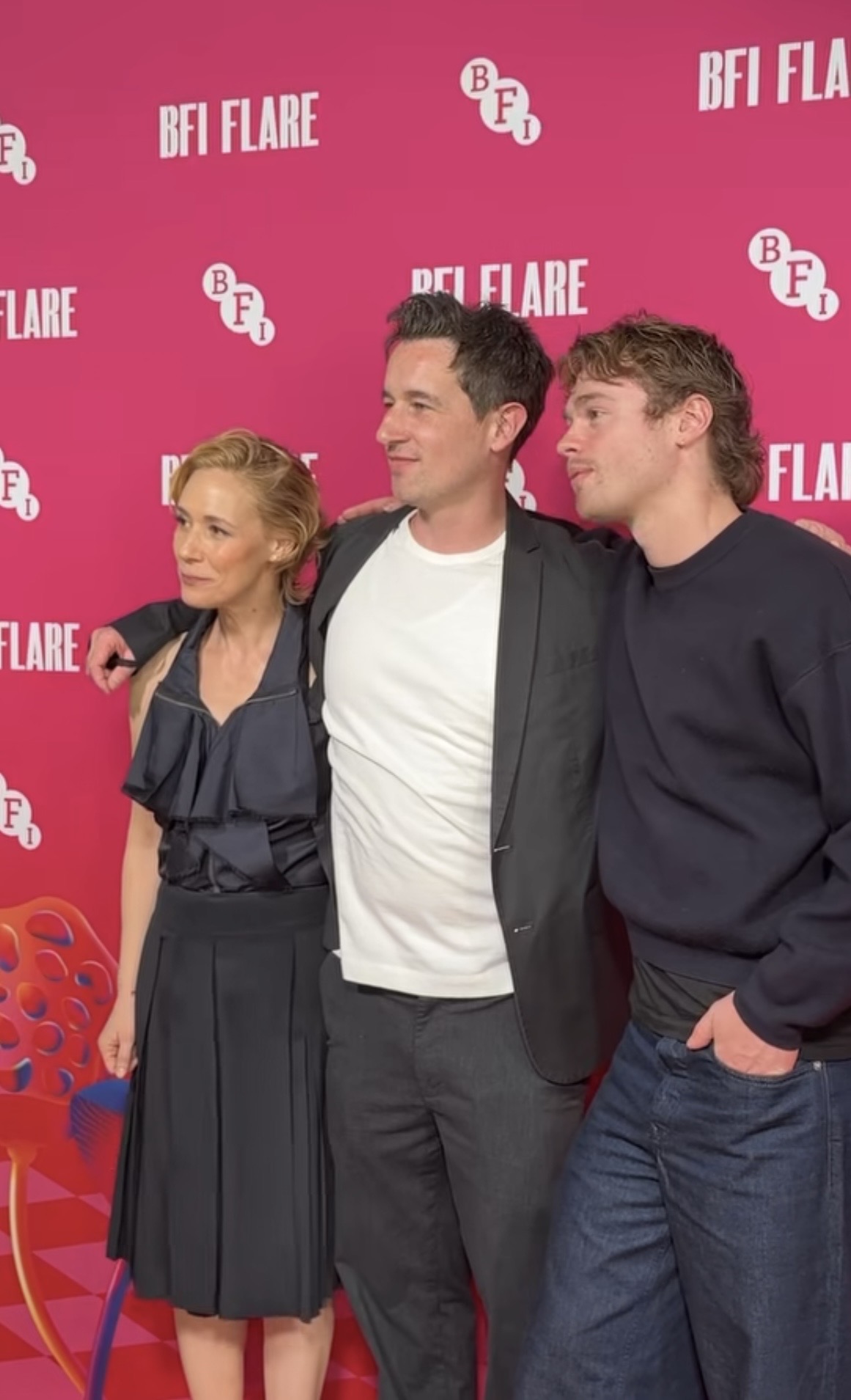
Canadian filmmaker Nick Butler chatted with #Powerjournalist Markos Papadatos about writing and directing “Lunar Sway,” as well as working with Kaden Connors and Noah Parker.
The synopsis is: In this offbeat comedy, a bi guy in a desert town receives a surprise visit from his con-artist birth mother, with chaos ensuing.
How did “Lunar Sway” come about?
I started writing it a few days after wrapping production on my first feature. I’m monogamous with my movie ideas so I’d only been thinking about that one project for a long time and was starting wonder if I’d ever coming up with a new idea. But a few days after we wrapped that shoot, I started writing Lunar Sway and the first draft poured out very quickly.
The whole process of bringing it together was relatively quick, and I think that comes from just building off the momentum of having completed a first feature and wanting to reunite with the crew and keep creating together.
What inspired you to write and direct this story?
I was in an unrequited love situation and was giving a lot of thought to the idea of looking for love in all the wrong places, which is something our main character Cliff is also struggling with. So the screenplay became a way to try and make sense of all the feelings I was going through at the time.
I always knew it would be a very visually stylized movie, so I started putting together image references almost as soon as I started writing, so directing it felt like a very natural extension.
What was it like working with Kaden Connors, Noah Parker and the rest of the cast?
Our entire cast is amazing. Everyone was truly easy to work with and we’re all still close to this day. Noah’s such a talent and really understood the role right away. No matter what we asked him to do, from crying to being vulnerable one day to being bratty and doing a prat fall into a sprinkler the next, he was able to just tap in and do whatever we put in his path.
Noah brings a lot of empathy and heart to his character, Cliff, which is important because Cliff is very flawed and makes a lot of bad decisions. But Noah makes him relatable and love-able despite all that.
Kaden was also an amazing addition to the cast. He’s Jovi, Cliff’s elusive and very mysterious ex-boyfriend who plays some mind games. In real life, Kaden couldn’t be more open-hearted and warm as a person, so it’s a testament to his talent that he’s able to play such a withholding character.
What did this screenplay teach you about yourself?
The screenplay is very personal to me, and while it’s not a direct autobiography, it did give me a chance to reflect on the ways in which I have and still do look for love in all the wrong places, just like these characters. Cliff has a pattern of being drawn to people who are unavailable on some level and
I think that’s something a lot of people can relate to. Our relationship to intimacy can be so complicated and hard to fully understand. This screenplay allowed me to come to terms with my own experiences with romance over the years.
How does it feel to be a filmmaker in the digital age? (Now with streaming, technology and social media being so prevalent)
Filmmaking and technology have always been inseparable, and I think it’s important for filmmakers to embrace changes in technology and not be scared of them. The digital age has opened the door for more people to make movies on a smaller scale, with a lower budget, and also share it online. That’s very important and urgent and we need to continue to find ways of making filmmaking more accessible.
That being said any technology can obviously be misused and there is a lot to be frustrated about the current state of the industry. I think the powers that be have been incredibly short-sighted in their competitive mad dash to roll out streamers and the result is a landscape that is inconvenient and expensive for viewers and damaging to the future of filmmaking. It’s a big topic, but at the end of the day I’m an optimist and I don’t think it’s too late to course correct. Like so many others I value going to see movies in the theatre and we’re starting to see some slightly more thoughtful conversations around how to help movie theatres bounce back.
Like a lot of people I’m very concerned about the negative impact social media has on our brains, our culture, our relationships and our art. Any technology can be used for good or for evil and I don’t think we’re on the right side of that equation at the moment. But we can all sense a desire for change and I do hope we find ways to evolve past the current cultural landscape, which is bleak. You can feel people reaching a breaking point with phone addiction and wanting something different and I hope we find that.
Artists will always find ways to get their work made and we’re seeing so much exciting and innovative work, but the mainstream entertainment industry is in a very confused and weak place right now, creatively, on many levels. That needs to change.
What is your advice for young and emerging filmmakers?
When pitching your movie around, stand behind the version you’re genuinely passionate about, instead of trying to second guess what others want to hear. If you’re pitching a watered down version that you don’t fully believe in, people who sense that.The movie is made in prep. Do as much as early as you can.Spend a lot of time finding the right crew members. Do not rush that process. Who you surround yourself with on set is everything.
What does the word success mean to you? (My favorite question)
When the collaboration on set results in the version of the movie you set out to make. If you can stand back and see that you made the film you intended, I think that is a successful exercise in filmmaking.
What would you like to say to our readers about “Lunar Sway”? (What’s the one thing you want them to get out of it)
I always hope audiences see themselves reflected in the characters, and find empathy for even the most flawed or complicated character.
To learn more about filmmaker Nick Butler, follow him on Instagram.