

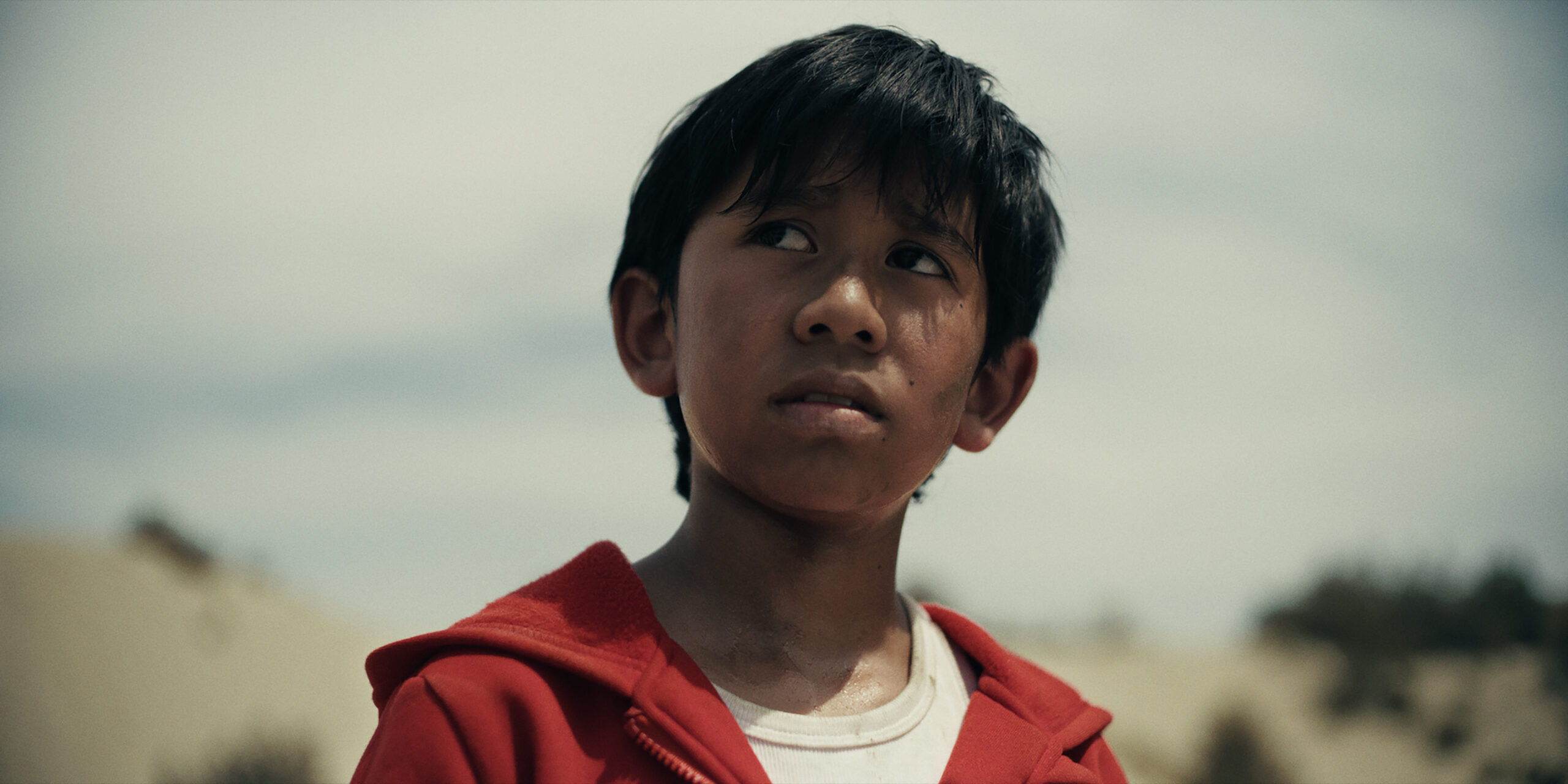
Tamás Yvan Topolánszky chatted with #Powerjournalist Markos Papadatos about his new film “Never Give Up!”
How did Never Give Up! come about?
Two things came together for me. During the refugee crisis in Budapest in 2015, I saw children whose faces stayed with me: fear, exhaustion, hope, sometimes all at once. Then, in 2019, I came across an old motivational speech containing an extraordinary contradiction. I began imagining a child hearing those words without knowing anything about the person saying them.
He would hear something completely different from what we hear. That became the seed of the film, and of the question behind it: who owns a message—the person who says it, or the person who gives it meaning?
What inspires you each day as a filmmaker?
People, especially the things about them I don’t immediately understand. A small gesture, an unexpected reaction, the difference between what someone says and what they actually feel. Those things can occupy my mind for days. I’m drawn to situations where convictions are tested, where something that seems obvious from a distance becomes much more complicated when you get close to the person living through it.
I’m also interested in how timeless questions take on different forms in the world we live in today. Often, a story begins for me when I find myself torn between two ways of seeing something and can’t easily settle on either.
How does it feel to have the film qualify for Oscar consideration?
I wish I could simply say it’s a wonderful feeling, but what I feel most is an enormous responsibility. Towards my team, who poured their hearts into this and helped bring the story to life despite seemingly impossible circumstances, and towards our wonderful actors—especially Chema, our young lead, who had never acted before but met the demands of this role with remarkable determination.
Above all, towards the people this film could mean something to, who haven’t yet had the chance to see it. I believe we’ve achieved something with this film. Now comes what feels like the hardest part: spreading the word and helping the film reach further.
The question at the heart of the film applies to the film itself, too. Who owns a message? We’ve told the story, but perhaps it belongs to the people who will give it meaning.
How does it feel to be a filmmaker in the digital age?
I think there are two sides to that question. If we’re talking about working with digital cameras instead of film, I feel a certain sadness that many filmmakers of my generation may rarely, if ever, have the opportunity to shoot on film. At the same time, the possibilities of digital images feel almost limitless. We’re still discovering what those images can look and feel like, and that feels fresh and exciting to me. There’s something very liberating about it.
If we’re talking about how digital technology has opened filmmaking to anyone with an idea and the stamina to see it through, my feelings are more mixed. I’m very happy that filmmaking is no longer such a closed club. But I sometimes wonder how long the films we make can remain relevant once they reach an audience. There’s an enormous amount of noise surrounding them, and even a very good film needs time and attention to leave a lasting impression. That’s what concerns me: we have so much freedom to create, but how much room is there for what we create to stay with people?
What did this screenplay teach you about yourself?
It made me realize how quickly I attach meaning to a voice before I’ve really listened to the words. I know who is speaking, so I think I know what I’m going to hear. The boy doesn’t have that knowledge. Writing from his perspective meant constantly questioning my own reactions.
It also tested my patience. I spent years with this idea, and there were moments when I couldn’t see how to make it work. There’s a certain irony in struggling to keep going with a film called Never Give Up!.
What does success mean to you?
I’m not sure success is something you ever feel you’ve reached. For many artists, the moment you get somewhere, your attention has already moved towards what you haven’t managed to do yet. I love the answer attributed to Akira Kurosawa when asked which was his best film: “The next one.”
There’s a humility in that which I admire. Even after everything you’ve made, you still believe you have something to learn. That feels very close to what keeps me working: the desire to go beyond my own limitations and make each attempt better than the last. Perhaps success is being able to see what you couldn’t do before—and feeling ready to try again.
What would you like to say to the fans?
Thank you for watching, for caring, and for helping this film find its way to others. I’m always curious to hear what stayed with you—even, or perhaps especially, when it’s something I hadn’t thought of myself. If the film meant something to you, tell someone about it. We spent years trying to bring this story to life, and a personal recommendation can take it somewhere we could never reach on our own.
What’s the one thing you want them to get out of Never Give Up!?
I hope they remember the boy. There’s a larger question in the film about language, politics and who gets to give words their meaning. But all of that rests on whether we care about this child. He isn’t trying to make a political statement. He’s trying to survive and hold on to something his mother gave him. We, as adults, bring our knowledge and our politics to what we see. He brings his humanity. I hope the audience stays close enough to him to feel that.