

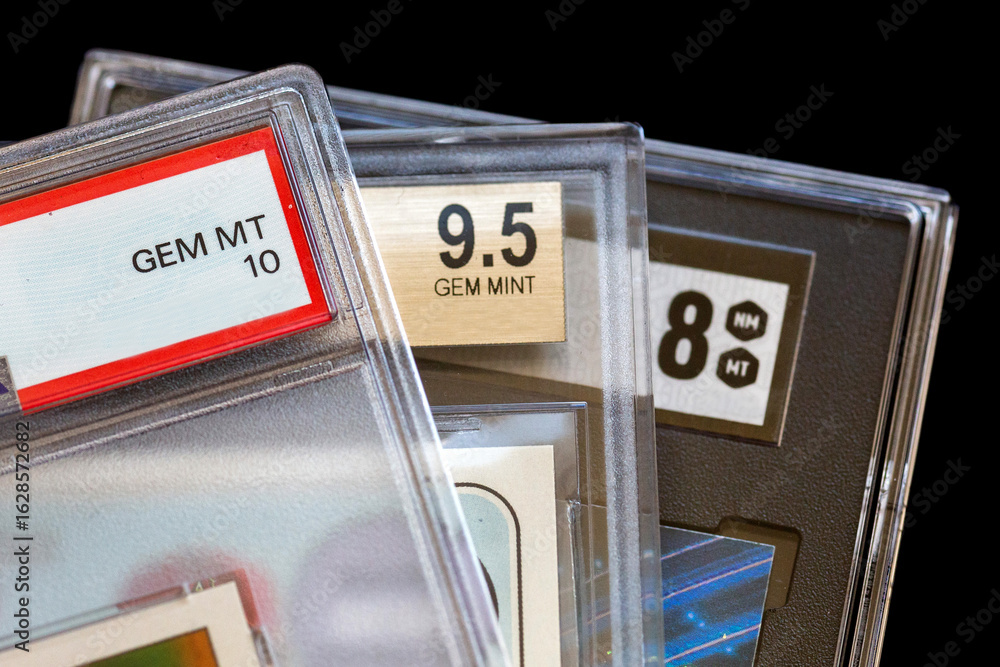
Do you have a favorite player that you are just dying to add to your card collection? Are you tired of buying hanger and blaster boxes and not getting a lot of value out of them? Do you want more value out of the money you spend on cards? If you said yes to any of those questions, you may want to consider joining some “card breaks.”
What are “card breaks”?
Generally, speaking, in the card world, there are folks that will pool several high-priced boxes together (think hundreds of dollars per box), and then sell slots either by player or team, to cover the cost of (and hopefully more) of the boxes they will be opening. These people are called “breakers” in the industry.
What is the advantage of a “break”? Well, from a card-breaker’s point of view, they can make a profit by purchasing cases with high-end cards and selling slots via auction, and it is very much a source of income. But, more importantly, from a card collecting perspective, being part of a break gives you access to high-end cards that are not included in many of the lower priced options at stores like hanger boxes and blaster boxes. In addition, you simply don’t need to pay what is typically $1,000+ USD to purchase cases. Cases are where a lot of these big hits reside. You can simply buy slots by targeting teams and/or players for a more reasonable price. As a bonus, it gives you the opportunity to add some high-end value to your collection.
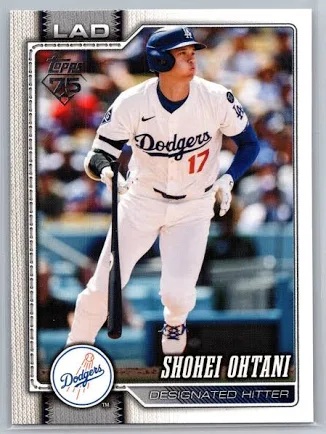
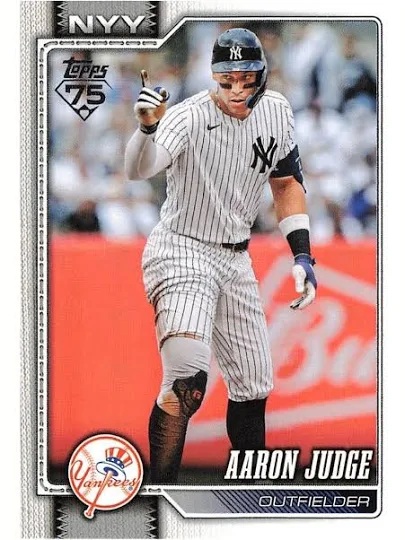
The auction slots for breaks will generally be on a platform such as eBay. The key here is to look for value if you aren’t tied to a specific player. I would not recommend this approach if you wanted high-end superstars such as Shohei Ohtani or Aaron Judge, because there will not be deals to be found. Similarly, in a team concept, you will pay a premium for the Dodgers and Yankees, because they are loaded with popular, high-demand superstars. This can be a fruitful exercise and a way to add some high-end cards to your collection, however, without spending a ton of cash in the process.
How to find a trustworthy ‘breaker’
So how does one enter a break? Here are a few tips on finding a trustworthy breaker, especially on eBay; just make sure to do your own research before you immediately dive in.
1. Avoid low scores and negative reviews
Look for breakers that have overwhelmingly favorable ratings and reviews. A breaker with low scores and negative reviews is a red flag and someone you should avoid. Generally, people are much more apt to complain when something goes bad. Breakers with a large quantity of negative feedback and/or negative ratings could indicate possible trouble. Trouble in the sense of things such as damaged cards which would lessen your value considerably, or even worse not delivering the cards from the break. In any case, avoid breakers with that kind of feedback and look for highly rated and favorable writeups.
Once you find someone you are comfortable with, do the research on the players available in the break, and some of the odds in the boxes being broken. Topps, for instance, has a list of all players included in each collection, and odds of pulling each type of numbered card, etc.
2. Look at autograph frequency
Consider those players who do a decent amount of autographing, as that in general will increase your odds of hitting on a good card.
Cards that are autographed are always worth more than cards that are not autographed. So, when we look for value, autographs would be considered very good value, as would cards that are numbered up to 250 or less, as those cards are rare. When you get a combination autograph on a limited availability card, that’s when you can get a really big hit on value.
3. Find teams with a solid core of young players
Finally, choose players with upside. Mix in a rookie with a veteran if you are bidding on players or find a team that has a good core of young players in the collections that are being broken. I mention young players. The reason I target young players is that many are unknown to the novice collector and general public, and their value as a result is relatively low. So, if you can find a few young players you like, you have the potential to gain more value from their cards when they perform well. Maybe you hit on that one player that is not well known that puts together a Hall-of-Fame career. That may be enough to someday put a down payment on your vacation home.
4. Set your target bid range, then enter your bid
Then, enter your bids on the players or teams you target. You should have target numbers in mind in terms of how much you want to spend, and an upper limit on the player and/or team you are bidding on. If you are just starting out, try a combination of players or teams that will be in the $20-$30 USD range. That’s generally the cost of a blaster box, so in terms of cost, it is not prohibitive. At the same time, it gives you a chance to add the player(s) that interest you to your collection and potential high-end value.
Stick to your plan. There are many breaks out there. If one goes really high in price, be patient and find the next break that you like. Time is on your side, always remember that!
The results are in, here’s what happens after the bid
If you win the bid, you are in the break! Breakers will generally post a video of all boxes and cards being opened, so you can follow along. Definitely check out how the break that you are entering works, but I would say most that I have seen will send you all cards attached to the player(s) and/or team(s) that you won in the slot auction. The videos are fun to follow along with! It gives you the feel of being part of the process. But make sure you watch carefully, as you can glean information such as how many high-end cards generally are in each break, who generally signs more autographs, etc. Watch a few of them if you have some time to get the feel for breaks. But, most of all, have fun and enjoy seeing what you add to your collection.
My recent break experiences
Now, as with anything, there are no guarantees. I recently joined two breaks: Corbin Carroll (RF, Arizona Diamondbacks) and Christian Moore (OF/IF Los Angeles Angels). Why did I choose these two players? Well, for entirely different reasons. I chose Corbin Carroll because he is my favorite player first and foremost. But also because he is known to be quite generous in terms of signing cards and memorabilia. I chose Christian Moore because he is a young prospect with some breakout potential, and because he went to my favorite university, University of Tennessee Knoxville.
Break #1 Results: Corbin Carroll
For the first break, I chose Corbin Carroll, who as I said is my favorite player right now and signs a lot. I spent $22 for him in the break. The results were three base cards, probably $3 in value currently. So, not what I intended, but I look at this as cheaper than buying a blaster box and getting a base card. Kind of a no harm, no foul type thing.
Break #2 Results: Christian Moore
My second choice was Christian Moore. He was a star second baseman for the University of Tennessee and has spent most of the 2026 season at the AAA Level in Salt Lake City. Again, a young player and was the number 8 pick in the 2024 MLB Draft. One of the reasons I like him is his numbers in AAA. This year, he is hitting .302 with a .431 OBP, which are huge numbers. He has 31 doubles and triples to go along with 11 Home Runs and has also stolen 15 bases. Now, the one item to watch is strikeouts. In AAA, Christian Moore has 94 strikeouts in 335 at bats in 2026. In the major leagues, he has accumulated 78 strikeouts in 199 at bats. Those strikeout numbers are too high to be successful. But, if he figures that out, look out!
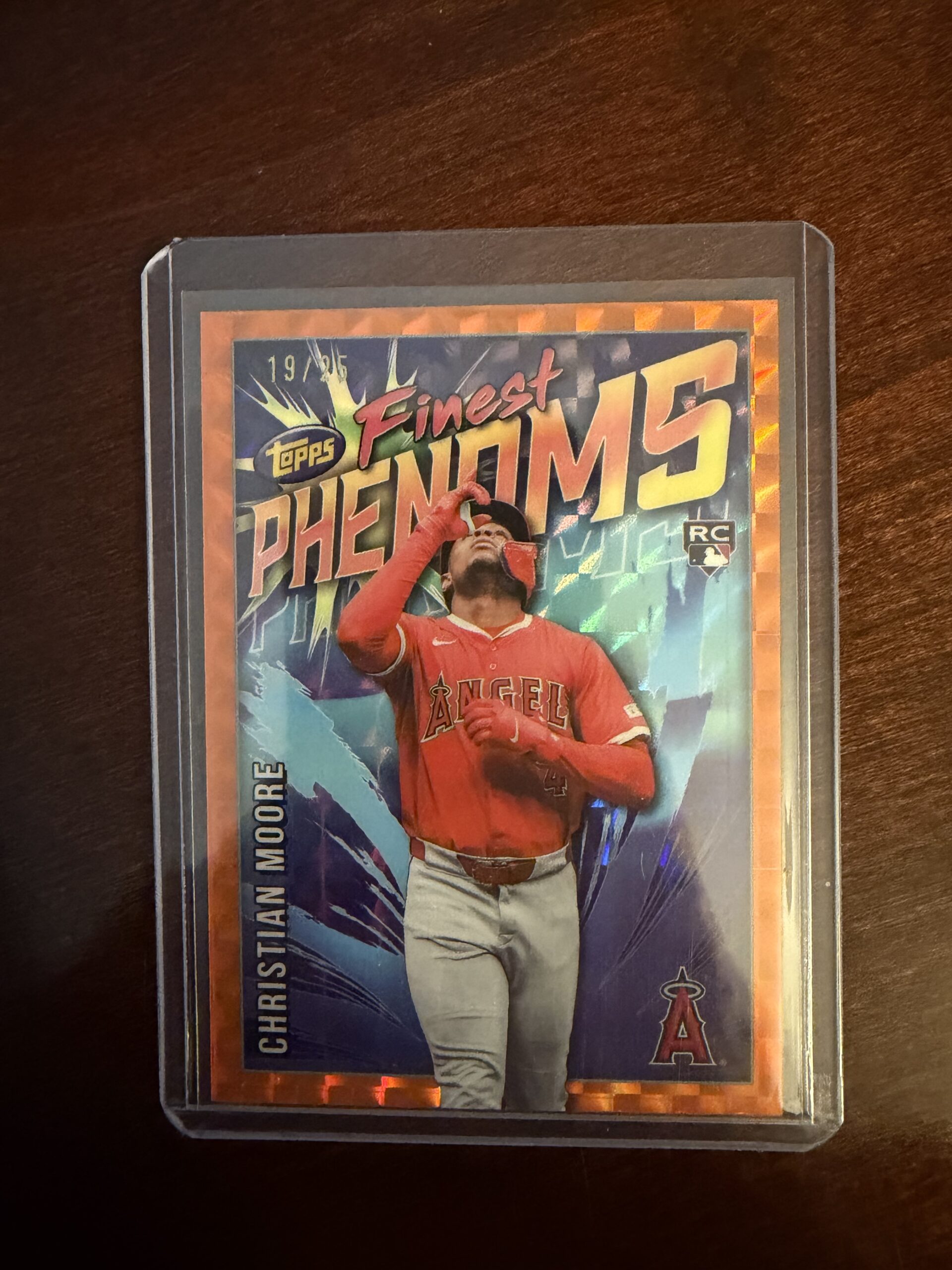
I spent just $3.50 for Christian Moore in the break. The good news is I did hit on a card out of 25, which currently I estimate at a $40 value. If Christian Moore figures out the strikeout situation, that card can be worth well over $100 in the coming years. This is what I mean when I speak of looking for value. So, you win some (Christian Moore) and you lose some (Corbin Carroll).
The verdict
I definitely recommend card breaks. As you can see, the recent card breaks I participated in yielded a good result. It also yielded a not so good result. But, adding a possible high-end card to my collection was worth it, because I can now gain value over time.
Have a card break you want to share? I’d love to hear about your card experiences below in the comments!